Explore a category
Planets, moons and space,
in proportion.
Compare worlds, moons, spacecraft, orbital distances and astronomical structures across extreme scales.
Space records distinguish body diameter from orbit, distance and model boundary. Mean radii, schematic boundaries and changing orbital separations are labelled separately.
- Entities
- 79
- Most common primary scale
- Length & distance
- Common measurements
- Mean-equivalent diameter, Diameter, Overall docked length, Overall height, Representative equatorial diameter, Mean diameter
Within this category's most common primary scale, explore Vanguard 1 at 16.5 cm and Observable universe at 28.21 Gpc. These are navigation anchors, not universal category limits.
79 entities in this category, ordered by name.
No matches here. Try the main search to explore your own quantity.
79 measured entities
Browse planets, moons and space
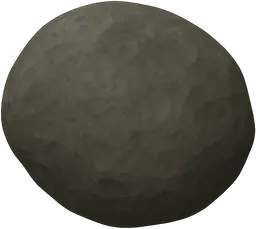 Adrastea16.4 kmAdrastea is a small, irregular inner moon of Jupiter, located just outside the planet's main ring.
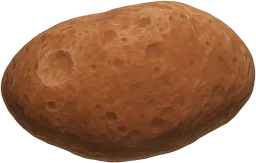 Amalthea167 kmAmalthea is an irregularly shaped moon of Jupiter with a reddish surface and prominent craters.
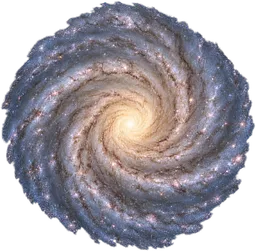 Andromeda galaxy79.72 kpcThe Andromeda galaxy, also called M31, is the nearest large spiral galaxy to the Milky Way.
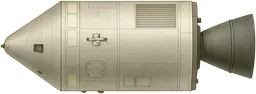 Apollo command and service module11 mThe Apollo command and service module was the main spacecraft section used by NASA's Apollo missions to transport astronauts between Earth and lunar orbit.
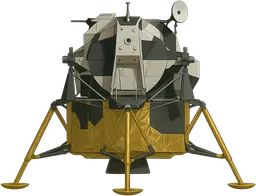 Apollo lunar module7.04 mThe Apollo lunar module was a two-stage spacecraft used by NASA to land astronauts on the Moon and return them to lunar orbit during the Apollo missions.
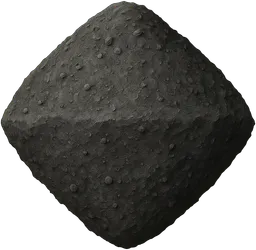 Bennu asteroid492 mBennu is a near-Earth asteroid with a rubble-pile structure and a roughly top-shaped body.
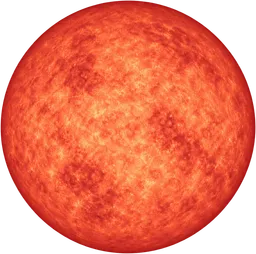 Betelgeuse6.511 AUBetelgeuse is a red supergiant star in the constellation Orion that changes in brightness over time.
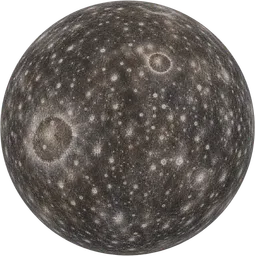 Callisto4,821 kmCallisto is a natural satellite of Jupiter, with a heavily cratered icy surface.
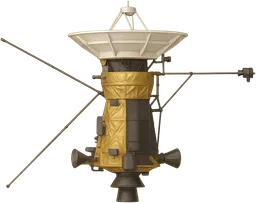 Cassini spacecraft6.8 mThe Cassini spacecraft was a NASA probe launched to study Saturn and its moons, carrying scientific instruments and the Huygens lander.
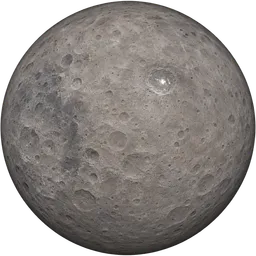 Ceres939.4 kmCeres is a dwarf planet located in the asteroid belt between Mars and Jupiter.
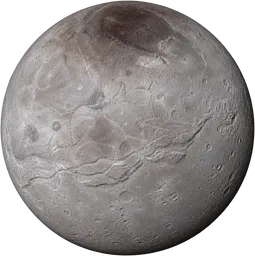 Charon1,212 kmCharon is a natural satellite of Pluto, composed mainly of rock and water ice.
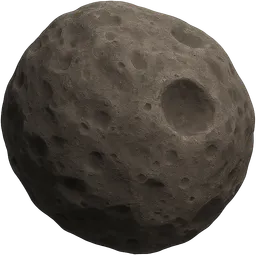 Deimos12.4 kmDeimos is the smaller and outermost natural satellite of Mars, with an irregular, rocky shape.
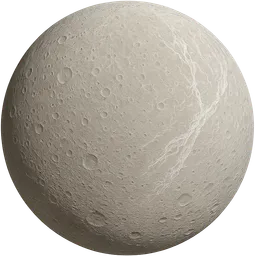 Dione1,123 kmDione is an icy moon of Saturn, distinguished by its heavily cratered surface and bright ice cliffs.
 Distance to Andromeda766.5 kpcThis is the distance between the Milky Way and the Andromeda galaxy, our nearest large galactic neighbour.Distance to Proxima Centauri4.25 lyThis is the distance from the Sun to Proxima Centauri, the closest known star to our Solar System.Distance to Sirius8.6 lyThis is the distance from the Sun to Sirius, the brightest star in the night sky.Distance to the galactic centre7.972 kpcThis is the distance from the Solar System to the centre of the Milky Way galaxy.
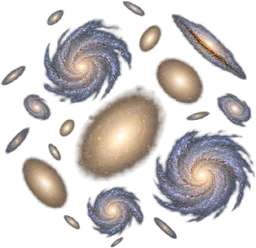 Distance to the Virgo Cluster16.56 MpcThis is the distance from the Milky Way to the Virgo Cluster, a nearby large cluster of galaxies.
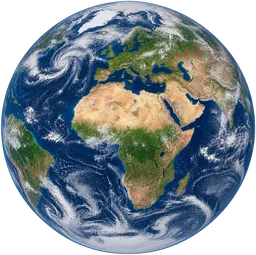 Earth12,740 kmEarth is the rocky planet on which we live and the third planet from the Sun.Earth–Moon distance384,400 kmThe Earth–Moon distance is the average space between the centres of the Earth and the Moon.Earth–Sun distance1 AUThe Earth–Sun distance, or astronomical unit, is the standard measure of separation between Earth and the Sun used in astronomy.
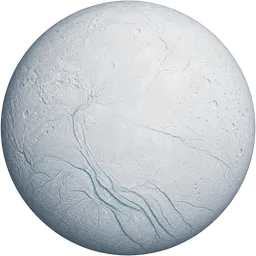 Enceladus504.2 kmEnceladus is a natural satellite of Saturn, with an icy surface and plumes of water vapour erupting from its south pole.
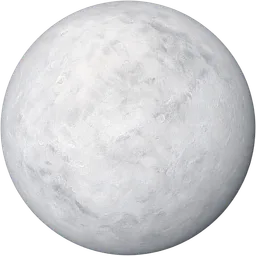 Eris2,326 kmEris is a dwarf planet in the scattered disc region beyond Neptune, composed of rock and ice.
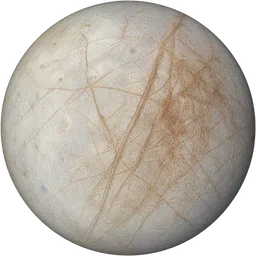 Europa3,122 kmEuropa is a natural satellite of Jupiter, with a smooth icy surface thought to cover a subsurface ocean.
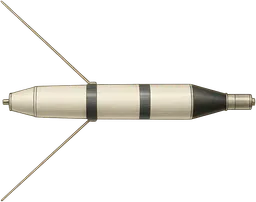 Explorer 12.03 mExplorer 1 was the first satellite launched by the United States, carrying scientific instruments to study Earth's radiation environment.
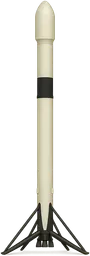 Falcon 970 mFalcon 9 is a two-stage orbital rocket developed by SpaceX for launching satellites and crewed missions.
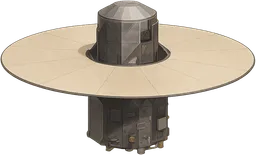 Gaia spacecraft3.5 mGaia is a European Space Agency observatory designed to map the positions and motions of stars in the Milky Way.
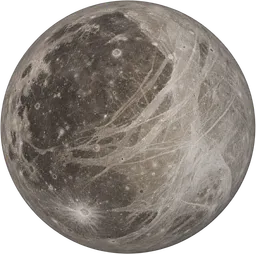 Ganymede5,262 kmGanymede is a natural satellite of Jupiter and contains a magnetic field generated by its partially liquid core.
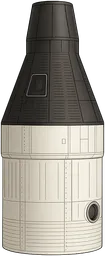 Gemini spacecraft5.61 mThe Gemini spacecraft was a two-person American capsule used for NASA’s crewed space missions in the 1960s.
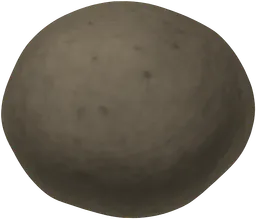 Himalia170 kmHimalia is an irregularly shaped outer moon of Jupiter, orbiting the planet at a great distance.
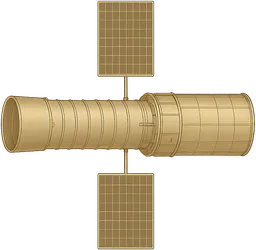 Hubble Space Telescope13.2 mThe Hubble Space Telescope is an orbiting observatory launched by NASA to capture detailed images of astronomical objects.
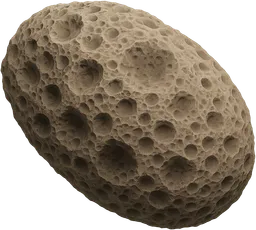 Hyperion270 kmHyperion is a porous, irregularly shaped moon of Saturn that rotates chaotically and has a sponge-like surface.
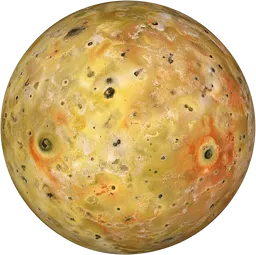 Io3,643 kmIo is a natural satellite of Jupiter, covered with active volcanoes and sulphur deposits.
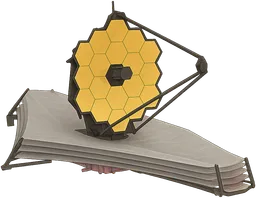 James Webb Space Telescope21.2 mThe James Webb Space Telescope is an infrared observatory in space designed to study distant galaxies, stars and planetary systems.
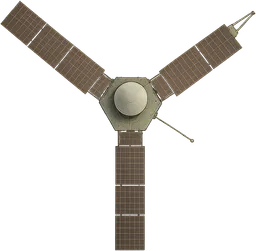 Juno spacecraft20 mJuno is a NASA spacecraft sent to study Jupiter’s atmosphere, magnetic field and structure, powered by three large solar arrays.
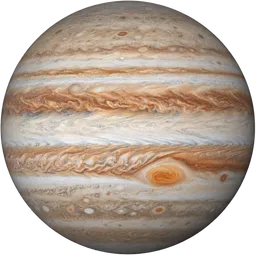 Jupiter139,800 kmJupiter is a giant planet composed mainly of hydrogen and helium, orbiting the Sun beyond the asteroid belt.
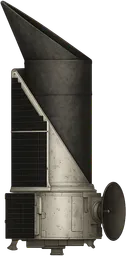 Kepler space telescope4.7 mThe Kepler space telescope was a NASA observatory launched to detect planets around other stars by monitoring changes in their brightness.
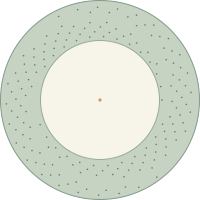 Kuiper Belt outer orbit50 AUThe Kuiper Belt is a region of the Solar System beyond Neptune containing many icy bodies and dwarf planets.
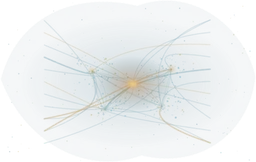 Laniakea-scale region159.4 MpcLaniakea is a vast region of interconnected galaxy clusters defined by shared gravitational flows.
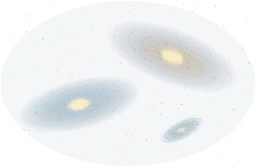 Local Group3.066 MpcThe Local Group is a collection of galaxies that includes the Milky Way, Andromeda, and several smaller galaxies.
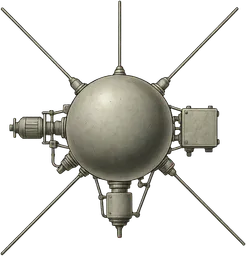 Luna 290 cmLuna 2 was a Soviet spacecraft that became the first human-made object to impact the Moon in 1959.
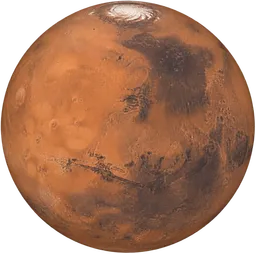 Mars6,779 kmMars is a rocky planet orbiting the Sun, with a reddish surface due to iron oxide.
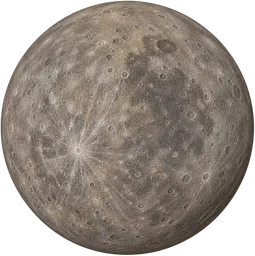 Mercury4,879 kmMercury is a rocky planet orbiting closest to the Sun in the Solar System.
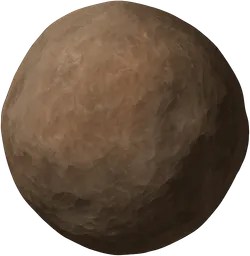 Metis43 kmMetis is an irregularly shaped inner moon of Jupiter, orbiting close to the planet's cloud tops.Milky Way30.66 kpcThe Milky Way is a spiral galaxy containing hundreds of billions of stars, including our Solar System.
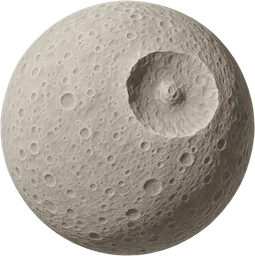 Mimas396.4 kmMimas is an icy moon of Saturn, visually dominated by the large Herschel impact crater.
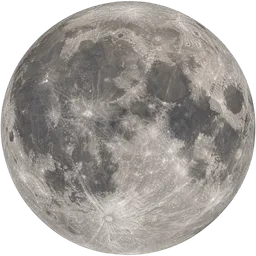 Moon3,475 kmThe Moon is Earth’s natural satellite and the brightest large object in Earth’s night sky.
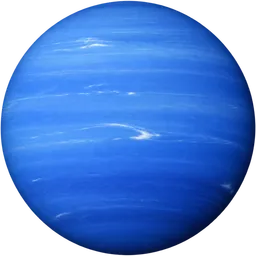 Neptune49,240 kmNeptune is an ice giant planet with a deep blue atmosphere, orbiting the Sun beyond Uranus.Neptune’s orbital distance30.11 AUNeptune’s orbital distance is the average separation between Neptune and the Sun.
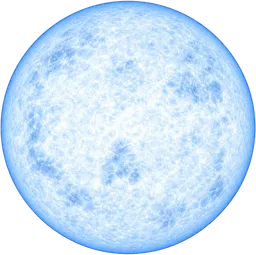 Neutron star20 kmA neutron star is the dense remnant core left after a massive star explodes as a supernova, composed mostly of neutrons.
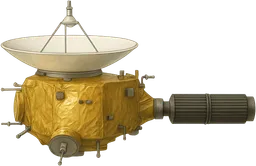 New Horizons spacecraft2.2 mNew Horizons is a NASA spacecraft launched to study Pluto and the Kuiper Belt, carrying scientific instruments and powered by a radioisotope generator.
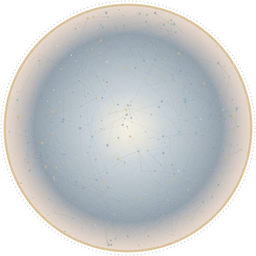 Observable universe28.21 GpcThe observable universe is the region from which light or other signals have had time to reach us since the early universe.
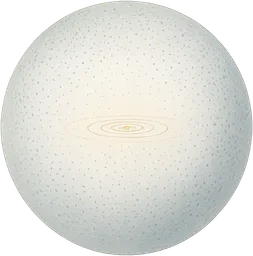 Oort Cloud3.163 lyThe Oort Cloud is a distant, roughly spherical shell of icy objects believed to surround the Solar System and supply long-period comets.
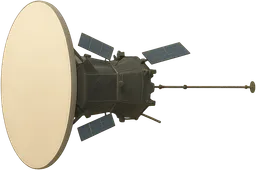 Parker Solar Probe3 mThe Parker Solar Probe is a NASA spacecraft launched to study the Sun’s outer atmosphere at close range.
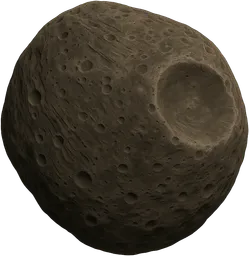 Phobos22.53 kmPhobos is the larger and innermost moon of Mars, notable for its irregular shape and heavily cratered surface.
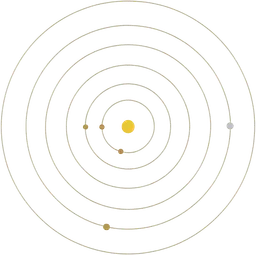 Planetary Solar System60.22 AUThe Solar System is the collection of the Sun and all objects gravitationally bound to it, including planets, moons, and smaller bodies.
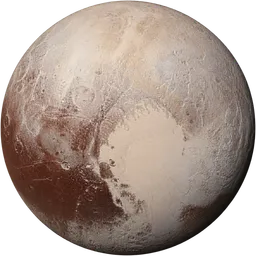 Pluto2,377 kmPluto is a dwarf planet in the Kuiper Belt, composed of rock and ice and orbiting the Sun.Proxima Centauri214,300 kmProxima Centauri is a red dwarf star and the closest known star to the Sun.Red giant0.465 AUA red giant is a star that has expanded and cooled after exhausting the hydrogen in its core.
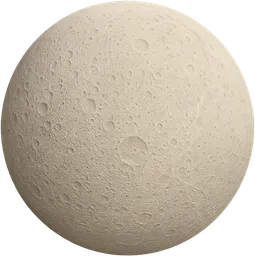 Rhea1,528 kmRhea is an icy moon of Saturn with a heavily cratered surface and bright fractures.
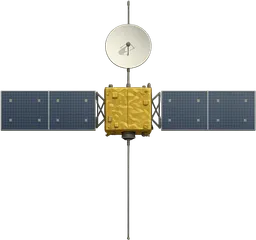 Rosetta spacecraft32 mRosetta was an ESA spacecraft launched to study comet 67P/Churyumov–Gerasimenko, carrying the Philae lander and powered by solar arrays.
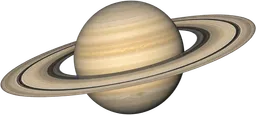 Saturn116,500 kmSaturn is a giant planet made mostly of hydrogen and helium, distinguished by its extensive ring system.
 Saturn V110.6 mThe Saturn V was a multi-stage rocket developed by NASA to launch astronauts to the Moon during the Apollo programme.Sirius A2,379,000 kmSirius A is the brighter main-sequence star in the Sirius binary system.
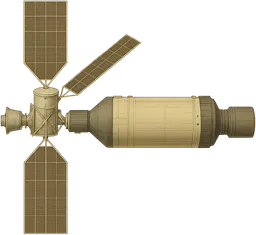 Skylab36.1 mSkylab was the first American space station, used for scientific experiments and crewed missions in Earth orbit during the 1970s.
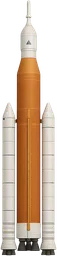 Space Launch System Block 198.1 mSpace Launch System Block 1 is NASA’s heavy-lift rocket designed for launching deep space missions beyond Earth orbit.
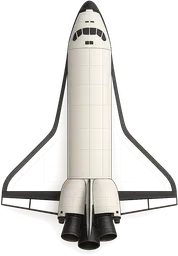 Space Shuttle orbiter37.24 mA Space Shuttle orbiter was a reusable winged spacecraft that carried crews and cargo between Earth and low orbit.
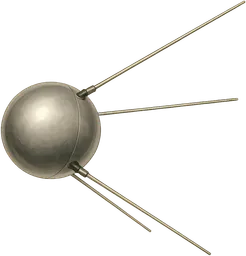 Sputnik 158 cmSputnik 1 was the first artificial satellite launched into Earth orbit by the Soviet Union in 1957.
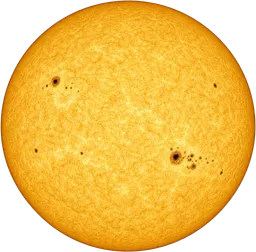 Sun1,391,000 kmThe Sun is the star at the centre of the Solar System.
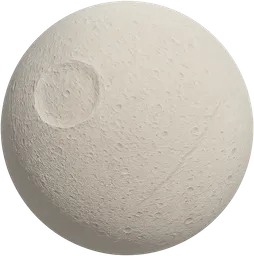 Tethys1,062 kmTethys is a mid-sized icy moon of Saturn, notable for its large impact basin and surface fractures.
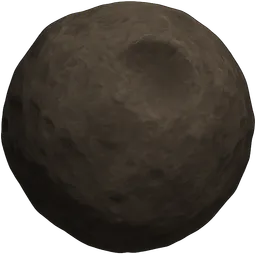 Thebe98.6 kmThebe is a small, irregular inner moon of Jupiter that orbits close to the planet within its ring system.
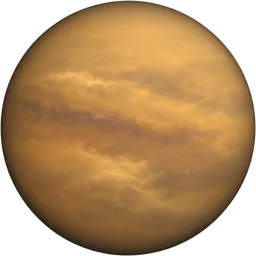 Titan5,150 kmTitan is a natural satellite of Saturn, with a thick nitrogen-rich atmosphere and surface lakes of hydrocarbons.
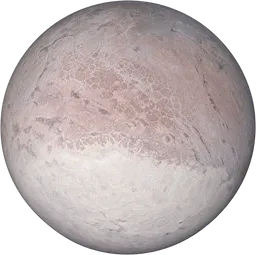 Triton2,705 kmTriton is a natural satellite of Neptune, with a retrograde orbit and a surface of frozen nitrogen.
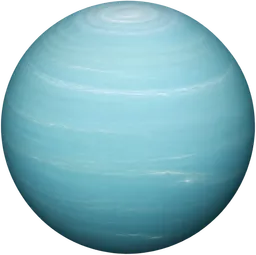 Uranus50,720 kmUranus is an ice giant planet with a blue-green atmosphere, orbiting the Sun on its side.
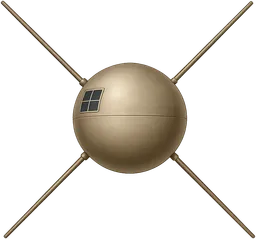 Vanguard 116.5 cmVanguard 1 is an early American satellite launched in 1958, notable for being the oldest human-made object still in orbit.
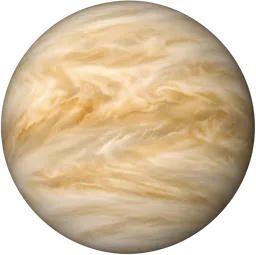 Venus12,100 kmVenus is a rocky planet orbiting the Sun, covered by thick clouds of carbon dioxide and sulphuric acid.
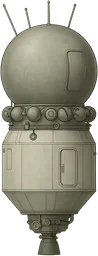 Vostok 1 spacecraft4.4 mThe Vostok 1 spacecraft carried Yuri Gagarin, the first human to orbit Earth, during his 1961 spaceflight.
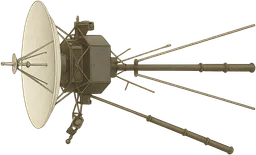 Voyager 1 spacecraft3.66 mVoyager 1 is a NASA space probe launched in 1977 to study the outer planets and now travels through interstellar space.
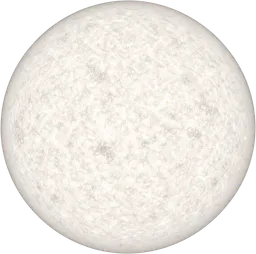 White dwarf12,000 kmA white dwarf is the dense, hot remnant core left behind after a star like the Sun has exhausted its nuclear fuel and shed its outer layers.