
Rosetta spacecraft
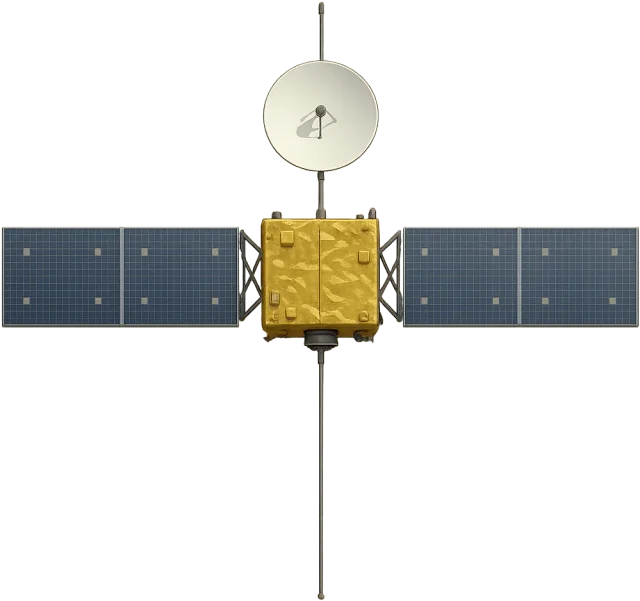
Rosetta was an ESA spacecraft launched to study comet 67P/Churyumov–Gerasimenko, carrying the Philae lander and powered by solar arrays.
Also known as: Rosetta comet spacecraft, Rosetta probe
How big is it?
32 m · deployed solar-array span
Deployed solar-array span · approximate
Typical recorded range: 31 m to 33 m.
A little perspective
Rosetta spacecraft vs Lockheed SR-71 Blackbird: length comparison
The overall length of the Lockheed SR-71 Blackbird is about 1.02 times the deployed solar-array span of the Rosetta spacecraft.
Rosetta was an ESA spacecraft launched to study comet 67P/Churyumov–Gerasimenko, carrying the Philae lander and powered by solar arrays.
The Lockheed SR-71 Blackbird is a long-range, high-altitude reconnaissance aircraft developed for the United States Air Force during the Cold War.
Both rulers start at the same zero and share one linear scale. Artwork keeps its original proportions.
Measurements, assumptions & sources +
Rosetta spacecraft
Deployed solar-array span: 32 m; approximate; range 31 m–33 m.
ESA’s Rosetta spacecraft spanned approximately 32 m across its two deployed solar-array wings and had a launch mass near 3,000 kg. The Philae lander is included in launch mass, not shown as a separate body.
The marked deployed solar-array span is calibrated. Unmeasured illustration details are representative.
Lockheed SR-71 Blackbird
Overall length: 32.7 m; specified; range 32.6 m–32.8 m.
A rounded SR-71 reference: 32.7 m long, 16.9 m span, about 78 t maximum takeoff mass and roughly 980 m/s at high-speed cruise. Mission profile changes speed and mass.
NASA Armstrong — SR-71 Blackbird
The marked overall length is calibrated. Unmeasured illustration details are representative.
Use the visual comparison to explore its scale, then check the measurements and sources.
Change your perspective
Put it next to…
Choose a suggestion to redraw the comparison, or open its page to learn what it is.
Why this measurement?
Why we use 32 m
We compare the deployed solar-array span of the Rosetta spacecraft. This is an estimate; check the notes for its rounding and uncertainty. The recorded range is 31 m to 33 m.
ESA’s Rosetta spacecraft spanned approximately 32 m across its two deployed solar-array wings and had a launch mass near 3,000 kg. The Philae lander is included in launch mass, not shown as a separate body.
The marked horizontal span follows the measured feature, not the edges of the image. How calibrated comparisons work →
Recorded properties
Dimensions and measurements
| Property | Selected value | Recorded range | Basis |
|---|---|---|---|
| 32 m | 31 m to 33 m | approximate | |
| 3 t | 2.9 t to 3.1 t | approximate |
Around this scale
Explore nearby values.
Compare examples with lower, similar and higher values. Each card names the measurement being compared.
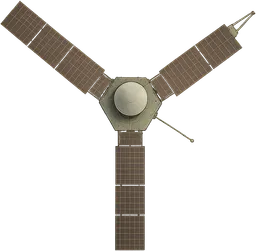 Nearest lower valuePlanets, moons and spaceJuno spacecraft20 mDeployed solar-array spanJuno is a NASA spacecraft sent to study Jupiter’s atmosphere, magnetic field and structure, powered by three large solar arrays.
 Around the same scaleVehicles and transportLockheed SR-71 Blackbird32.7 mOverall lengthThe Lockheed SR-71 Blackbird is a long-range, high-altitude reconnaissance aircraft developed for the United States Air Force during the Cold War.
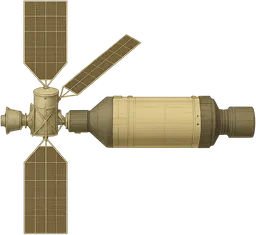 Nearest higher valuePlanets, moons and spaceSkylab36.1 mOverall orbital lengthSkylab was the first American space station, used for scientific experiments and crewed missions in Earth orbit during the 1970s.
Sources and method
Want to check the number?
The source records and measurement method remain available for inspection.
- ESA — Rosetta factsheetDeployed spacecraft dimensions, launch mass and Philae mission configuration.
There’s always another scale
Follow your curiosity.
SpaceJuno spacecraft20 mJuno is a NASA spacecraft sent to study Jupiter’s atmosphere, magnetic field and structure, powered by three large solar arrays.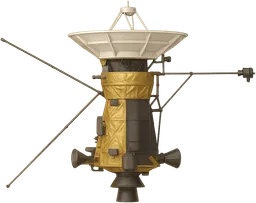 SpaceCassini spacecraft6.8 mThe Cassini spacecraft was a NASA probe launched to study Saturn and its moons, carrying scientific instruments and the Huygens lander.TransportLockheed SR-71 Blackbird32.7 mThe Lockheed SR-71 Blackbird is a long-range, high-altitude reconnaissance aircraft developed for the United States Air Force during the Cold War.
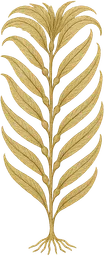 Living thingsGiant kelp plant30 mGiant kelp is a large brown alga that grows from the seafloor and can form dense underwater forests.SpaceSkylab36.1 mSkylab was the first American space station, used for scientific experiments and crewed missions in Earth orbit during the 1970s.
 SportDoubles tennis court23.77 mA doubles tennis court is the marked playing surface used for tennis with the outer doubles sidelines included.
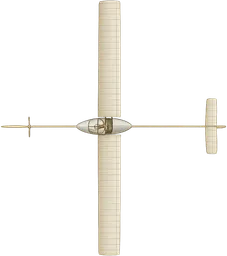 TransportHuman-powered aircraft28.7 mA human-powered aircraft is a lightweight aeroplane propelled solely by the pilot using pedals to drive a propeller.
 SportSingles tennis court23.77 mA singles tennis court is a rectangular surface with marked lines used for playing one-on-one tennis matches.