
Blue whale
A blue whale is a baleen whale that feeds by filtering small animals from seawater. It is the largest living animal known.
Also known as: whale
How big is it?
25 m long
Also 82.02 ft
Nose-to-tail length · representative

A little perspective
Blue whale vs Double-decker bus: length comparison
A blue whale is about 2.27 times as long as a double-decker bus.

A blue whale is a baleen whale that feeds by filtering small animals from seawater.
A double-decker bus is a passenger vehicle with two levels, used for public transport.
Both rulers start at the same zero and share one linear scale. Artwork keeps its original proportions.
Measurements, assumptions & sources +
Blue whale
Nose-to-tail length: 25 m; representative.
A chosen 25 m, 100 tonne adult blue whale (Balaenoptera musculus). Population, sex and age matter: this is a representative comparison specimen, not a record animal.
The marked nose-to-tail length is calibrated. Unmeasured illustration details are representative.
Double-decker bus
Length: 11 m; example.
An 11 m long, 12 tonne example. Model and passenger load vary.
Defined examples — our methodology
The marked length is calibrated. Unmeasured illustration details are representative.
Use the visual comparison to explore its scale, then check the measurements and sources.
Change your perspective
Put it next to…
Choose a suggestion to redraw the comparison, or open its page to learn what it is.
Why this measurement?
Why we use 25 m
We compare the nose-to-tail length of a blue whale. This is a representative comparison value; individual specimens or conditions can vary.
A chosen 25 m, 100 tonne adult blue whale (Balaenoptera musculus). Population, sex and age matter: this is a representative comparison specimen, not a record animal.
The marked horizontal span follows the measured feature, not the edges of the image. How calibrated comparisons work →
Recorded properties
Dimensions and measurements
| Property | Selected value | Recorded range | Basis |
|---|---|---|---|
| 100 t | Not recorded | representative | |
| 25 m | Not recorded | representative |
Around this scale
Explore nearby values.
Compare examples with lower, similar and higher values. Each card names the measurement being compared.
 Nearest lower valueSport and equipmentDoubles tennis court23.77 mLengthA doubles tennis court is the marked playing surface used for tennis with the outer doubles sidelines included.
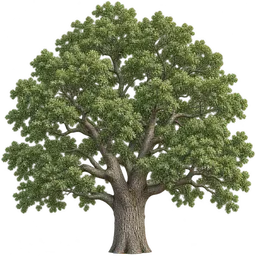 Around the same scaleLiving thingsOak tree25 mHeightAn oak tree is a deciduous tree valued for its strong wood and distinctive lobed leaves.
 Nearest higher valueLiving thingsGiant kelp plant30 mRepresentative full thallus lengthGiant kelp is a large brown alga that grows from the seafloor and can form dense underwater forests.
Sources and method
Want to check the number?
The source records and measurement method remain available for inspection.
- NOAA Fisheries — Blue whaleLengths and masses vary strongly with population and sex. The 25 m, 100 tonne example is not a maximum.
More ways to see it
Curated comparisons
There’s always another scale
Follow your curiosity.
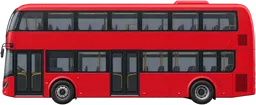 TransportDouble-decker bus11 mA double-decker bus is a passenger vehicle with two levels, used for public transport.
 PeopleHuman1.75 mA human is a primate of the species Homo sapiens, distinguished by habitual upright walking, language and complex tool use.
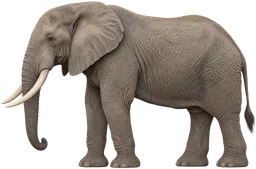 Living thingsAfrican elephant3.3 mAn African elephant is a large plant-eating mammal recognised by its trunk, tusks and broad ears.
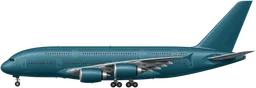 TransportAirbus A38072.7 mThe Airbus A380 is a double-deck, wide-body passenger aeroplane built for long-haul flights.
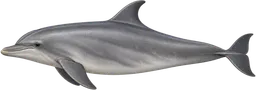 Living thingsBottlenose dolphin2.5 mA bottlenose dolphin is a marine mammal with a streamlined body, prominent dorsal fin and a short beak-like snout.SportDoubles tennis court23.77 mA doubles tennis court is the marked playing surface used for tennis with the outer doubles sidelines included.
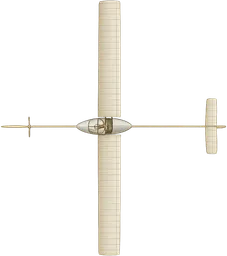 TransportHuman-powered aircraft28.7 mA human-powered aircraft is a lightweight aeroplane propelled solely by the pilot using pedals to drive a propeller.
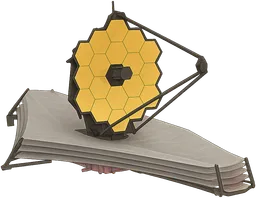 SpaceJames Webb Space Telescope21.2 mThe James Webb Space Telescope is an infrared observatory in space designed to study distant galaxies, stars and planetary systems.
A closer look