Fundamental physics
1.616 × 10⁻³⁵ mA theoretical scale formed from the speed of light, reduced Planck constant and gravitational constant. It is not experimentally established as the smallest possible length. The area and volume are derived mathematical scales.
Fundamental physics
1.682 fmTwice the approximately 0.8409 fm charge radius. The charge distribution has no hard boundary; the illustration is schematic.
Microscopic
10 fmA 10 fm diameter scale model of a heavy nucleus. Nuclear size depends on the number of nucleons.
Microscopic
105.8 pmA diameter of twice the Bohr radius, used as a characteristic scale. An electron cloud has no hard outer surface.
Microscopic
280 pmA chosen 0.28 nm molecular-scale model. Effective molecular size depends on the definition.
Microscopic
2 nmA 2 nm diameter scale for B-form double-stranded DNA. The pictured strand length is illustrative, not the selected measurement.
Microscopic
100 nmA chosen 100 nm viral particle, including the approximate envelope. Viruses vary greatly.
Microscopic
2 µmA 2 µm long illustrative bacterium. Species and growth conditions vary.
Microscopic
7.5 µmA chosen 7.5 µm human red-blood-cell diameter. Real cells vary and deform.
Microscopic
10 µmA 10 µm diameter teaching example, not a universal cell size.
People
70 µmA 70 µm diameter example; hair thickness varies.
Microscopic
500 µmSeparate illustrative measurements: 0.5 mm across; 1 mg mass. Mineral and shape vary.
Living things
5 mmExample 5 mm ant, 3 mg; ants span a wide range of sizes.
Living things
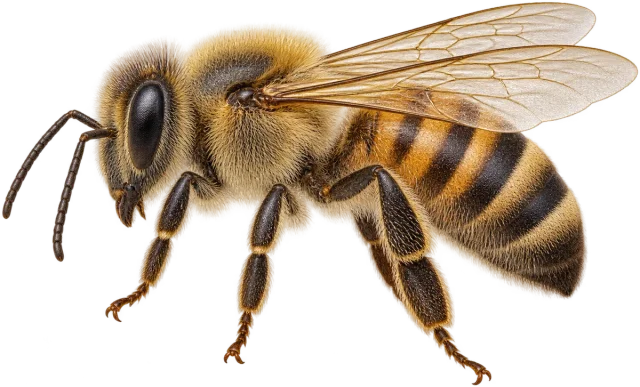
1.5 cmA 15 mm worker honeybee (Apis mellifera), at the upper end of the cited 10–15 mm worker range. Body length excludes antennae, legs and wings. The 100 mg mass is a separate illustrative assumption.
Everyday things
2.426 cmStandard copper-nickel clad US quarter: 24.26 mm diameter, 1.75 mm thickness and 5.67 g mass. Earlier silver quarters do not share this mass. The illustrated relief is representative; the circular rim is the measured span.
Everyday things
15 cmA 150 × 72 mm, 200 g example phone.
People
1.75 mA defined adult standing 1.75 m tall with a mass of 70 kg. This is a consistent comparison specimen, not a global average or health benchmark.
Living things
3.3 mAn adult male African bush elephant (Loxodonta africana). This specimen is 3.3 m at the shoulder and 5,000 kg; neither is a species average. Female elephants are generally smaller.
Living things
25 mA chosen 25 m, 100 tonne adult blue whale (Balaenoptera musculus). Population, sex and age matter: this is a representative comparison specimen, not a record animal.
Transport
76.3 mLufthansa’s 747-8 reference configuration. Mass is maximum takeoff mass, not empty mass; 920 km/h is a quoted cruise speed.
Built world
330 mThe Eiffel Tower is a landmark tower in Paris. This record measures its full 330 m height to the top of the antenna installed in 2022, rather than a roof or occupied-floor height.
Built world
828 mArchitectural height to the top of the spire, 828 m. It is useful to compare consistently stated heights, since roof, antenna and occupied-floor heights differ.
Places
8.849 kmA rounded modern elevation anchor of 8,848.86 m above mean sea level. This is elevation, not the mountain’s height above its local base. The illustrated silhouette uses an implied sea-level baseline; it is not a surveyed mountain cross-section.
Space
20 kmA 20 km, 1.4 solar-mass teaching model. The precise radius depends on stellar mass and the uncertain behaviour of dense matter.
Space
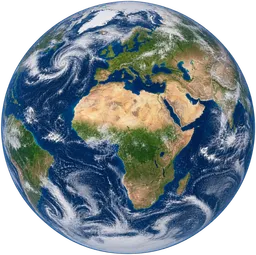
12,740 kmMean-radius spherical model for Earth; actual shape is not perfectly spherical.
Space
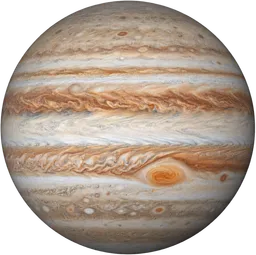
139,800 kmMean-radius spherical model for Jupiter; actual shape is not perfectly spherical. Gravity refers to a conventional atmospheric level, not solid ground.
Space
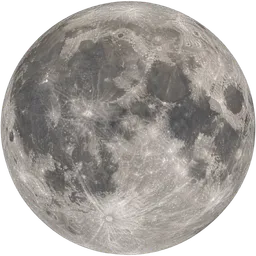
384,400 kmAverage centre-to-centre distance. The Moon’s orbit is not a circle.
Space
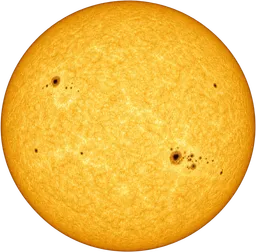
1,391,000 kmOur star, modelled with the IAU nominal solar radius. “Surface” means the visible photosphere. The core is much hotter; this is not a solid surface.
Space
1 AUOne astronomical unit is exactly 149,597,870,700 m. It is a useful Earth–Sun orbital scale, not the separation at every instant. Light takes about 8 minutes 19 seconds to cross it.
Space
60.22 AUA schematic diameter spanning Neptune’s orbit. The Solar System also includes much more distant bodies. The illustration is a boundary diagram; dots identify objects or regions and do not depict their physical diameters.
Space
3.163 lyA conceptual 200,000 AU diameter corresponding to a 100,000 AU outer radius. This distant comet reservoir is inferred, with a very uncertain extent. The illustration is a boundary diagram; dots identify objects or regions and do not depict their physical diameters.
Space
4.25 lyRounded NASA nearby-star distance anchor, 4.25 light-years. The Earth is not at the centre of the galaxy.
Space
7.972 kpcA rounded 26,000 light-year reference from the Solar System to the Milky Way’s centre.
Space
30.66 kpcA rounded 100,000 light-year span of the stellar disk. Faint stars and the dark-matter halo extend farther; galaxies have no crisp rim.
Space
766.5 kpcApproximate distance to our large galactic neighbour. This measures separation, not the galaxy’s diameter.
Space
3.066 MpcA rounded 10 million light-year span for the neighbourhood of galaxies. Galaxy groups have no solid edge.
Space
159.4 MpcAn illustrative 520 million light-year span for a large-scale galaxy-flow region; boundaries depend on the model.
Space
28.21 GpcAbout 92 billion light-years across in present-day comoving distance. Space expanded while the light travelled. The 13.8-billion-year age is a time, not its radius divided by light speed. The total universe may be far larger, possibly infinite.
There is no measured object at every power of ten. This nearest anchor lies 0 orders of magnitude away.

 Illustrative artwork · not to scale
 Illustrative artwork · not to scale
 Illustrative artwork · not to scale
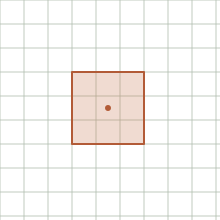 Fundamental physicsPlanck length1.616 × 10⁻³⁵ mThe Planck length is a scale formed from fundamental physical constants.
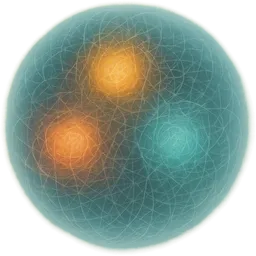 Fundamental physicsProton1.682 fmA proton is a positively charged particle found in the nucleus of atoms, made up of quarks.
 SpaceEarth–Sun distance1 AUThe Earth–Sun distance, or astronomical unit, is the standard measure of separation between Earth and the Sun used in astronomy.
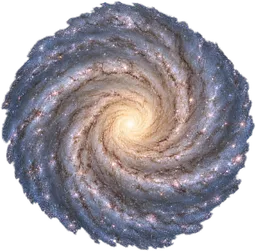 SpaceMilky Way30.66 kpcThe Milky Way is a spiral galaxy containing hundreds of billions of stars, including our Solar System.
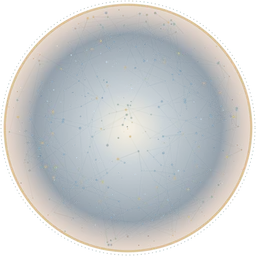 SpaceObservable universe28.21 GpcThe observable universe is the region from which light or other signals have had time to reach us since the early universe.