Observable universe
The observable universe is the region from which light or other signals have had time to reach us since the early universe.
Also known as: universe
How big is it?
28.21 Gpc across
Diameter · cosmological estimate
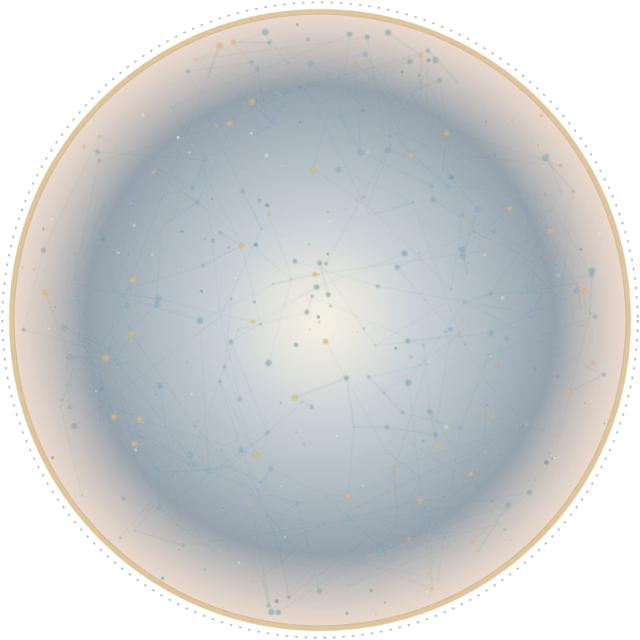
A little perspective
About 177 times the diameter of Laniakea-scale region.
Laniakea-scale region: Laniakea is a vast region of interconnected galaxy clusters defined by shared gravitational flows.
Measurements, assumptions & sources +
Observable universe
About 92 billion light-years across in present-day comoving distance. Space expanded while the light travelled. The 13.8-billion-year age is a time, not its radius divided by light speed. The total universe may be far larger, possibly infinite.
NASA — How big is space? (2025)
The marked diameter is calibrated. Unmeasured illustration details are representative.
Laniakea-scale region
An illustrative 520 million light-year span for a large-scale galaxy-flow region; boundaries depend on the model.
Defined examples — our methodology
The marked diameter is calibrated. Unmeasured illustration details are representative.
Change your perspective
Put it next to…
Choose a suggestion to redraw the comparison, or open its page to learn what it is.
Why this measurement?
Why we use 28.21 Gpc
For comparison, this page uses diameter. The record labels the measurement cosmological estimate; that status is retained wherever the value is compared.
About 92 billion light-years across in present-day comoving distance. Space expanded while the light travelled. The 13.8-billion-year age is a time, not its radius divided by light speed. The total universe may be far larger, possibly infinite.
The marked horizontal span follows the named feature; transparent margins and unmeasured details do not alter it. How calibrated comparisons work →
Recorded properties
Observable universe dimensions and measurements
| Property | Selected value | Recorded range | Basis |
|---|---|---|---|
| 28.21 Gpc | Not recorded | cosmological estimate | |
| 14.1 Gpc | Not recorded | cosmological estimate | |
| 13.8 Gyr | Not recorded | cosmological estimate |
Around this scale
Go smaller. Go bigger.
These links use compatible length records, ordered around the selected value.
Sources and method
Want to check the number?
The source records and measurement method remain available for inspection.
- NASA — How big is space? (2025)Approximately 92 billion light-years across today. This is the observable universe, not a measurement of the total universe.
- NASA — Cosmic historyApproximately 13.8 billion years since the early hot universe in the standard cosmological model.
More ways to see it
Curated comparisons
There’s always another scale
Follow your curiosity.
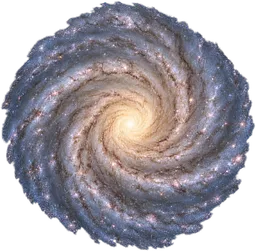 SpaceMilky Way30.66 kpcThe Milky Way is a spiral galaxy containing hundreds of billions of stars, including our Solar System.
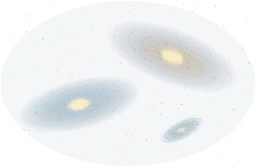 SpaceLocal Group3.066 MpcThe Local Group is a collection of galaxies that includes the Milky Way, Andromeda, and several smaller galaxies.
 Fundamental physicsPlanck length1.616 × 10⁻³⁵ mThe Planck length is a scale formed from fundamental physical constants.
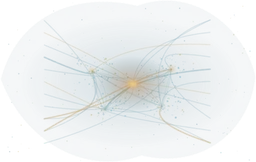 SpaceLaniakea-scale region159.4 MpcLaniakea is a vast region of interconnected galaxy clusters defined by shared gravitational flows.
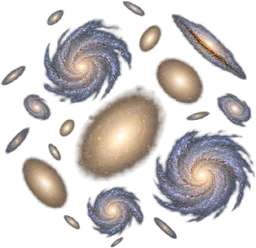 SpaceDistance to the Virgo Cluster16.56 MpcThis is the distance from the Milky Way to the Virgo Cluster, a nearby large cluster of galaxies.
 SpaceDistance to Andromeda766.5 kpcThis is the distance between the Milky Way and the Andromeda galaxy, our nearest large galactic neighbour.SpaceAndromeda galaxy79.72 kpcThe Andromeda galaxy, also called M31, is the nearest large spiral galaxy to the Milky Way.SpaceDistance to the galactic centre7.972 kpcThis is the distance from the Solar System to the centre of the Milky Way galaxy.