
Weight across worlds
Same you.
Different gravity.
Mass stays the same. Weight is the pull of gravity.
Using a custom mass. You can also choose an object with a recorded mass.
Mass, on every world70 kg
Mass stays the same.
Gravity changes the pull.
Weight on Mars259.7 N
3.71 m/s² × 70 kg
37.8% of the force on Earth
A scale calibrated to Earth gravity would display an equivalent of 26.48 kg under this force. That is an Earth-calibrated scale reading; the mass remains 70 kg. Giant planets have no solid surface at their quoted atmospheric reference level.
Using applied mass: 70 kg on Mars.
Experiment 1
One mass, two spring scales
Both scales use the same ideal spring. Mass stays at 70 kg; its gravitational force, and therefore the extension, changes with the world.
Hooke's law: F = k × x, using the shared stiffness k = 1000 N/m. Both drawings use the same 0–1 m display range and the same 50 px unstretched spring length.
Experiment 2
Freefall in a vacuum
Imagine dropping both objects in a vacuum — with no air to slow them down. Gravity is the only force acting on them.
The falling JHB atlas object changes automatically with the selected drop height, with its base following the ruler exactly. Horizontal artwork stays unrotated and is uniformly scaled from its recorded dimension. In a vacuum, objects of different masses fall at the same rate under the same gravity. Here, the difference comes from the gravity of each world. For the Sun and gas giants, the ground is a hypothetical reference level; this is a local constant-gravity model, not atmospheric entry or orbital motion.
Ready to drop both objects.
The numbers behind the pull +
We use F = m × g. Standard Earth gravity is 9.80665 m/s²; actual gravity varies with latitude and altitude. Planetary values are rounded reference values. Jupiter, Saturn, Uranus and Neptune use a conventional atmospheric level. A person could not stand on a solid surface there. For large astronomical objects this is a hypothetical force in a uniform external field, not a model of their self-gravity or mutual interaction.
There’s always another scale
Follow your curiosity.
 PeopleHuman1.75 mA human is a primate of the species Homo sapiens, distinguished by habitual upright walking, language and complex tool use.
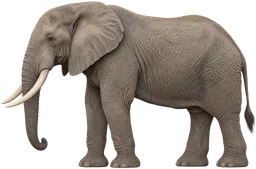 Living thingsAfrican elephant3.3 mAn African elephant is a large plant-eating mammal recognised by its trunk, tusks and broad ears.
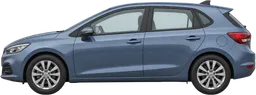 TransportFamily car4.5 mA family car is a motor vehicle designed to carry several passengers and their belongings.
 Living thingsBlue whale25 mA blue whale is a baleen whale that feeds by filtering small animals from seawater.
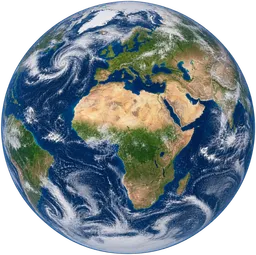 SpaceEarth12,740 kmEarth is the rocky planet on which we live and the third planet from the Sun.
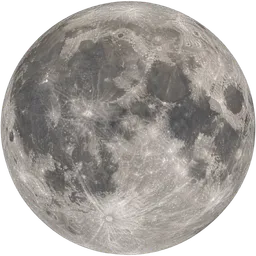 SpaceMoon3,475 kmThe Moon is Earth’s natural satellite and the brightest large object in Earth’s night sky.
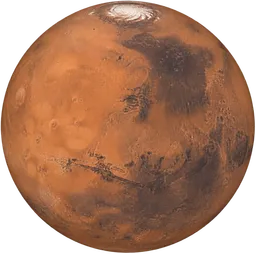 SpaceMars6,779 kmMars is a rocky planet orbiting the Sun, with a reddish surface due to iron oxide.
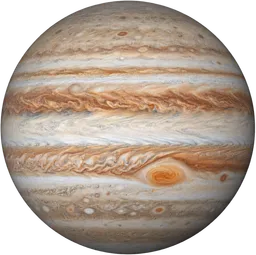 SpaceJupiter139,800 kmJupiter is a giant planet composed mainly of hydrogen and helium, orbiting the Sun beyond the asteroid belt.