
Planetary Solar System
The Solar System is the collection of the Sun and all objects gravitationally bound to it, including planets, moons, and smaller bodies.
How big is it?
60.22 AU across
Diameter · rounded reference
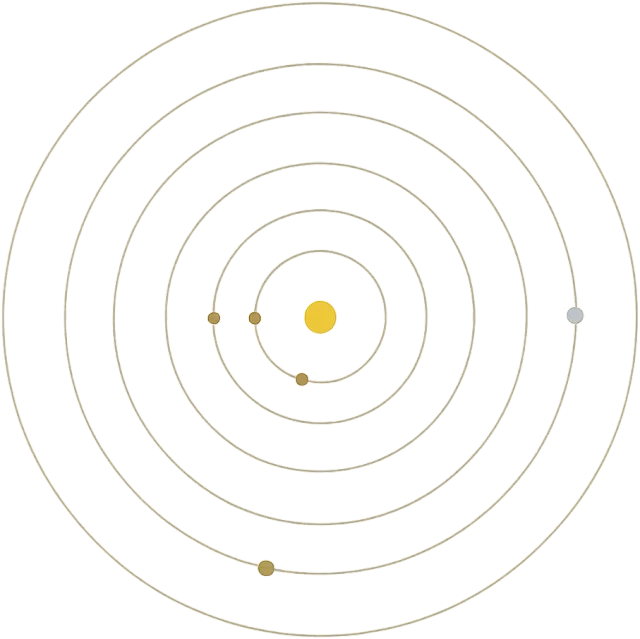
A little perspective
Planetary Solar System vs Neptune’s orbital distance: length comparison
The diameter of the planetary Solar System is about 2 times Neptune’s orbital distance.
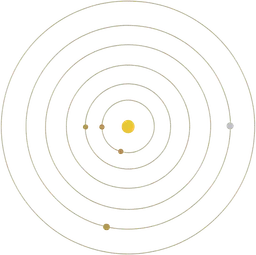
The Solar System is the collection of the Sun and all objects gravitationally bound to it, including planets, moons, and smaller bodies.
Neptune’s orbital distance is the average separation between Neptune and the Sun.
Both rulers start at the same zero and share one linear scale. Artwork keeps its original proportions. A ruler represents the selected distance or a measurement not visible in this view.
Measurements, assumptions & sources +
Planetary Solar System
Diameter: 60.22 AU; rounded reference.
A schematic diameter spanning Neptune’s orbit. The Solar System also includes much more distant bodies. The illustration is a boundary diagram; dots identify objects or regions and do not depict their physical diameters.
Defined examples — our methodology
The marked diameter is calibrated. Unmeasured illustration details are representative.
Neptune’s orbital distance
Distance: 30.11 AU; rounded reference.
A rounded 30.11 AU semi-major-axis reference, not today’s distance.
Defined examples — our methodology
The marked distance is calibrated. Unmeasured illustration details are representative.
Use the visual comparison to explore its scale, then check the measurements and sources.
Change your perspective
Put it next to…
Choose a suggestion to redraw the comparison, or open its page to learn what it is.
Why this measurement?
Why we use 60.22 AU
We compare the diameter of the planetary Solar System. This is a rounded comparison value; check the notes for its source and scope.
A schematic diameter spanning Neptune’s orbit. The Solar System also includes much more distant bodies. The illustration is a boundary diagram; dots identify objects or regions and do not depict their physical diameters.
The marked horizontal span follows the measured feature, not the edges of the image. How calibrated comparisons work →
Recorded properties
Dimensions and measurements
| Property | Selected value | Recorded range | Basis |
|---|---|---|---|
| 60.22 AU | Not recorded | rounded reference |
Around this scale
Explore nearby values.
Compare examples with lower, similar and higher values. Each card names the measurement being compared.
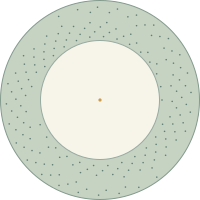 Nearest lower valuePlanets, moons and spaceKuiper Belt outer orbit50 AUDistanceThe Kuiper Belt is a region of the Solar System beyond Neptune containing many icy bodies and dwarf planets.
 Around the same scalePlanets, moons and spaceNeptune’s orbital distance30.11 AUDistanceNeptune’s orbital distance is the average separation between Neptune and the Sun.
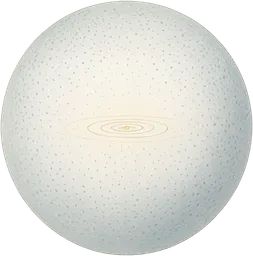 Nearest higher valuePlanets, moons and spaceOort Cloud3.163 lyDiameterThe Oort Cloud is a distant, roughly spherical shell of icy objects believed to surround the Solar System and supply long-period comets.
Sources and method
Want to check the number?
The source records and measurement method remain available for inspection.
More ways to see it
Curated comparisons
There’s always another scale
Follow your curiosity.
SpaceEarth–Sun distance1 AUThe Earth–Sun distance, or astronomical unit, is the standard measure of separation between Earth and the Sun used in astronomy.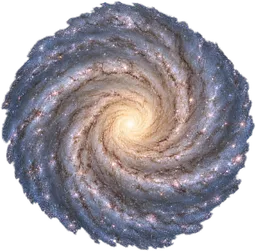 SpaceMilky Way30.66 kpcThe Milky Way is a spiral galaxy containing hundreds of billions of stars, including our Solar System.
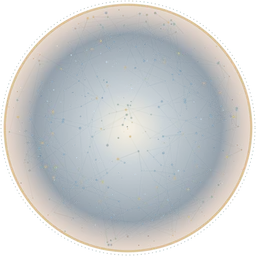 SpaceObservable universe28.21 GpcThe observable universe is the region from which light or other signals have had time to reach us since the early universe.SpaceNeptune’s orbital distance30.11 AUNeptune’s orbital distance is the average separation between Neptune and the Sun.SpaceKuiper Belt outer orbit50 AUThe Kuiper Belt is a region of the Solar System beyond Neptune containing many icy bodies and dwarf planets.
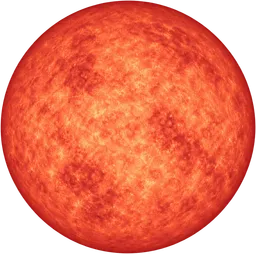 SpaceBetelgeuse6.511 AUBetelgeuse is a red supergiant star in the constellation Orion that changes in brightness over time.SpaceRed giant0.465 AUA red giant is a star that has expanded and cooled after exhausting the hydrogen in its core.SpaceDistance to Proxima Centauri4.25 lyThis is the distance from the Sun to Proxima Centauri, the closest known star to our Solar System.