Red giant
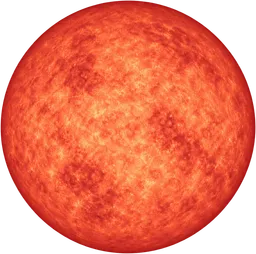
A red giant is a star that has expanded and cooled after exhausting the hydrogen in its core.
How big is it?
0.465 AU across
Diameter · rounded model
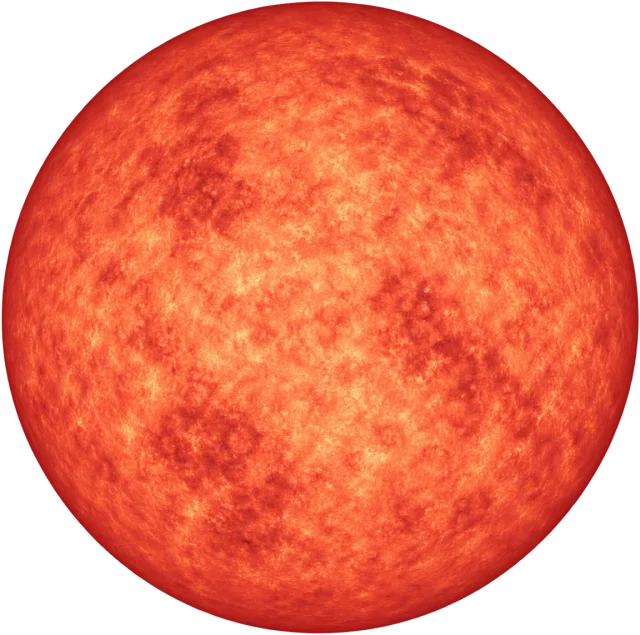
A little perspective
Earth–Sun distance is about 2.15 times larger on this measurement.
Earth–Sun distance: The Earth–Sun distance, or astronomical unit, is the standard measure of separation between Earth and the Sun used in astronomy.
Measurements, assumptions & sources +
Red giant
An explicitly chosen giant-star example, not a universal evolutionary stage.
Defined examples — our methodology
The marked diameter is calibrated. Unmeasured illustration details are representative.
Earth–Sun distance
One astronomical unit is exactly 149,597,870,700 m. It is a useful Earth–Sun orbital scale, not the separation at every instant. Light takes about 8 minutes 19 seconds to cross it.
NIST — 2022 CODATA fundamental constants
The marked distance is calibrated. Unmeasured illustration details are representative.
Change your perspective
Put it next to…
Choose a suggestion to redraw the comparison, or open its page to learn what it is.
Why this measurement?
Why we use 0.465 AU
For comparison, this page uses diameter. This is labelled rounded model: an explicit comparison model rather than a claim that every example has the same value.
An explicitly chosen giant-star example, not a universal evolutionary stage.
The marked horizontal span follows the named feature; transparent margins and unmeasured details do not alter it. How calibrated comparisons work →
Recorded properties
Red giant dimensions and measurements
| Property | Selected value | Recorded range | Basis |
|---|---|---|---|
| 0.465 AU | Not recorded | rounded model | |
| 1.2 M☉ | Not recorded | rounded model |
Around this scale
Go smaller. Go bigger.
These links use compatible length records, ordered around the selected value.
Sources and method
Want to check the number?
The source records and measurement method remain available for inspection.
There’s always another scale
Follow your curiosity.
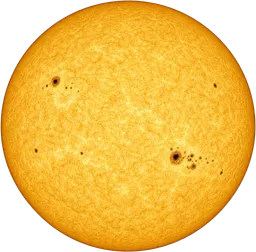 SpaceSun1,391,000 kmThe Sun is the star at the centre of the Solar System.
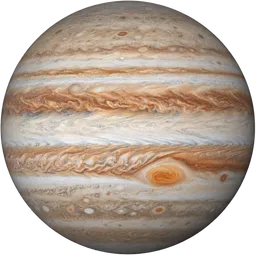 SpaceJupiter139,800 kmJupiter is a giant planet composed mainly of hydrogen and helium, orbiting the Sun beyond the asteroid belt.
 SpaceNeutron star20 kmA neutron star is the dense remnant core left after a massive star explodes as a supernova, composed mostly of neutrons.
 SpaceEarth–Sun distance1 AUThe Earth–Sun distance, or astronomical unit, is the standard measure of separation between Earth and the Sun used in astronomy.
 SpaceBetelgeuse6.511 AUBetelgeuse is a red supergiant star in the constellation Orion that changes in brightness over time.SpaceSirius A2,379,000 kmSirius A is the brighter main-sequence star in the Sirius binary system.SpaceNeptune’s orbital distance30.11 AUNeptune’s orbital distance is the average separation between Neptune and the Sun.SpaceEarth–Moon distance384,400 kmThe Earth–Moon distance is the average space between the centres of the Earth and the Moon.