
Earth–Sun distance
The Earth–Sun distance, or astronomical unit, is the standard measure of separation between Earth and the Sun used in astronomy.
Also known as: earth to sun, earth sun distance, distance to the sun, au, astronomical unit
How big is it?
1 AU · distance
Distance · definition
A little perspective
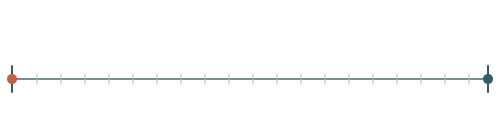
Earth–Sun distance vs Earth–Moon distance: length comparison
The Earth–Sun distance is about 389 times the Earth–Moon distance.
The Earth–Sun distance, or astronomical unit, is the standard measure of separation between Earth and the Sun used in astronomy.
The Earth–Moon distance is the average space between the centres of the Earth and the Moon.
The ring marks the true-scale position of the Earth–Moon distance; it does not show its width. Only the inset is enlarged (×56).
Both rulers start at the same zero and share one linear scale. Artwork keeps its original proportions. A ruler represents the selected distance or a measurement not visible in this view.
Measurements, assumptions & sources +
Earth–Sun distance
Distance: 1 AU; definition.
One astronomical unit is exactly 149,597,870,700 m. It is a useful Earth–Sun orbital scale, not the separation at every instant. Light takes about 8 minutes 19 seconds to cross it.
NIST — 2022 CODATA fundamental constants
The marked distance is calibrated. Unmeasured illustration details are representative.
Earth–Moon distance
Distance: 384,400 km; average.
Average centre-to-centre distance. The Moon’s orbit is not a circle.
NASA — Earth and Moon by the numbers
The marked distance is calibrated. Unmeasured illustration details are representative.
Use the visual comparison to explore its scale, then check the measurements and sources.
Change your perspective
Put it next to…
Choose a suggestion to redraw the comparison, or open its page to learn what it is.
Why this measurement?
Why we use 1 AU
We compare the Earth–Sun distance. This value follows an exact definition or conversion.
One astronomical unit is exactly 149,597,870,700 m. It is a useful Earth–Sun orbital scale, not the separation at every instant. Light takes about 8 minutes 19 seconds to cross it.
The marked horizontal span follows the measured feature, not the edges of the image. How calibrated comparisons work →
Recorded properties
Dimensions and measurements
| Property | Selected value | Recorded range | Basis |
|---|---|---|---|
| 1 AU | Not recorded | definition | |
| 8.317 min | Not recorded | definition |
Around this scale
Explore nearby values.
Compare examples with lower, similar and higher values. Each card names the measurement being compared.
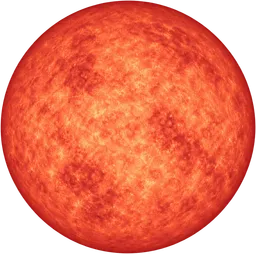 Nearest lower valuePlanets, moons and spaceRed giant0.465 AUDiameterA red giant is a star that has expanded and cooled after exhausting the hydrogen in its core.Nearest higher valuePlanets, moons and spaceBetelgeuse6.511 AUDiameterBetelgeuse is a red supergiant star in the constellation Orion that changes in brightness over time.
Sources and method
Want to check the number?
The source records and measurement method remain available for inspection.
- NIST — 2022 CODATA fundamental constantsRecommended constants with uncertainties; exact SI definitions are distinguished from measured constants.
More ways to see it
Curated comparisons
There’s always another scale
Follow your curiosity.
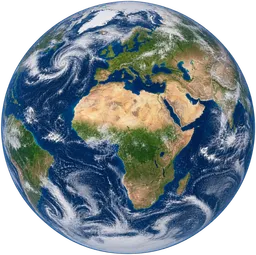 SpaceEarth12,740 kmEarth is the rocky planet on which we live and the third planet from the Sun.
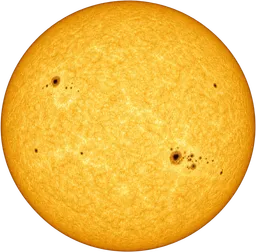 SpaceSun1,391,000 kmThe Sun is the star at the centre of the Solar System.SpaceEarth–Moon distance384,400 kmThe Earth–Moon distance is the average space between the centres of the Earth and the Moon.SpaceNeptune’s orbital distance30.11 AUNeptune’s orbital distance is the average separation between Neptune and the Sun.SpaceRed giant0.465 AUA red giant is a star that has expanded and cooled after exhausting the hydrogen in its core.SpaceBetelgeuse6.511 AUBetelgeuse is a red supergiant star in the constellation Orion that changes in brightness over time.
 SpaceSirius A2,379,000 kmSirius A is the brighter main-sequence star in the Sirius binary system.
 SpaceKuiper Belt outer orbit50 AUThe Kuiper Belt is a region of the Solar System beyond Neptune containing many icy bodies and dwarf planets.