Earth–Sun distance
The Earth–Sun distance, or astronomical unit, is the standard measure of separation between Earth and the Sun used in astronomy.
1 AUDistanceWorlds apart
What are they, and what does the difference actually look like?
Two things. One honest scale.
Meet the pair
The Earth–Sun distance, or astronomical unit, is the standard measure of separation between Earth and the Sun used in astronomy.
1 AUDistanceNeptune’s orbital distance is the average separation between Neptune and the Sun.
30.11 AUDistanceNeptune’s orbital distance has about 30.1 times the distance of Earth–Sun distance.
One astronomical unit is exactly 149,597,870,700 m. It is a useful Earth–Sun orbital scale, not the separation at every instant. Light takes about 8 minutes 19 seconds to cross it.
NIST — 2022 CODATA fundamental constants
The marked distance is calibrated. Unmeasured illustration details are representative.
A rounded 30.11 AU semi-major-axis reference, not today’s distance.
Defined examples — our methodology
The marked distance is calibrated. Unmeasured illustration details are representative.
Change the comparison
Measurement details
The visual compares distance with distance. The records below preserve each value’s basis and caveats.
Distance · definition
One astronomical unit is exactly 149,597,870,700 m. It is a useful Earth–Sun orbital scale, not the separation at every instant. Light takes about 8 minutes 19 seconds to cross it.
Distance · rounded reference
A rounded 30.11 AU semi-major-axis reference, not today’s distance.
The labelled spans and stored measurements determine the scale; unmeasured illustration details do not.
There’s always another scale
SpaceEarth–Sun distance1 AUThe Earth–Sun distance, or astronomical unit, is the standard measure of separation between Earth and the Sun used in astronomy.SpaceNeptune’s orbital distance30.11 AUNeptune’s orbital distance is the average separation between Neptune and the Sun.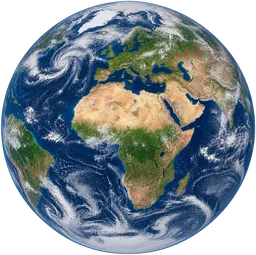 SpaceEarth12,740 kmEarth is the rocky planet on which we live and the third planet from the Sun.
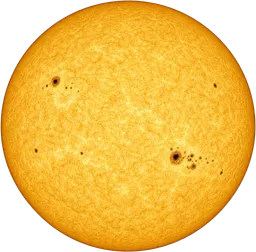 SpaceSun1,391,000 kmThe Sun is the star at the centre of the Solar System.SpaceEarth–Moon distance384,400 kmThe Earth–Moon distance is the average space between the centres of the Earth and the Moon.
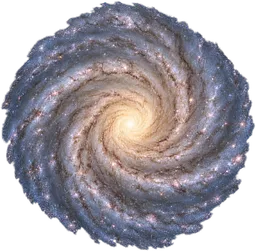 SpaceMilky Way30.66 kpcThe Milky Way is a spiral galaxy containing hundreds of billions of stars, including our Solar System.
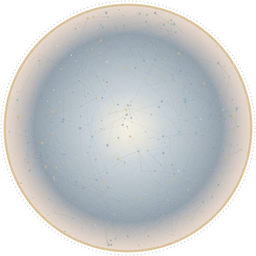 SpaceObservable universe28.21 GpcThe observable universe is the region from which light or other signals have had time to reach us since the early universe.
Side by side