
Neutron star
A neutron star is the dense remnant core left after a massive star explodes as a supernova, composed mostly of neutrons.
How big is it?
20 km across
Diameter · representative
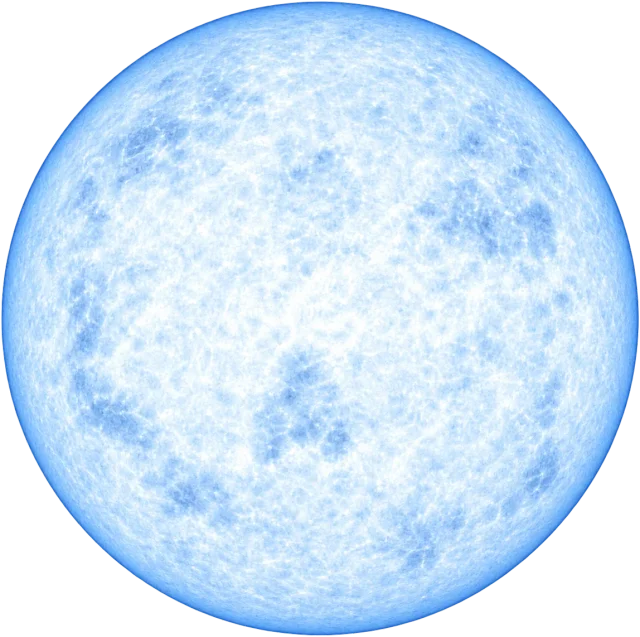
A little perspective
Neutron star vs Phobos: diameter comparison
The mean diameter of Phobos is about 1.13 times the diameter of a neutron star.
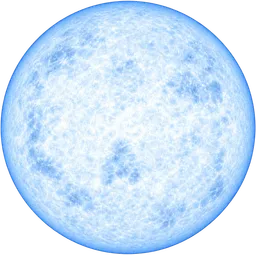
A neutron star is the dense remnant core left after a massive star explodes as a supernova, composed mostly of neutrons.
Phobos is the larger and innermost moon of Mars, notable for its irregular shape and heavily cratered surface.
Both rulers start at the same zero and share one linear scale. Artwork keeps its original proportions.
Measurements, assumptions & sources +
Neutron star
Diameter: 20 km; representative.
A 20 km, 1.4 solar-mass teaching model. The precise radius depends on stellar mass and the uncertain behaviour of dense matter.
The marked diameter is calibrated. Unmeasured illustration details are representative.
Phobos
Representative mean diameter: 22.53 km; approximate; range 18 km–27 km.
Mars’s larger moon is irregular, about 27 × 22 × 18 km. The 22.533 km comparison diameter is representative rather than a spherical edge.
The marked representative mean diameter is calibrated. Unmeasured illustration details are representative.
Use the visual comparison to explore its scale, then check the measurements and sources.
Change your perspective
Put it next to…
Choose a suggestion to redraw the comparison, or open its page to learn what it is.
Why this measurement?
Why we use 20 km
We compare the diameter of a neutron star. This is a representative comparison value; individual specimens or conditions can vary.
A 20 km, 1.4 solar-mass teaching model. The precise radius depends on stellar mass and the uncertain behaviour of dense matter.
The marked horizontal span follows the measured feature, not the edges of the image. How calibrated comparisons work →
Recorded properties
Dimensions and measurements
| Property | Selected value | Recorded range | Basis |
|---|---|---|---|
| 20 km | Not recorded | representative | |
| 1.4 M☉ | Not recorded | representative |
Around this scale
Explore nearby values.
Compare examples with lower, similar and higher values. Each card names the measurement being compared.
 Nearest lower valuePlanets, moons and spaceAdrastea16.4 kmMean-equivalent diameterAdrastea is a small, irregular inner moon of Jupiter, located just outside the planet's main ring.
 Around the same scalePeople and human anatomyOne-hour cycle20 kmDistanceA one-hour cycle is the distance covered by cycling at a constant speed for one hour without stopping.
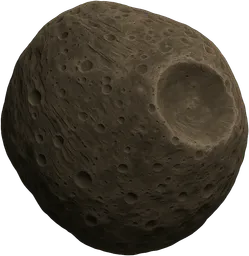 Nearest higher valuePlanets, moons and spacePhobos22.53 kmRepresentative mean diameterPhobos is the larger and innermost moon of Mars, notable for its irregular shape and heavily cratered surface.
Sources and method
Want to check the number?
The source records and measurement method remain available for inspection.
- NASA — Neutron starsCity-sized stellar remnants. Our 20 km, 1.4 solar-mass example is illustrative, not a named measured star.
More ways to see it
Curated comparisons
There’s always another scale
Follow your curiosity.
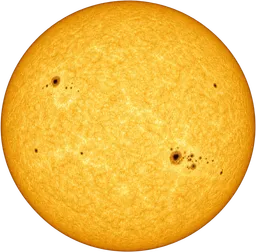 SpaceSun1,391,000 kmThe Sun is the star at the centre of the Solar System.
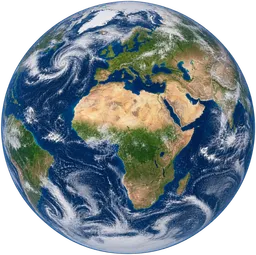 SpaceEarth12,740 kmEarth is the rocky planet on which we live and the third planet from the Sun.
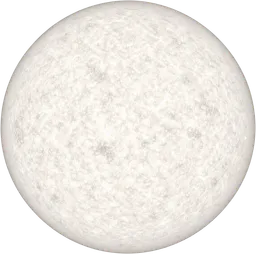 SpaceWhite dwarf12,000 kmA white dwarf is the dense, hot remnant core left behind after a star like the Sun has exhausted its nuclear fuel and shed its outer layers.
 Fundamental physicsProton1.682 fmA proton is a positively charged particle found in the nucleus of atoms, made up of quarks.SpacePhobos22.53 kmPhobos is the larger and innermost moon of Mars, notable for its irregular shape and heavily cratered surface.PeopleOne-hour cycle20 kmA one-hour cycle is the distance covered by cycling at a constant speed for one hour without stopping.PlacesChallenger Deep10.94 kmChallenger Deep is the deepest known point in the Earth's oceans, located in the Mariana Trench.
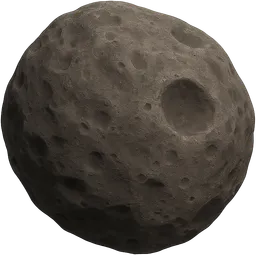 SpaceDeimos12.4 kmDeimos is the smaller and outermost natural satellite of Mars, with an irregular, rocky shape.
A closer look