Adrastea
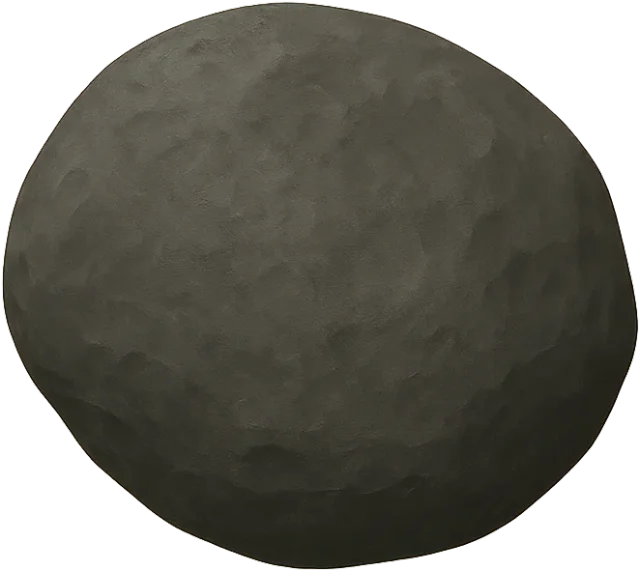
Adrastea is a small, irregular inner moon of Jupiter, located just outside the planet's main ring.
Also known as: Jupiter XV, Adrastea moon
How big is it?
16.4 km across
Mean-equivalent diameter · approximate
Typical recorded range: 15 km to 18 km.
A little perspective
Neutron star is about 1.22 times larger on this measurement.
Neutron star: A neutron star is the dense remnant core left after a massive star explodes as a supernova, composed mostly of neutrons.
Measurements, assumptions & sources +
Adrastea
Jupiter moon Adrastea is an irregular inner satellite with a mean radius near 8.2 km, represented here by a 16.4 km mean-equivalent diameter. Its low-detail illustrated shape remains schematic because the body is poorly resolved.
NASA JPL — Planetary satellite physical parameters
The marked mean-equivalent diameter is calibrated. Unmeasured illustration details are representative.
Neutron star
A 20 km, 1.4 solar-mass teaching model. The precise radius depends on stellar mass and the uncertain behaviour of dense matter.
The marked diameter is calibrated. Unmeasured illustration details are representative.
Change your perspective
Put it next to…
Choose a suggestion to redraw the comparison, or open its page to learn what it is.
Why this measurement?
Why we use 16.4 km
For comparison, this page uses mean-equivalent diameter. This is labelled approximate; the central value is useful for comparison, while real values or measurement solutions can vary. The recorded range is 15 km to 18 km.
Jupiter moon Adrastea is an irregular inner satellite with a mean radius near 8.2 km, represented here by a 16.4 km mean-equivalent diameter. Its low-detail illustrated shape remains schematic because the body is poorly resolved.
The marked horizontal span follows the named feature; transparent margins and unmeasured details do not alter it. How calibrated comparisons work →
Recorded properties
Adrastea dimensions and measurements
| Property | Selected value | Recorded range | Basis |
|---|---|---|---|
| 16.4 km | 15 km to 18 km | approximate |
Around this scale
Go smaller. Go bigger.
These links use compatible length records, ordered around the selected value.
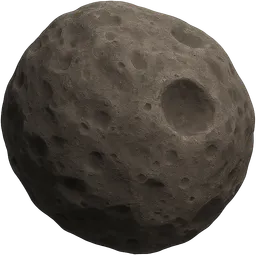 Nearest lower value · SpaceDeimos12.4 kmDeimos is the smaller and outermost natural satellite of Mars, with an irregular, rocky shape.
 Around the same scale · PeopleOne-hour cycle20 kmA one-hour cycle is the distance covered by cycling at a constant speed for one hour without stopping.
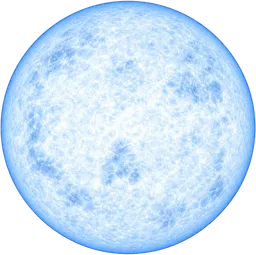 Nearest higher value · SpaceNeutron star20 kmA neutron star is the dense remnant core left after a massive star explodes as a supernova, composed mostly of neutrons.
Sources and method
Want to check the number?
The source records and measurement method remain available for inspection.
- NASA JPL — Planetary satellite physical parametersPublished mean radii and gravitational parameters GM. Spherical areas, volumes, masses and local gravity are explicitly derived.
There’s always another scale
Follow your curiosity.
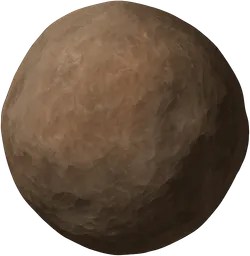 SpaceMetis43 kmMetis is an irregularly shaped inner moon of Jupiter, orbiting close to the planet's cloud tops.
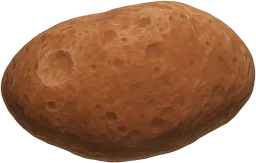 SpaceAmalthea167 kmAmalthea is an irregularly shaped moon of Jupiter with a reddish surface and prominent craters.
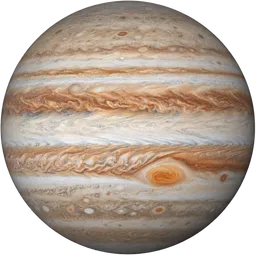 SpaceJupiter139,800 kmJupiter is a giant planet composed mainly of hydrogen and helium, orbiting the Sun beyond the asteroid belt.SpaceNeutron star20 kmA neutron star is the dense remnant core left after a massive star explodes as a supernova, composed mostly of neutrons.PlacesChallenger Deep10.94 kmChallenger Deep is the deepest known point in the Earth's oceans, located in the Mariana Trench.PeopleOne-hour cycle20 kmA one-hour cycle is the distance covered by cycling at a constant speed for one hour without stopping.SpaceDeimos12.4 kmDeimos is the smaller and outermost natural satellite of Mars, with an irregular, rocky shape.
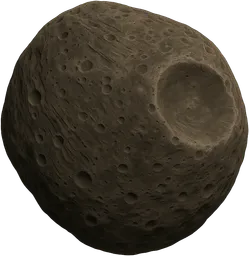 SpacePhobos22.53 kmPhobos is the larger and innermost moon of Mars, notable for its irregular shape and heavily cratered surface.