
Planck length
The Planck length is a scale formed from fundamental physical constants. It marks a regime where present theories of gravity and quantum physics are expected to need a unified description.
Also known as: planck, planck scale
How big is it?
1.616 × 10⁻³⁵ m long
Length · theoretical
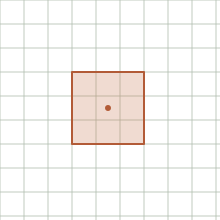
A little perspective
Planck length vs Proton: length comparison
The diameter of a proton is about 1.04 × 10²⁰ times the Planck length.
The Planck length is a scale formed from fundamental physical constants.
The ring marks the true-scale position of the Planck length; it does not show its width. Only the inset is enlarged (×3.32 × 10¹⁹).
A proton is a positively charged particle found in the nucleus of atoms, made up of quarks.
Both rulers start at the same zero and share one linear scale. Artwork keeps its original proportions.
Measurements, assumptions & sources +
Planck length
Length: 1.616 × 10⁻³⁵ m; theoretical.
A theoretical scale formed from the speed of light, reduced Planck constant and gravitational constant. It is not experimentally established as the smallest possible length. The area and volume are derived mathematical scales.
NIST — 2022 CODATA fundamental constants
The marked length is calibrated. Unmeasured illustration details are representative.
Proton
Diameter: 1.682 fm; measured constant.
Twice the approximately 0.8409 fm charge radius. The charge distribution has no hard boundary; the illustration is schematic.
NIST — 2022 CODATA fundamental constants
The marked diameter is calibrated. Unmeasured illustration details are representative.
Use the visual comparison to explore its scale, then check the measurements and sources.
Change your perspective
Put it next to…
Choose a suggestion to redraw the comparison, or open its page to learn what it is.
Why this measurement?
Why we use 1.616 × 10⁻³⁵ m
We compare the Planck length. This is a theoretical value calculated under stated physical assumptions, not a direct observation.
A theoretical scale formed from the speed of light, reduced Planck constant and gravitational constant. It is not experimentally established as the smallest possible length. The area and volume are derived mathematical scales.
The marked horizontal span follows the measured feature, not the edges of the image. How calibrated comparisons work →
Recorded properties
Dimensions and measurements
| Property | Selected value | Recorded range | Basis |
|---|---|---|---|
| 1.616 × 10⁻³⁵ m | Not recorded | theoretical | |
| 2.612 × 10⁻⁷⁰ m² | Not recorded | theoretical | |
| 4.222 × 10⁻¹⁰² L | Not recorded | theoretical | |
| 5.391 × 10⁻⁴⁴ s | Not recorded | theoretical |
Around this scale
Explore nearby values.
Compare examples with lower, similar and higher values. Each card names the measurement being compared.
Sources and method
Want to check the number?
The source records and measurement method remain available for inspection.
- NIST — 2022 CODATA fundamental constantsRecommended constants with uncertainties; exact SI definitions are distinguished from measured constants.
More ways to see it
Curated comparisons
There’s always another scale
Follow your curiosity.
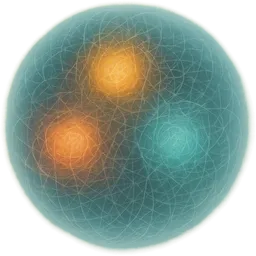 Fundamental physicsProton1.682 fmA proton is a positively charged particle found in the nucleus of atoms, made up of quarks.
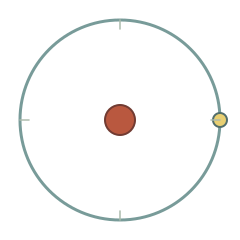 MicroscopicHydrogen atom105.8 pmA hydrogen atom is the simplest neutral atom, with one proton in its nucleus and one electron around it.
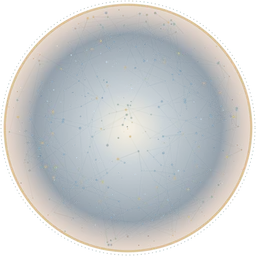 SpaceObservable universe28.21 GpcThe observable universe is the region from which light or other signals have had time to reach us since the early universe.Fundamental physicsPlanck mass21.76 µgThe Planck mass is a theoretical mass scale derived from fundamental constants, significant in discussions of quantum gravity.
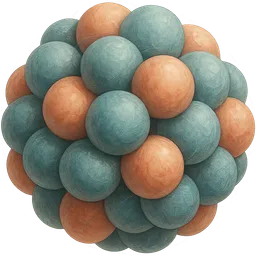 MicroscopicAtomic nucleus10 fmAn atomic nucleus is the compact central part of an atom, made from protons and neutrons.
 Fundamental physicsElectron9.109 × 10⁻³¹ kgAn electron is a fundamental subatomic particle with a negative electric charge, found in atoms and responsible for electricity and chemical bonding.Fundamental physicsBohr radius52.92 pmThe Bohr radius is a fundamental physical constant representing the most probable distance between the nucleus and the electron in a hydrogen atom according to early quantum theory.
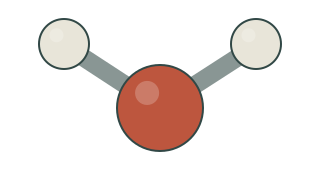 MicroscopicWater molecule280 pmA water molecule is a group of two hydrogen atoms bonded to one oxygen atom.