
Planck mass
The Planck mass is a theoretical mass scale derived from fundamental constants, significant in discussions of quantum gravity.
How big is it?
21.76 µg · mass
Mass · theoretical
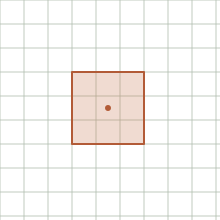
A little perspective
Planck mass vs Salt crystal: mass comparison
The mass of a salt crystal is about 2.76 times the Planck mass.
The Planck mass is a theoretical mass scale derived from fundamental constants, significant in discussions of quantum gravity.
A salt crystal is a small, naturally occurring or manufactured piece of sodium chloride used in food and industry.
Bar length measures mass, not physical size. Both bars start at zero kilograms (kg). Pictures identify the objects only.
Measurements, assumptions & sources +
Planck mass
Mass: 21.76 µg; theoretical.
A theoretical mass scale formed from fundamental constants. It is neither a universal minimum nor a universal maximum mass.
NIST — 2022 CODATA fundamental constants
The marked mass is calibrated. Unmeasured illustration details are representative.
Salt crystal
Mass: 60 µg; defined specimen.
A chosen 0.3 mm table-salt crystal. The irregular illustration is a scale specimen.
An illustrative mass chosen for this teaching specimen, stored independently from its size. Actual composition, hydration and specimen dimensions vary.
Defined examples — our methodology
The marked mass is calibrated. Unmeasured illustration details are representative.
Use the visual comparison to explore its scale, then check the measurements and sources.
Change your perspective
Put it next to…
Choose a suggestion to redraw the comparison, or open its page to learn what it is.
Why this measurement?
Why we use 21.76 µg
We compare the Planck mass. This is a theoretical value calculated under stated physical assumptions, not a direct observation.
A theoretical mass scale formed from fundamental constants. It is neither a universal minimum nor a universal maximum mass.
The picture identifies the subject; the diagram compares the recorded values. How calibrated comparisons work →
Recorded properties
Dimensions and measurements
| Property | Selected value | Recorded range | Basis |
|---|---|---|---|
| 21.76 µg | Not recorded | theoretical |
Around this scale
Explore nearby values.
Compare examples with lower, similar and higher values. Each card names the measurement being compared.
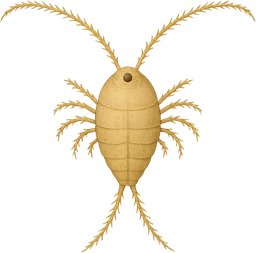 Nearest lower valueLiving thingsCopepod10 µgDefined wet massA copepod is a tiny aquatic crustacean found in marine and freshwater environments, playing a key role in aquatic food webs.
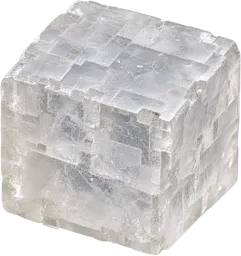 Nearest higher valueMicroscopic objectsSalt crystal60 µgMassA salt crystal is a small, naturally occurring or manufactured piece of sodium chloride used in food and industry.
Sources and method
Want to check the number?
The source records and measurement method remain available for inspection.
- NIST — 2022 CODATA fundamental constantsRecommended constants with uncertainties; exact SI definitions are distinguished from measured constants.
There’s always another scale
Follow your curiosity.
Fundamental physicsPlanck length1.616 × 10⁻³⁵ mThe Planck length is a scale formed from fundamental physical constants. MicroscopicHydrogen atom105.8 pmA hydrogen atom is the simplest neutral atom, with one proton in its nucleus and one electron around it.
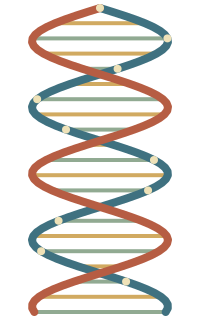 MicroscopicDNA double helix2 nmDNA is the molecule that stores hereditary information in living organisms.MicroscopicSalt crystal300 µmA salt crystal is a small, naturally occurring or manufactured piece of sodium chloride used in food and industry.Living thingsCopepod2 mmA copepod is a tiny aquatic crustacean found in marine and freshwater environments, playing a key role in aquatic food webs.
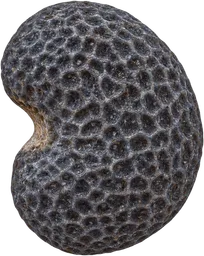 Living thingsPoppy seed1 mmA poppy seed is an edible seed produced by plants in the poppy family and commonly used in breads and other foods.
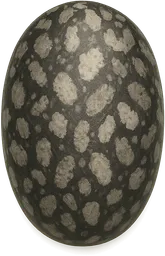 Everyday thingsChia seed2 mmA chia seed is the edible seed of the Salvia hispanica plant, often used in foods such as puddings and cereals.
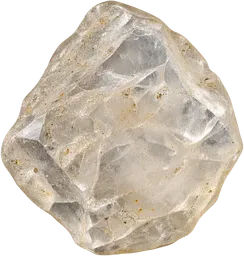 MicroscopicGrain of sand500 µmA grain of sand is a tiny fragment of rock or mineral, commonly found on beaches and in soil.