Glucose molecule
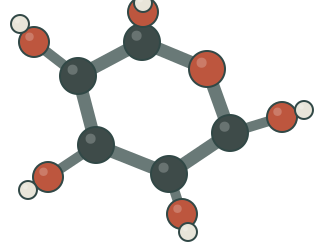
A glucose molecule is a simple sugar used by living cells as a source of chemical energy. It contains carbon, hydrogen and oxygen atoms.
How big is it?
1 nm across
Characteristic size · representative
A little perspective
DNA double helix is about 2 times larger on this measurement.
DNA double helix: DNA is the molecule that stores hereditary information in living organisms.
Measurements, assumptions & sources +
Glucose molecule
A one-nanometre scale model of a glucose molecule; orientation affects its span.
University of Utah — Cell size and scale
The marked characteristic size is calibrated. Unmeasured illustration details are representative.
DNA double helix
A 2 nm diameter scale for B-form double-stranded DNA. The pictured strand length is illustrative, not the selected measurement.
University of Utah — Cell size and scale
The marked helix diameter is calibrated. Unmeasured illustration details are representative.
Change your perspective
Put it next to…
Choose a suggestion to redraw the comparison, or open its page to learn what it is.
Why this measurement?
Why we use 1 nm
For comparison, this page uses characteristic size. This is labelled representative; the central value is useful for comparison, while real values or measurement solutions can vary.
A one-nanometre scale model of a glucose molecule; orientation affects its span.
The marked horizontal span follows the named feature; transparent margins and unmeasured details do not alter it. How calibrated comparisons work →
Recorded properties
Glucose molecule dimensions and measurements
| Property | Selected value | Recorded range | Basis |
|---|---|---|---|
| 1 nm | Not recorded | representative | |
| 2.991 × 10⁻²⁵ kg | Not recorded | representative |
Around this scale
Go smaller. Go bigger.
These links use compatible length records, ordered around the selected value.
Sources and method
Want to check the number?
The source records and measurement method remain available for inspection.
- University of Utah — Cell size and scaleApproximate biological size regimes. Atlas specimens and geometric assumptions are individually labelled.
More ways to see it
Curated comparisons
There’s always another scale
Follow your curiosity.
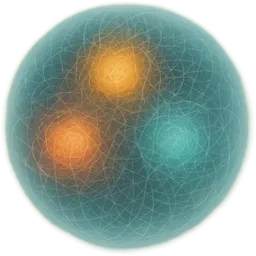 Fundamental physicsProton1.682 fmA proton is a positively charged particle found in the nucleus of atoms, made up of quarks.
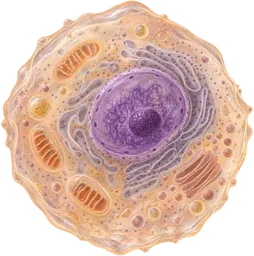 Microscopic10 µm cell10 µmA cell is the basic structural unit of living organisms.
 People70 µm hair70 µmA hair is a slender strand of protein that grows from the skin of humans and other mammals.
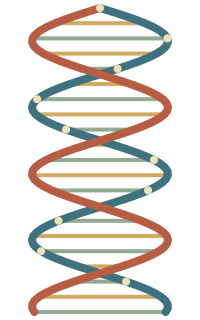 MicroscopicDNA double helix2 nmDNA is the molecule that stores hereditary information in living organisms.
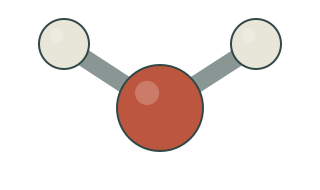 MicroscopicWater molecule280 pmA water molecule is a group of two hydrogen atoms bonded to one oxygen atom.
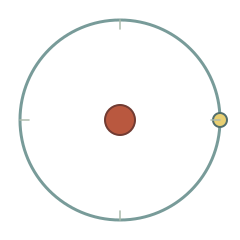 MicroscopicHydrogen atom105.8 pmA hydrogen atom is the simplest neutral atom, with one proton in its nucleus and one electron around it.Fundamental physicsBohr radius52.92 pmThe Bohr radius is a fundamental physical constant representing the most probable distance between the nucleus and the electron in a hydrogen atom according to early quantum theory.
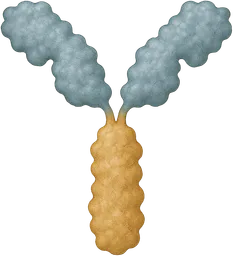 MicroscopicIgG antibody molecule14.5 nmAn IgG antibody molecule is a Y-shaped protein produced by the immune system to identify and neutralise foreign substances.