Explore a category
Microscopic objects,
in proportion.
Explore cells, microorganisms and particles using scientifically useful micrometre and nanometre scales.
Microscopic records often use a characteristic diameter or maximum span. Preparation, state and biological variation can affect the observed measurement.
- Entities
- 21
- Most common primary scale
- Length & distance
- Common measurements
- Diameter, Length, Defined maximum projected span, Characteristic size, Head-to-tail length, Helix diameter
Within this category's most common primary scale, explore Atomic nucleus at 10 fm and Grain of sand at 500 µm. These are navigation anchors, not universal category limits.
21 entities in this category, ordered by name.
No matches here. Try the main search to explore your own quantity.
21 measured entities
Browse microscopic objects
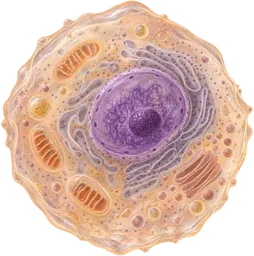 10 µm cell10 µmA cell is the basic structural unit of living organisms.
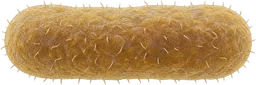 2 µm bacterium2 µmA bacterium is a single-celled microorganism without a membrane-bound nucleus.
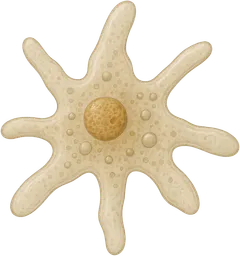 Amoeba cell300 µmAn amoeba cell is a single-celled organism that moves and engulfs food by extending temporary projections called pseudopodia.
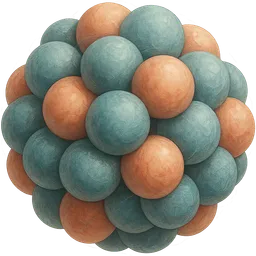 Atomic nucleus10 fmAn atomic nucleus is the compact central part of an atom, made from protons and neutrons.
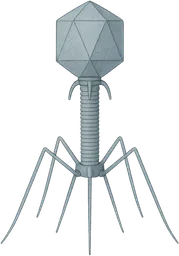 Bacteriophage T4200 nmBacteriophage T4 is a virus that infects bacteria.
 DNA double helix2 nmDNA is the molecule that stores hereditary information in living organisms.
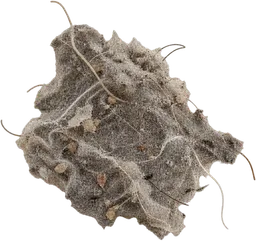 Dust particle10 µmDust is a mixture of tiny solid particles from sources such as soil, fibres, skin and pollen.
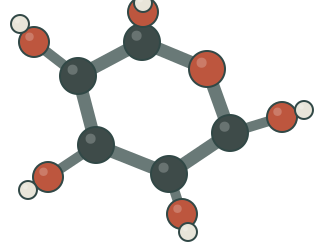 Glucose molecule1 nmA glucose molecule is a simple sugar used by living cells as a source of chemical energy.
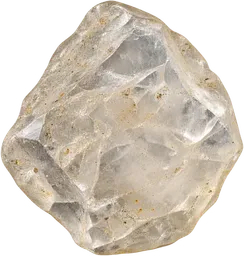 Grain of sand500 µmA grain of sand is a tiny fragment of rock or mineral, commonly found on beaches and in soil.
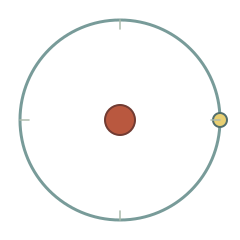 Hydrogen atom105.8 pmA hydrogen atom is the simplest neutral atom, with one proton in its nucleus and one electron around it.
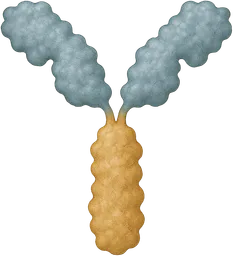 IgG antibody molecule14.5 nmAn IgG antibody molecule is a Y-shaped protein produced by the immune system to identify and neutralise foreign substances.
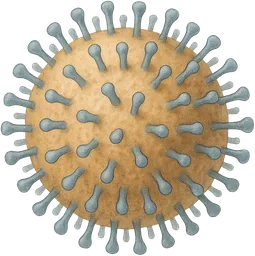 Influenza virion100 nmAn influenza virion is a single infectious particle of the influenza virus, consisting of genetic material inside a lipid envelope.
 Neuron cell body20 µmA neuron cell body, or soma, is the central part of a nerve cell containing its nucleus.
 Platelet3 µmA platelet is a small blood-cell fragment that helps form clots and stop bleeding after a blood vessel is damaged.
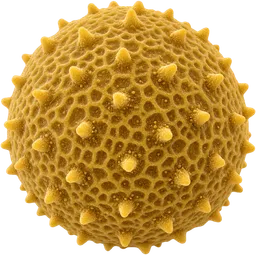 Pollen grain30 µmA pollen grain carries the male reproductive cells of a seed-producing plant.
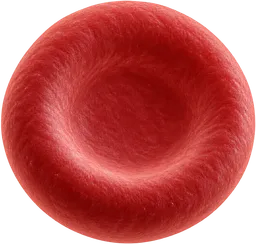 Red blood cell7.5 µmA red blood cell is a specialised blood cell that transports oxygen using haemoglobin.
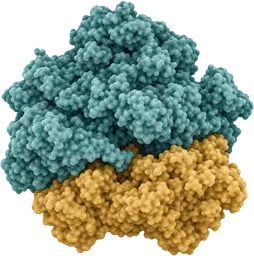 Ribosome25 nmA ribosome is a molecular machine that builds proteins by reading instructions carried by messenger RNA.
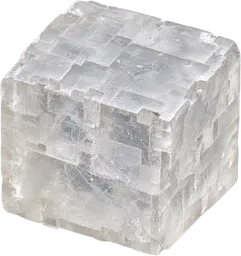 Salt crystal300 µmA salt crystal is a small, naturally occurring or manufactured piece of sodium chloride used in food and industry.
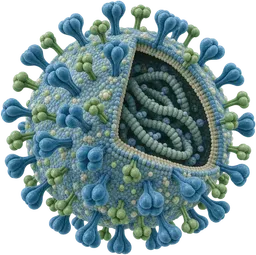 Virus100 nmA virus is an infectious particle containing genetic material inside a protein coat, sometimes with an outer envelope.
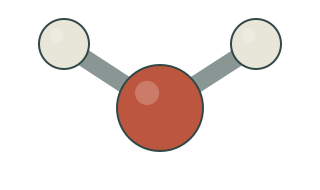 Water molecule280 pmA water molecule is a group of two hydrogen atoms bonded to one oxygen atom.
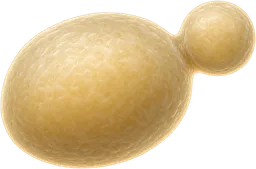 Yeast cell5 µmYeast is a group of single-celled fungi.