
Siphonophore colony
A siphonophore is a floating colony of specialised animals called zooids that function together as one organism-like body.
Also known as: giant siphonophore, siphonophore
How big is it?
40 m · representative extended colony length
Also 131.2 ft
Representative extended colony length · representative
Typical recorded range: 20 m to 50 m.
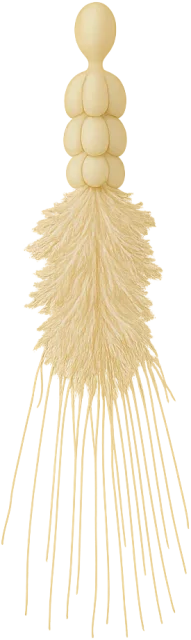
A little perspective
Siphonophore colony vs Space Shuttle orbiter: length comparison
The extended colony length of a siphonophore colony is about 1.07 times the overall orbiter length of a Space Shuttle orbiter.
A siphonophore is a floating colony of specialised animals called zooids that function together as one organism-like body.
A Space Shuttle orbiter was a reusable winged spacecraft that carried crews and cargo between Earth and low orbit.
Both rulers start at the same zero and share one linear scale. Artwork keeps its original proportions. Horizontal rulers compare the selected spans; vertical brackets also identify height on the artwork.
Measurements, assumptions & sources +
Siphonophore colony
Representative extended colony length: 40 m; representative; range 20 m–50 m.
A representative 40 m extended giant siphonophore colony. Siphonophores are colonies of specialised zooids rather than single jellyfish; fragile length changes with posture and observation method.
Schmidt Ocean Institute — Giant siphonophore
The marked representative extended colony length is calibrated. Unmeasured illustration details are representative.
Space Shuttle orbiter
Overall orbiter length: 37.24 m; specified.
A NASA Space Shuttle orbiter measured 37.24 m long, with a 23.79 m wingspan and 17.25 m overall height. External tank and boosters are not included.
NASA Technical Reports Server — Space Shuttle transportation system
The marked overall orbiter length is calibrated. Unmeasured illustration details are representative.
Use the visual comparison to explore its scale, then check the measurements and sources.
Change your perspective
Put it next to…
Choose a suggestion to redraw the comparison, or open its page to learn what it is.
Why this measurement?
Why we use 40 m
We compare the extended colony length of a siphonophore colony. This is a representative comparison value; individual specimens or conditions can vary. The recorded range is 20 m to 50 m.
A representative 40 m extended giant siphonophore colony. Siphonophores are colonies of specialised zooids rather than single jellyfish; fragile length changes with posture and observation method.
The marked vertical span follows the measured feature, not the edges of the image. How calibrated comparisons work →
Recorded properties
Dimensions and measurements
| Property | Selected value | Recorded range | Basis |
|---|---|---|---|
| 40 m | 20 m to 50 m | representative |
Around this scale
Explore nearby values.
Compare examples with lower, similar and higher values. Each card names the measurement being compared.
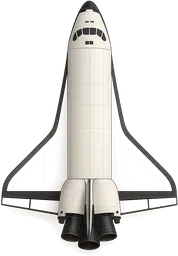 Nearest lower valuePlanets, moons and spaceSpace Shuttle orbiter37.24 mOverall orbiter lengthA Space Shuttle orbiter was a reusable winged spacecraft that carried crews and cargo between Earth and low orbit.
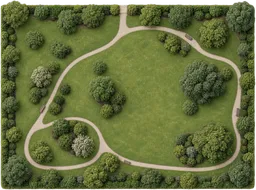 Around the same scalePlaces and natural features50 × 40 m playground40 mWidthA playground is an outdoor space intended for children's recreation and play activities.
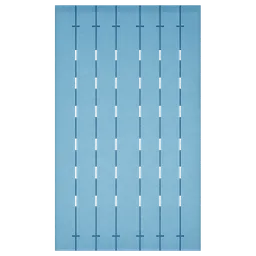 Nearest higher valueSport and equipment50 m swimming pool50 mLengthA 50 m swimming pool is a large pool built for competitive swimming events, including international competitions.
Sources and method
Want to check the number?
The source records and measurement method remain available for inspection.
- Schmidt Ocean Institute — Giant siphonophoreExtended giant-colony observations and colonial zooid anatomy; length is posture- and observation-dependent.
There’s always another scale
Follow your curiosity.
 Living thingsGorgonian sea fan1.5 mA gorgonian sea fan is a colony of small coral-like animals supported by a branching, fan-shaped skeleton.
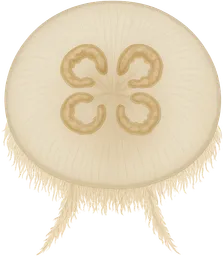 Living thingsMoon jellyfish25 cmA moon jellyfish is a translucent marine animal recognised by the four horseshoe-shaped structures visible through its bell.SpaceSpace Shuttle orbiter37.24 mA Space Shuttle orbiter was a reusable winged spacecraft that carried crews and cargo between Earth and low orbit.
 TransportLockheed SR-71 Blackbird32.7 mThe Lockheed SR-71 Blackbird is a long-range, high-altitude reconnaissance aircraft developed for the United States Air Force during the Cold War.
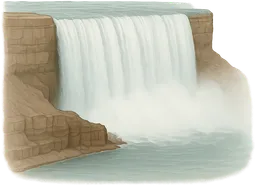 PlacesNiagara Falls51 mNiagara Falls is a group of three waterfalls on the Niagara River between Canada and the United States.
 Living thingsGiant kelp plant30 mGiant kelp is a large brown alga that grows from the seafloor and can form dense underwater forests.
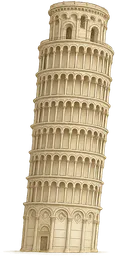 Built worldLeaning Tower of Pisa56 mThe Leaning Tower of Pisa is a medieval freestanding bell tower in Pisa, Italy, famous for its unintended tilt.
 SportDoubles tennis court23.77 mA doubles tennis court is the marked playing surface used for tennis with the outer doubles sidelines included.