
Gaia spacecraft
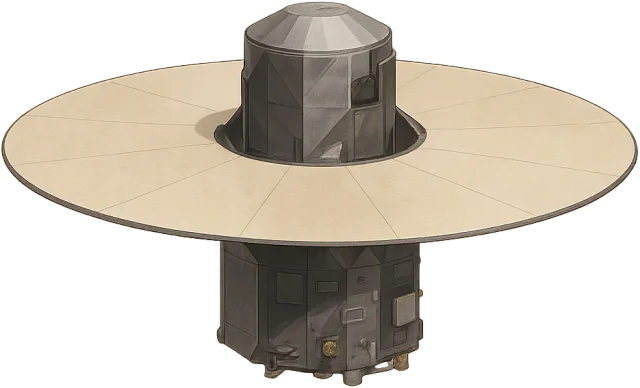
Gaia is a European Space Agency observatory designed to map the positions and motions of stars in the Milky Way.
Also known as: Gaia observatory
How big is it?
3.5 m · approximate observatory height
Approximate observatory height · approximate
Typical recorded range: 3.3 m to 3.7 m.
A little perspective
Gaia spacecraft vs Voyager 1 spacecraft: length comparison
The dish-to-bus span of the Voyager 1 spacecraft is about 1.05 times the observatory height of the Gaia spacecraft.
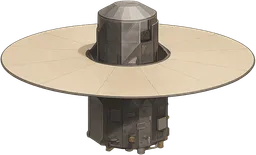
Gaia is a European Space Agency observatory designed to map the positions and motions of stars in the Milky Way.
Voyager 1 is a NASA space probe launched in 1977 to study the outer planets and now travels through interstellar space.
Both rulers start at the same zero and share one linear scale. Artwork keeps its original proportions. Horizontal rulers compare the selected spans; vertical brackets also identify height on the artwork.
Measurements, assumptions & sources +
Gaia spacecraft
Approximate observatory height: 3.5 m; approximate; range 3.3 m–3.7 m.
ESA’s Gaia observatory was approximately 3.5 m high and had a launch mass near 2,030 kg. Its deployed circular sunshield defines a much larger transverse span.
The marked approximate observatory height is calibrated. Unmeasured illustration details are representative.
Voyager 1 spacecraft
Approximate dish-to-bus span: 3.66 m; approximate; range 3.5 m–3.8 m.
Voyager 1 had a launch mass of about 721.9 kg and a main dish-to-bus scale of roughly 3.66 m. Its long magnetometer boom and antennas extend beyond that calibrated span.
The marked approximate dish-to-bus span is calibrated. Unmeasured illustration details are representative.
Use the visual comparison to explore its scale, then check the measurements and sources.
Change your perspective
Put it next to…
Choose a suggestion to redraw the comparison, or open its page to learn what it is.
Why this measurement?
Why we use 3.5 m
We compare the observatory height of the Gaia spacecraft. This is an estimate; check the notes for its rounding and uncertainty. The recorded range is 3.3 m to 3.7 m.
ESA’s Gaia observatory was approximately 3.5 m high and had a launch mass near 2,030 kg. Its deployed circular sunshield defines a much larger transverse span.
The marked vertical span follows the measured feature, not the edges of the image. How calibrated comparisons work →
Recorded properties
Dimensions and measurements
| Property | Selected value | Recorded range | Basis |
|---|---|---|---|
| 3.5 m | 3.3 m to 3.7 m | approximate | |
| 2.03 t | Not recorded | approximate |
Around this scale
Explore nearby values.
Compare examples with lower, similar and higher values. Each card names the measurement being compared.
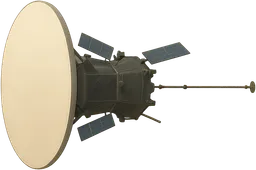 Nearest lower valuePlanets, moons and spaceParker Solar Probe3 mOverall spacecraft heightThe Parker Solar Probe is a NASA spacecraft launched to study the Sun’s outer atmosphere at close range.
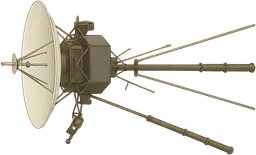 Around the same scalePlanets, moons and spaceVoyager 1 spacecraft3.66 mApproximate dish-to-bus spanVoyager 1 is a NASA space probe launched in 1977 to study the outer planets and now travels through interstellar space.
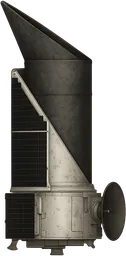 Nearest higher valuePlanets, moons and spaceKepler space telescope4.7 mOverall observatory heightThe Kepler space telescope was a NASA observatory launched to detect planets around other stars by monitoring changes in their brightness.
Sources and method
Want to check the number?
The source records and measurement method remain available for inspection.
- ESA — Gaia factsheetObservatory dimensions, deployed sunshield and launch mass.
There’s always another scale
Follow your curiosity.
SpaceKepler space telescope4.7 mThe Kepler space telescope was a NASA observatory launched to detect planets around other stars by monitoring changes in their brightness.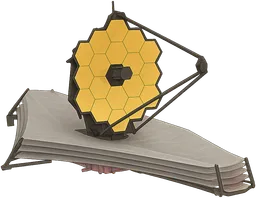 SpaceJames Webb Space Telescope21.2 mThe James Webb Space Telescope is an infrared observatory in space designed to study distant galaxies, stars and planetary systems.SpaceVoyager 1 spacecraft3.66 mVoyager 1 is a NASA space probe launched in 1977 to study the outer planets and now travels through interstellar space.
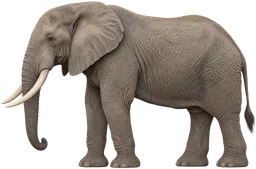 Living thingsAfrican elephant3.3 mAn African elephant is a large plant-eating mammal recognised by its trunk, tusks and broad ears.
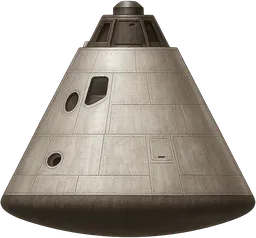 TransportApollo command module3.23 mThe Apollo command module was the conical spacecraft section that housed astronauts during NASA's Apollo lunar missions and re-entered Earth's atmosphere.
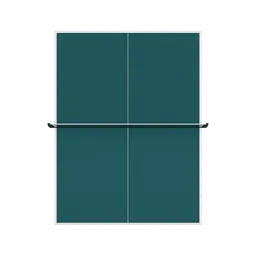 SportTable tennis table2.74 mA table tennis table is a flat, rectangular surface divided by a net for playing the game of table tennis.
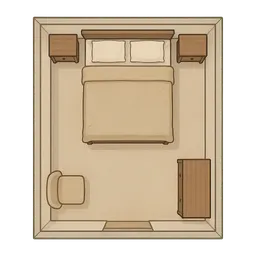 Everyday things3 × 4 m bedroom4 mA bedroom is a private room in a home intended for sleeping and personal use.
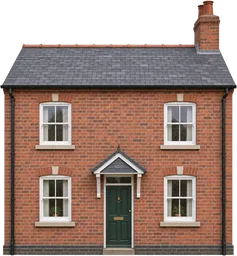 Built worldBuilding storey3 mA building storey is a single level of a structure between two floors or a floor and a ceiling.