
Explorer 1
Explorer 1 was the first satellite launched by the United States, carrying scientific instruments to study Earth's radiation environment.
Also known as: Explorer I, 1958 Alpha 1
How big is it?
2.03 m · overall spacecraft length
Overall spacecraft length · specified
Typical recorded range: 2 m to 2.1 m.
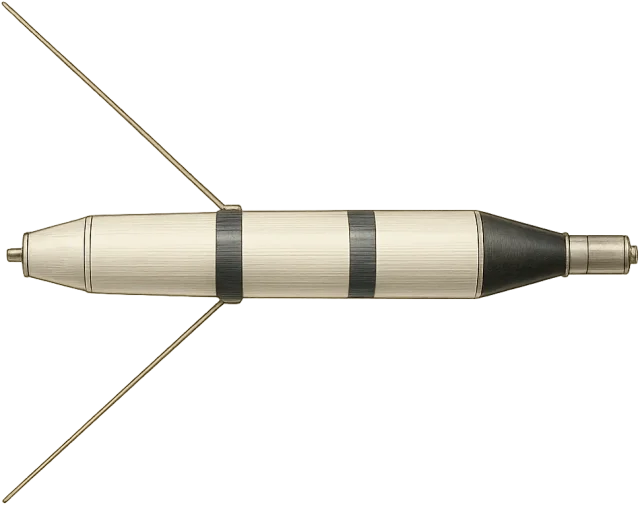
A little perspective
Explorer 1 vs Elkhorn coral colony: length comparison
The overall spacecraft length of Explorer 1 is about 1.02 times the colony width of an elkhorn coral colony.
Explorer 1 was the first satellite launched by the United States, carrying scientific instruments to study Earth's radiation environment.
An elkhorn coral colony is a branching formation of the coral species Acropora palmata, found in shallow Caribbean reefs.
Both rulers start at the same zero and share one linear scale. Artwork keeps its original proportions.
Measurements, assumptions & sources +
Explorer 1
Overall spacecraft length: 2.03 m; specified; range 2 m–2.1 m.
Explorer 1, the first US satellite, was about 2.03 m long and 14 kg including its instrumented cylindrical body. Antennas are contextual.
The marked overall spacecraft length is calibrated. Unmeasured illustration details are representative.
Elkhorn coral colony
Defined colony width: 2 m; defined specimen; range 1 m–3.5 m.
A defined mature elkhorn coral (Acropora palmata) colony 2 m wide and 1.2 m high. Branch growth and breakage produce irregular colonies; the basal reef substrate is excluded from both spans.
NOAA Fisheries — Elkhorn coral
The marked defined colony width is calibrated. Unmeasured illustration details are representative.
Use the visual comparison to explore its scale, then check the measurements and sources.
Change your perspective
Put it next to…
Choose a suggestion to redraw the comparison, or open its page to learn what it is.
Why this measurement?
Why we use 2.03 m
We compare the overall spacecraft length of Explorer 1. This value follows a stated specification; check its scope in the notes. The recorded range is 2 m to 2.1 m.
Explorer 1, the first US satellite, was about 2.03 m long and 14 kg including its instrumented cylindrical body. Antennas are contextual.
The marked horizontal span follows the measured feature, not the edges of the image. How calibrated comparisons work →
Recorded properties
Dimensions and measurements
| Property | Selected value | Recorded range | Basis |
|---|---|---|---|
| 2.03 m | 2 m to 2.1 m | specified | |
| 13.97 kg | 13.9 kg to 14.1 kg | specified |
Around this scale
Explore nearby values.
Compare examples with lower, similar and higher values. Each card names the measurement being compared.
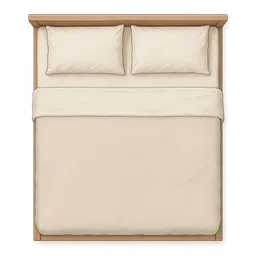 Nearest lower valueEveryday objectsKing-size bed2 mLengthA king bed is a wide bed intended for two sleepers, with standard proportions that vary between national bedding systems.
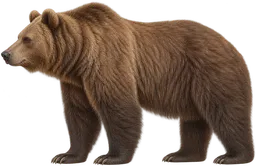 Around the same scaleLiving thingsBrown bear2 mLengthA brown bear is a large omnivorous mammal found in forests and mountainous regions of Eurasia and North America.
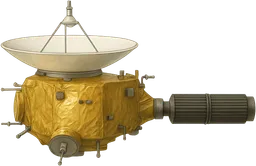 Nearest higher valuePlanets, moons and spaceNew Horizons spacecraft2.2 mSpacecraft body heightNew Horizons is a NASA spacecraft launched to study Pluto and the Kuiper Belt, carrying scientific instruments and powered by a radioisotope generator.
Sources and method
Want to check the number?
The source records and measurement method remain available for inspection.
- NASA — Explorer 1 overviewFirst US satellite dimensions, mass and mission context.
There’s always another scale
Follow your curiosity.
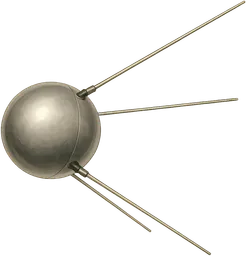 SpaceSputnik 158 cmSputnik 1 was the first artificial satellite launched into Earth orbit by the Soviet Union in 1957.
 SpaceEarth12,740 kmEarth is the rocky planet on which we live and the third planet from the Sun.
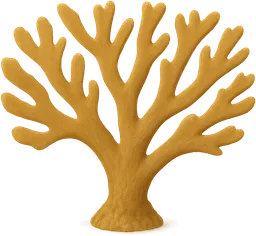 Living thingsElkhorn coral colony2 mAn elkhorn coral colony is a branching formation of the coral species Acropora palmata, found in shallow Caribbean reefs.
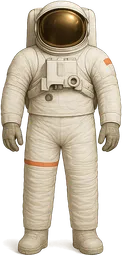 PeopleAdult in a spacesuit1.9 mAn adult in a spacesuit is a person wearing a pressurised suit and life-support system for survival outside Earth's atmosphere.SpaceNew Horizons spacecraft2.2 mNew Horizons is a NASA spacecraft launched to study Pluto and the Kuiper Belt, carrying scientific instruments and powered by a radioisotope generator.
 SportBasketball backboard1.8 mA basketball backboard is a flat, rigid board mounted behind the hoop to provide a surface for rebounding and scoring.
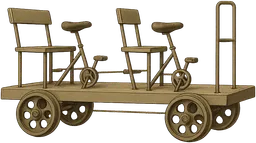 TransportPedal-powered rail trolley2.4 mA pedal-powered rail trolley is a lightweight vehicle propelled by pedalling, designed to travel along railway tracks for recreation or transport.
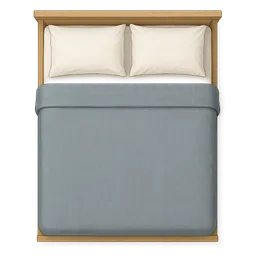 Everyday thingsDouble bed1.9 mA double bed is a wider bed designed to accommodate two people.