
Pyrosome colony
A pyrosome is a hollow, free-floating colony of many small filter-feeding tunicates joined in a tube.
Also known as: pyrosome, sea pickle colony
How big is it?
2 m · defined colony length
Also 6.562 ft
Defined colony length · defined specimen
Typical recorded range: 30 cm to 4 m.
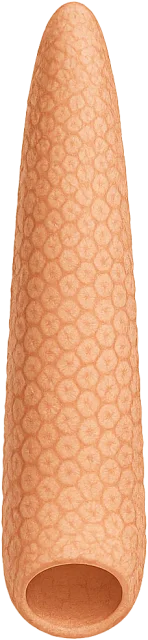
A little perspective
Pyrosome colony vs Elkhorn coral colony: length comparison
The colony length of a pyrosome colony is approximately equal to the colony width of an elkhorn coral colony.
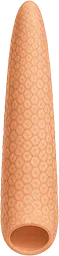
A pyrosome is a hollow, free-floating colony of many small filter-feeding tunicates joined in a tube.
An elkhorn coral colony is a branching formation of the coral species Acropora palmata, found in shallow Caribbean reefs.
Both rulers start at the same zero and share one linear scale. Artwork keeps its original proportions. Horizontal rulers compare the selected spans; vertical brackets also identify height on the artwork.
Measurements, assumptions & sources +
Pyrosome colony
Defined colony length: 2 m; defined specimen; range 30 cm–4 m.
A defined 2 m long, 30 cm wide free-swimming pyrosome colony. Thousands of zooids form its hollow gelatinous tube; species and colony age produce sizes from centimetres to several metres.
The marked defined colony length is calibrated. Unmeasured illustration details are representative.
Elkhorn coral colony
Defined colony width: 2 m; defined specimen; range 1 m–3.5 m.
A defined mature elkhorn coral (Acropora palmata) colony 2 m wide and 1.2 m high. Branch growth and breakage produce irregular colonies; the basal reef substrate is excluded from both spans.
NOAA Fisheries — Elkhorn coral
The marked defined colony width is calibrated. Unmeasured illustration details are representative.
Use the visual comparison to explore its scale, then check the measurements and sources.
Change your perspective
Put it next to…
Choose a suggestion to redraw the comparison, or open its page to learn what it is.
Why this measurement?
Why we use 2 m
We compare the colony length of a pyrosome colony. This is an illustrative comparison value, not a claim that every example is the same. The recorded range is 30 cm to 4 m.
A defined 2 m long, 30 cm wide free-swimming pyrosome colony. Thousands of zooids form its hollow gelatinous tube; species and colony age produce sizes from centimetres to several metres.
The marked vertical span follows the measured feature, not the edges of the image. How calibrated comparisons work →
Recorded properties
Dimensions and measurements
| Property | Selected value | Recorded range | Basis |
|---|---|---|---|
| 2 m | 30 cm to 4 m | defined specimen | |
| 30 cm | 10 cm to 60 cm | defined specimen |
Around this scale
Explore nearby values.
Compare examples with lower, similar and higher values. Each card names the measurement being compared.
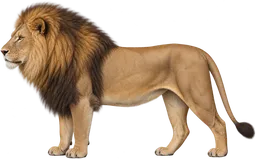 Nearest lower valueLiving thingsLion1.9 mBody lengthA lion is a large African cat that lives in social groups and preys on other mammals.
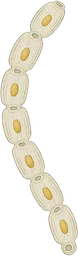 Around the same scaleLiving thingsSalp chain2 mDefined extended chain lengthA salp chain is a colony of barrel-shaped marine tunicates linked together while they swim and filter seawater.
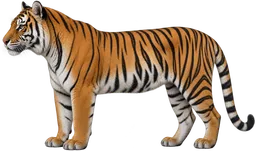 Nearest higher valueLiving thingsTiger2.1 mBody lengthA tiger is a solitary wild cat with a striped coat, native to Asia.
Sources and method
Want to check the number?
The source records and measurement method remain available for inspection.
- Smithsonian Ocean — PyrosomesHollow colonial-tunicate anatomy and variable colony size; the atlas uses a defined two-metre specimen.
There’s always another scale
Follow your curiosity.
Living thingsSalp chain2 mA salp chain is a colony of barrel-shaped marine tunicates linked together while they swim and filter seawater.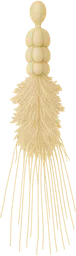 Living thingsSiphonophore colony40 mA siphonophore is a floating colony of specialised animals called zooids that function together as one organism-like body.
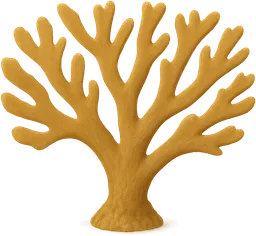 Living thingsElkhorn coral colony2 mAn elkhorn coral colony is a branching formation of the coral species Acropora palmata, found in shallow Caribbean reefs.
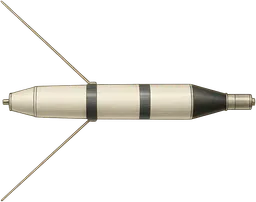 SpaceExplorer 12.03 mExplorer 1 was the first satellite launched by the United States, carrying scientific instruments to study Earth's radiation environment.
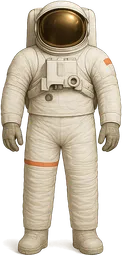 PeopleAdult in a spacesuit1.9 mAn adult in a spacesuit is a person wearing a pressurised suit and life-support system for survival outside Earth's atmosphere.
 SportBasketball backboard1.8 mA basketball backboard is a flat, rigid board mounted behind the hoop to provide a surface for rebounding and scoring.
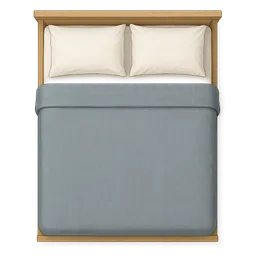 Everyday thingsDouble bed1.9 mA double bed is a wider bed designed to accommodate two people.
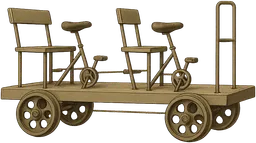 TransportPedal-powered rail trolley2.4 mA pedal-powered rail trolley is a lightweight vehicle propelled by pedalling, designed to travel along railway tracks for recreation or transport.