Salp chain
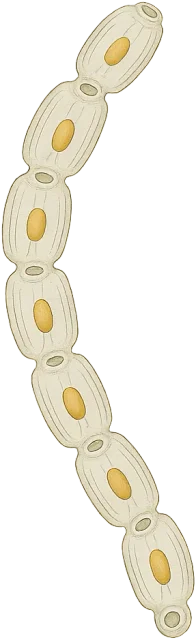
A salp chain is a colony of barrel-shaped marine tunicates linked together while they swim and filter seawater.
Also known as: salp colony, salp aggregate
How big is it?
2 m long
Also 6.562 ft
Defined extended chain length · defined specimen
Typical recorded range: 50 cm to 4 m.
A little perspective
About the same scale as Elkhorn coral colony.
Elkhorn coral colony: An elkhorn coral colony is a branching formation of the coral species Acropora palmata, found in shallow Caribbean reefs.
Measurements, assumptions & sources +
Salp chain
A defined 2 m extended chain of linked salps. Each transparent barrel-shaped salp is an individual tunicate; colonies flex, contract and break apart, so measured length depends strongly on posture.
The marked defined extended chain length is calibrated. Unmeasured illustration details are representative.
Elkhorn coral colony
A defined mature elkhorn coral (Acropora palmata) colony 2 m wide and 1.2 m high. Branch growth and breakage produce irregular colonies; the basal reef substrate is excluded from both spans.
NOAA Fisheries — Elkhorn coral
The marked defined colony width is calibrated. Unmeasured illustration details are representative.
Change your perspective
Put it next to…
Choose a suggestion to redraw the comparison, or open its page to learn what it is.
Why this measurement?
Why we use 2 m
For comparison, this page uses defined extended chain length. This is labelled defined specimen: an explicit comparison model rather than a claim that every example has the same value. The recorded range is 50 cm to 4 m.
A defined 2 m extended chain of linked salps. Each transparent barrel-shaped salp is an individual tunicate; colonies flex, contract and break apart, so measured length depends strongly on posture.
The marked vertical span follows the named feature; transparent margins and unmeasured details do not alter it. How calibrated comparisons work →
Recorded properties
Salp chain dimensions and measurements
| Property | Selected value | Recorded range | Basis |
|---|---|---|---|
| 2 m | 50 cm to 4 m | defined specimen |
Around this scale
Go smaller. Go bigger.
These links use compatible length records, ordered around the selected value.
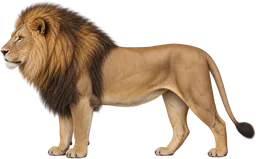 Nearest lower value · Living thingsLion1.9 mA lion is a large African cat that lives in social groups and preys on other mammals.
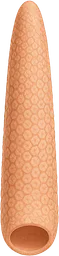 Around the same scale · Living thingsPyrosome colony2 mA pyrosome is a hollow, free-floating colony of many small filter-feeding tunicates joined in a tube.
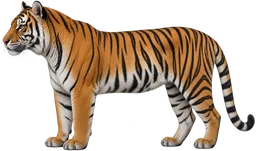 Nearest higher value · Living thingsTiger2.1 mA tiger is a solitary wild cat with a striped coat, native to Asia.
Sources and method
Want to check the number?
The source records and measurement method remain available for inspection.
- Smithsonian Ocean — SalpsBarrel-shaped tunicate anatomy and aggregate chains; the atlas uses a defined extended colony.
There’s always another scale
Follow your curiosity.
Living thingsPyrosome colony2 mA pyrosome is a hollow, free-floating colony of many small filter-feeding tunicates joined in a tube.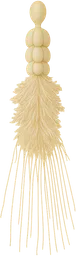 Living thingsSiphonophore colony40 mA siphonophore is a floating colony of specialised animals called zooids that function together as one organism-like body.
 Living thingsElkhorn coral colony2 mAn elkhorn coral colony is a branching formation of the coral species Acropora palmata, found in shallow Caribbean reefs.
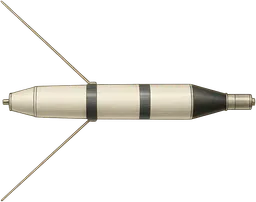 SpaceExplorer 12.03 mExplorer 1 was the first satellite launched by the United States, carrying scientific instruments to study Earth's radiation environment.
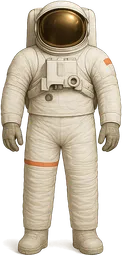 PeopleAdult in a spacesuit1.9 mAn adult in a spacesuit is a person wearing a pressurised suit and life-support system for survival outside Earth's atmosphere.
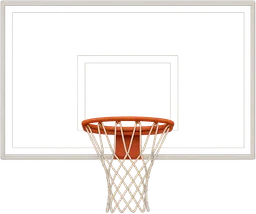 SportBasketball backboard1.8 mA basketball backboard is a flat, rigid board mounted behind the hoop to provide a surface for rebounding and scoring.
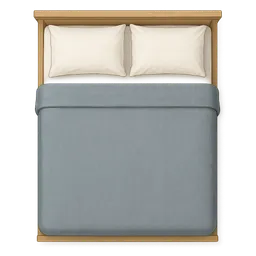 Everyday thingsDouble bed1.9 mA double bed is a wider bed designed to accommodate two people.
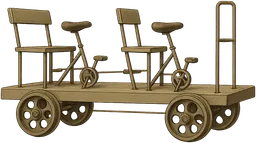 TransportPedal-powered rail trolley2.4 mA pedal-powered rail trolley is a lightweight vehicle propelled by pedalling, designed to travel along railway tracks for recreation or transport.