Io
Io is a natural satellite of Jupiter, covered with active volcanoes and sulphur deposits.
How big is it?
3,643 km across
Mean diameter · approximate
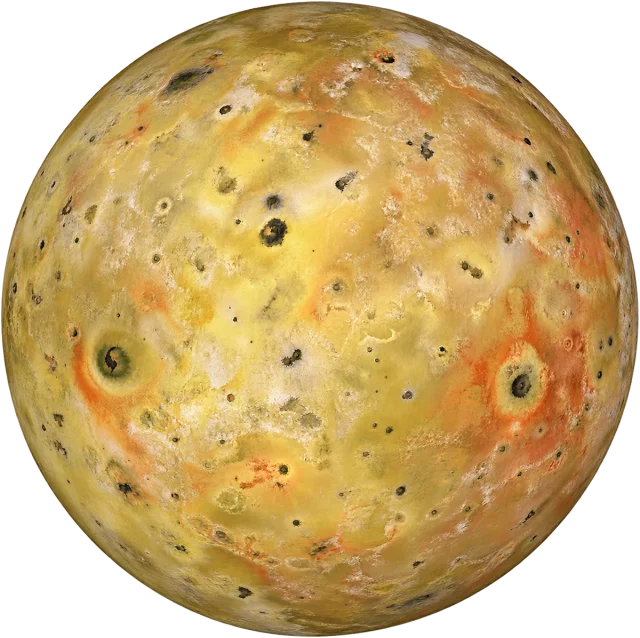
A little perspective
About the same scale as Moon.
Moon: The Moon is Earth’s natural satellite and the brightest large object in Earth’s night sky.
Measurements, assumptions & sources +
Io
Rounded mean-radius model of Io. The derived area and volume describe a sphere; surface terrain and flattening are omitted.
NASA JPL — Planetary satellite physical parameters
The marked mean diameter is calibrated. Unmeasured illustration details are representative.
Moon
Rounded mean-radius model of Moon. The derived area and volume describe a sphere; surface terrain and flattening are omitted.
NASA JPL — Planetary satellite physical parameters
The marked mean diameter is calibrated. Unmeasured illustration details are representative.
Change your perspective
Put it next to…
Choose a suggestion to redraw the comparison, or open its page to learn what it is.
Why this measurement?
Why we use 3,643 km
For comparison, this page uses mean diameter. This is labelled approximate; the central value is useful for comparison, while real values or measurement solutions can vary.
Rounded mean-radius model of Io. The derived area and volume describe a sphere; surface terrain and flattening are omitted.
The marked horizontal span follows the named feature; transparent margins and unmeasured details do not alter it. How calibrated comparisons work →
Recorded properties
Io dimensions and measurements
| Property | Selected value | Recorded range | Basis |
|---|---|---|---|
| 3,643 km | Not recorded | approximate | |
| 41,690,000 km² | Not recorded | derived | |
| 2.531 × 10¹⁰ km³ | Not recorded | derived | |
| 8.93 × 10¹⁹ t | Not recorded | derived | |
| 1.796 m/s² | Not recorded | derived |
Around this scale
Go smaller. Go bigger.
These links use compatible length records, ordered around the selected value.
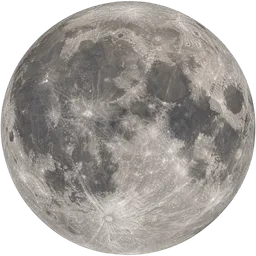 Nearest lower value · SpaceMoon3,475 kmThe Moon is Earth’s natural satellite and the brightest large object in Earth’s night sky.
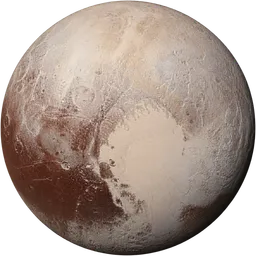 Around the same scale · SpacePluto2,377 kmPluto is a dwarf planet in the Kuiper Belt, composed of rock and ice and orbiting the Sun.
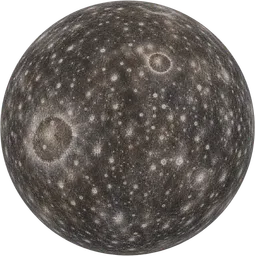 Nearest higher value · SpaceCallisto4,821 kmCallisto is a natural satellite of Jupiter, with a heavily cratered icy surface.
Sources and method
Want to check the number?
The source records and measurement method remain available for inspection.
- NASA JPL — Planetary satellite physical parametersPublished mean radii and gravitational parameters GM. Spherical areas, volumes, masses and local gravity are explicitly derived.
More ways to see it
Curated comparisons
There’s always another scale
Follow your curiosity.
SpaceMoon3,475 kmThe Moon is Earth’s natural satellite and the brightest large object in Earth’s night sky.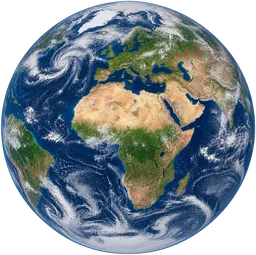 SpaceEarth12,740 kmEarth is the rocky planet on which we live and the third planet from the Sun.SpacePluto2,377 kmPluto is a dwarf planet in the Kuiper Belt, composed of rock and ice and orbiting the Sun.
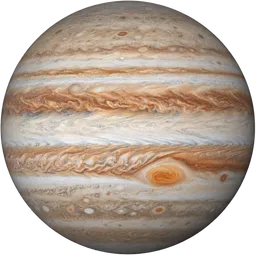 SpaceJupiter139,800 kmJupiter is a giant planet composed mainly of hydrogen and helium, orbiting the Sun beyond the asteroid belt.
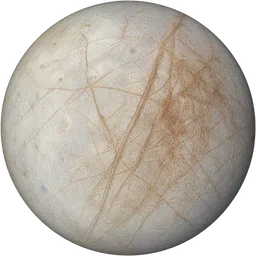 SpaceEuropa3,122 kmEuropa is a natural satellite of Jupiter, with a smooth icy surface thought to cover a subsurface ocean.SpaceCallisto4,821 kmCallisto is a natural satellite of Jupiter, with a heavily cratered icy surface.
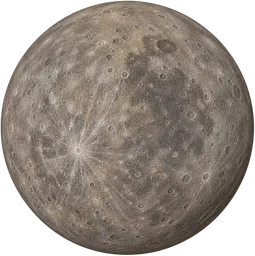 SpaceMercury4,879 kmMercury is a rocky planet orbiting closest to the Sun in the Solar System.
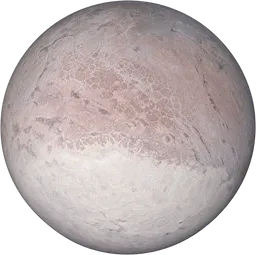 SpaceTriton2,705 kmTriton is a natural satellite of Neptune, with a retrograde orbit and a surface of frozen nitrogen.