
Rhea
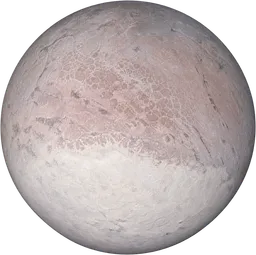
Rhea is an icy moon of Saturn with a heavily cratered surface and bright fractures.
Also known as: Saturn V moon, Rhea moon
How big is it?
1,528 km · mean-equivalent diameter
Mean-equivalent diameter · approximate
Typical recorded range: 1,525 km to 1,531 km.
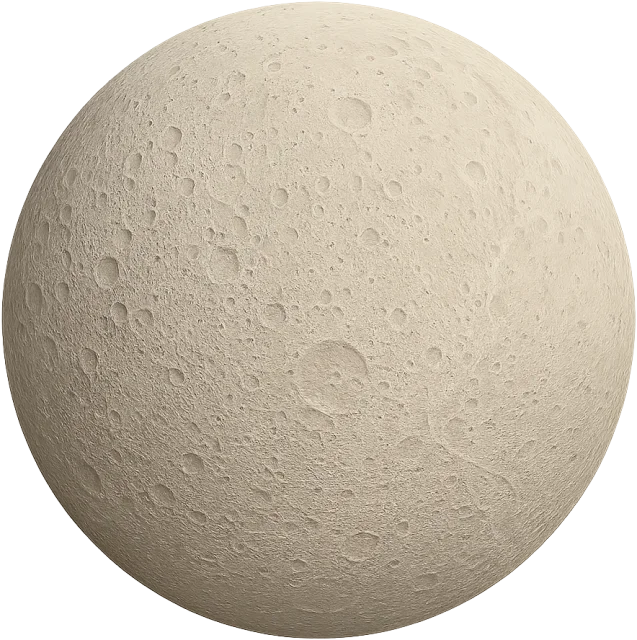
A little perspective
Rhea vs Charon: diameter comparison
The mean-equivalent diameter of Rhea is about 1.26 times the mean diameter of Charon.
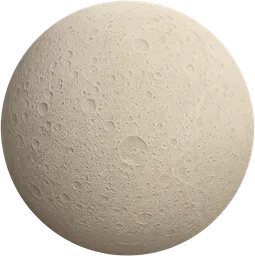
Rhea is an icy moon of Saturn with a heavily cratered surface and bright fractures.
Charon is a natural satellite of Pluto, composed mainly of rock and water ice.
Both rulers start at the same zero and share one linear scale. Artwork keeps its original proportions.
Measurements, assumptions & sources +
Rhea
Mean-equivalent diameter: 1,528 km; approximate; range 1,525 km–1,531 km.
Saturn moon Rhea has a mean-equivalent diameter of about 1,528 km and a mass near 2.3065 x 10^21 kg. The identity-specific illustration includes its densely cratered surface and restrained bright fractures.
NASA JPL — Planetary satellite physical parameters
The marked mean-equivalent diameter is calibrated. Unmeasured illustration details are representative.
Charon
Mean diameter: 1,212 km; approximate.
Rounded mean-radius model of Charon. The derived area and volume describe a sphere; surface terrain and flattening are omitted.
NASA JPL — Planetary satellite physical parameters
The marked mean diameter is calibrated. Unmeasured illustration details are representative.
Use the visual comparison to explore its scale, then check the measurements and sources.
Change your perspective
Put it next to…
Choose a suggestion to redraw the comparison, or open its page to learn what it is.
Why this measurement?
Why we use 1,528 km
We compare the mean-equivalent diameter of Rhea. This is an estimate; check the notes for its rounding and uncertainty. The recorded range is 1,525 km to 1,531 km.
Saturn moon Rhea has a mean-equivalent diameter of about 1,528 km and a mass near 2.3065 x 10^21 kg. The identity-specific illustration includes its densely cratered surface and restrained bright fractures.
The marked horizontal span follows the measured feature, not the edges of the image. How calibrated comparisons work →
Recorded properties
Dimensions and measurements
| Property | Selected value | Recorded range | Basis |
|---|---|---|---|
| 1,528 km | 1,525 km to 1,531 km | approximate | |
| 2.307 × 10¹⁸ t | 2.3 × 10¹⁸ t to 2.32 × 10¹⁸ t | approximate |
Around this scale
Explore nearby values.
Compare examples with lower, similar and higher values. Each card names the measurement being compared.
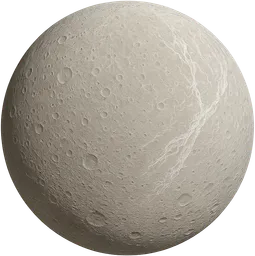 Nearest lower valuePlanets, moons and spaceDione1,123 kmMean-equivalent diameterDione is an icy moon of Saturn, distinguished by its heavily cratered surface and bright ice cliffs.
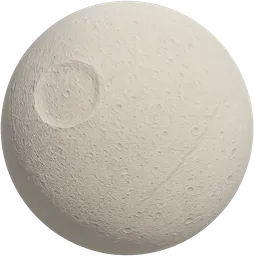 Around the same scalePlanets, moons and spaceTethys1,062 kmMean diameterTethys is a mid-sized icy moon of Saturn, notable for its large impact basin and surface fractures.
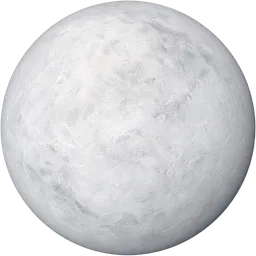 Nearest higher valuePlanets, moons and spaceEris2,326 kmDiameterEris is a dwarf planet in the scattered disc region beyond Neptune, composed of rock and ice.
Sources and method
Want to check the number?
The source records and measurement method remain available for inspection.
- NASA JPL — Planetary satellite physical parametersPublished mean radii and gravitational parameters GM. Spherical areas, volumes, masses and local gravity are explicitly derived.
There’s always another scale
Follow your curiosity.
SpaceDione1,123 kmDione is an icy moon of Saturn, distinguished by its heavily cratered surface and bright ice cliffs.SpaceTethys1,062 kmTethys is a mid-sized icy moon of Saturn, notable for its large impact basin and surface fractures.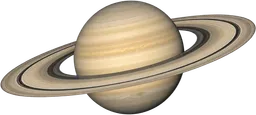 SpaceSaturn116,500 kmSaturn is a giant planet made mostly of hydrogen and helium, distinguished by its extensive ring system.
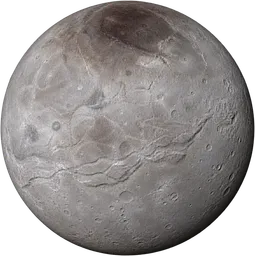 SpaceCharon1,212 kmCharon is a natural satellite of Pluto, composed mainly of rock and water ice.
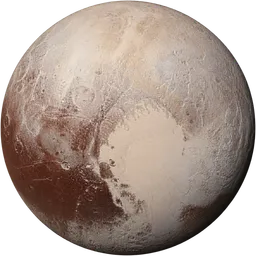 SpacePluto2,377 kmPluto is a dwarf planet in the Kuiper Belt, composed of rock and ice and orbiting the Sun.
 SpaceTriton2,705 kmTriton is a natural satellite of Neptune, with a retrograde orbit and a surface of frozen nitrogen.
 TransportFive-hour drive at 100 km/h500 kmA five-hour drive at a set speed is the distance a vehicle covers in five hours of continuous travel without breaks.SpaceEris2,326 kmEris is a dwarf planet in the scattered disc region beyond Neptune, composed of rock and ice.