
Himalia
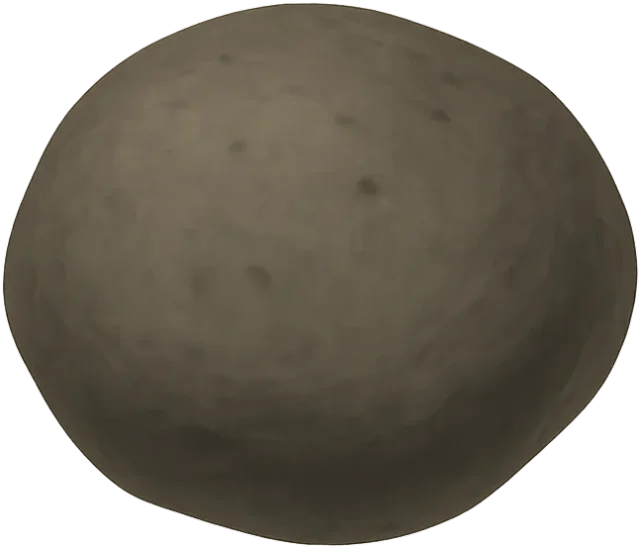
Himalia is an irregularly shaped outer moon of Jupiter, orbiting the planet at a great distance.
Also known as: Jupiter VI, Himalia moon
How big is it?
170 km · mean-equivalent diameter
Mean-equivalent diameter · approximate
Typical recorded range: 160 km to 180 km.
A little perspective
Himalia vs One-hour drive at 100 km/h: length comparison
The mean-equivalent diameter of Himalia is about 1.7 times the distance of a one-hour drive at 100 km/h.
Himalia is an irregularly shaped outer moon of Jupiter, orbiting the planet at a great distance.
A one-hour drive at a set speed is the distance a vehicle travels in one hour of uninterrupted motion.
Both rulers start at the same zero and share one linear scale. Artwork keeps its original proportions. A ruler represents the selected distance or a measurement not visible in this view.
Measurements, assumptions & sources +
Himalia
Mean-equivalent diameter: 170 km; approximate; range 160 km–180 km.
Jupiter moon Himalia is an irregular body roughly 170 km in mean-equivalent diameter. Published shape and mass solutions remain approximate; the low-detail illustration avoids claiming resolved surface anatomy.
NASA JPL — Planetary satellite physical parameters
The marked mean-equivalent diameter is calibrated. Unmeasured illustration details are representative.
One-hour drive at 100 km/h
Distance: 100 km; example.
A defined distance at a constant speed, excluding delays.
Defined examples — our methodology
The marked distance is calibrated. Unmeasured illustration details are representative.
Use the visual comparison to explore its scale, then check the measurements and sources.
Change your perspective
Put it next to…
Choose a suggestion to redraw the comparison, or open its page to learn what it is.
Why this measurement?
Why we use 170 km
We compare the mean-equivalent diameter of Himalia. This is an estimate; check the notes for its rounding and uncertainty. The recorded range is 160 km to 180 km.
Jupiter moon Himalia is an irregular body roughly 170 km in mean-equivalent diameter. Published shape and mass solutions remain approximate; the low-detail illustration avoids claiming resolved surface anatomy.
The marked horizontal span follows the measured feature, not the edges of the image. How calibrated comparisons work →
Recorded properties
Dimensions and measurements
| Property | Selected value | Recorded range | Basis |
|---|---|---|---|
| 170 km | 160 km to 180 km | approximate | |
| 4.2 × 10¹⁵ t | 3.5 × 10¹⁵ t to 5 × 10¹⁵ t | approximate |
Around this scale
Explore nearby values.
Compare examples with lower, similar and higher values. Each card names the measurement being compared.
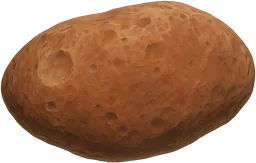 Nearest lower valuePlanets, moons and spaceAmalthea167 kmMean-equivalent diameterAmalthea is an irregularly shaped moon of Jupiter with a reddish surface and prominent craters.
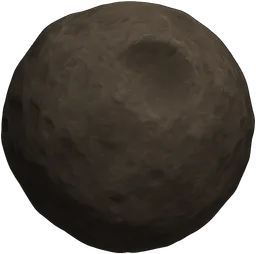 Around the same scalePlanets, moons and spaceThebe98.6 kmMean-equivalent diameterThebe is a small, irregular inner moon of Jupiter that orbits close to the planet within its ring system.
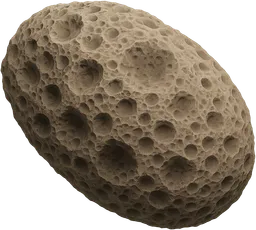 Nearest higher valuePlanets, moons and spaceHyperion270 kmMean-equivalent diameterHyperion is a porous, irregularly shaped moon of Saturn that rotates chaotically and has a sponge-like surface.
Sources and method
Want to check the number?
The source records and measurement method remain available for inspection.
- NASA JPL — Planetary satellite physical parametersPublished mean radii and gravitational parameters GM. Spherical areas, volumes, masses and local gravity are explicitly derived.
There’s always another scale
Follow your curiosity.
SpaceAmalthea167 kmAmalthea is an irregularly shaped moon of Jupiter with a reddish surface and prominent craters.SpaceThebe98.6 kmThebe is a small, irregular inner moon of Jupiter that orbits close to the planet within its ring system.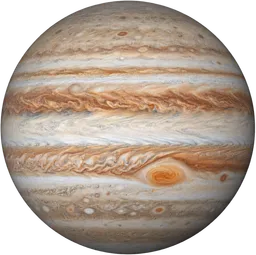 SpaceJupiter139,800 kmJupiter is a giant planet composed mainly of hydrogen and helium, orbiting the Sun beyond the asteroid belt.
 TransportOne-hour drive at 100 km/h100 kmA one-hour drive at a set speed is the distance a vehicle travels in one hour of uninterrupted motion.
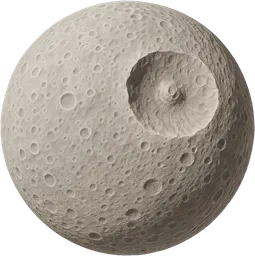 SpaceMimas396.4 kmMimas is an icy moon of Saturn, visually dominated by the large Herschel impact crater.
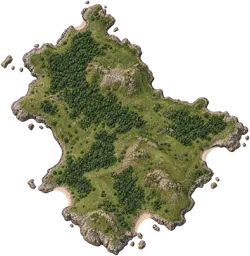 Places10,000 km² region10,000 km²A region is a large expanse of land defined by geographical or administrative boundaries.
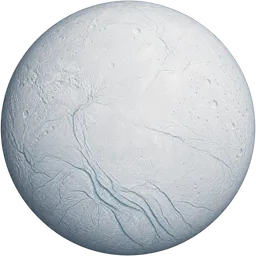 SpaceEnceladus504.2 kmEnceladus is a natural satellite of Saturn, with an icy surface and plumes of water vapour erupting from its south pole.TransportFive-hour drive at 100 km/h500 kmA five-hour drive at a set speed is the distance a vehicle covers in five hours of continuous travel without breaks.