
Neptune
Neptune is an ice giant planet with a deep blue atmosphere, orbiting the Sun beyond Uranus.
How big is it?
49,240 km · mean diameter
Mean diameter · approximate
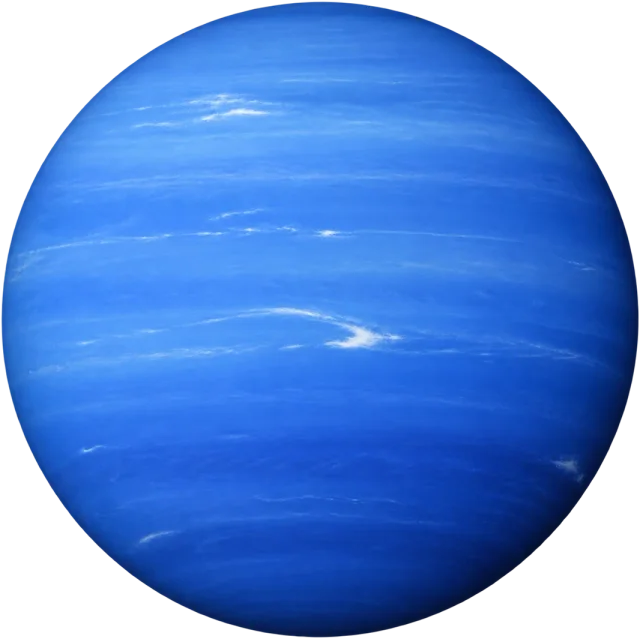
A little perspective
Neptune vs Uranus: diameter comparison
The mean diameter of Uranus is about 1.03 times the mean diameter of Neptune.
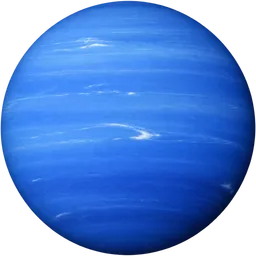
Neptune is an ice giant planet with a deep blue atmosphere, orbiting the Sun beyond Uranus.
Uranus is an ice giant planet with a blue-green atmosphere, orbiting the Sun on its side.
Both rulers start at the same zero and share one linear scale. Artwork keeps its original proportions.
Measurements, assumptions & sources +
Neptune
Mean diameter: 49,240 km; approximate.
Mean-radius spherical model for Neptune; actual shape is not perfectly spherical. Gravity refers to a conventional atmospheric level, not solid ground.
NASA JPL — planetary physical parameters
The marked mean diameter is calibrated. Unmeasured illustration details are representative.
Uranus
Mean diameter: 50,720 km; approximate.
Mean-radius spherical model for Uranus; actual shape is not perfectly spherical. Gravity refers to a conventional atmospheric level, not solid ground.
NASA JPL — planetary physical parameters
The marked mean diameter is calibrated. Unmeasured illustration details are representative.
Use the visual comparison to explore its scale, then check the measurements and sources.
Change your perspective
Put it next to…
Choose a suggestion to redraw the comparison, or open its page to learn what it is.
Why this measurement?
Why we use 49,240 km
We compare the mean diameter of Neptune. This is an estimate; check the notes for its rounding and uncertainty.
Mean-radius spherical model for Neptune; actual shape is not perfectly spherical. Gravity refers to a conventional atmospheric level, not solid ground.
The marked horizontal span follows the measured feature, not the edges of the image. How calibrated comparisons work →
Recorded properties
Dimensions and measurements
| Property | Selected value | Recorded range | Basis |
|---|---|---|---|
| 49,240 km | Not recorded | approximate | |
| 24,620 km | Not recorded | approximate | |
| 154,700 km | Not recorded | derived | |
| 7.618 × 10⁹ km² | Not recorded | derived | |
| 6.253 × 10¹³ km³ | Not recorded | derived | |
| 17.15 M⊕ | Not recorded | approximate | |
| 11.15 m/s² | Not recorded | approximate | |
| 30.11 AU | Not recorded | rounded orbital anchor | |
| 19,550 km/h | Not recorded | rounded orbital anchor |
Around this scale
Explore nearby values.
Compare examples with lower, similar and higher values. Each card names the measurement being compared.
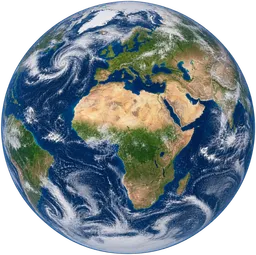 Nearest lower valuePlanets, moons and spaceEarth12,740 kmMean diameterEarth is the rocky planet on which we live and the third planet from the Sun.
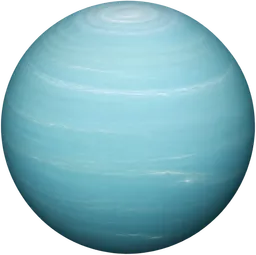 Nearest higher valuePlanets, moons and spaceUranus50,720 kmMean diameterUranus is an ice giant planet with a blue-green atmosphere, orbiting the Sun on its side.
Sources and method
Want to check the number?
The source records and measurement method remain available for inspection.
- NASA JPL — planetary physical parametersMean radii and masses. Spherical area and volume here are derived from mean radius. This atlas rounds for scale comparison.
- NASA — Planet CompareConventional surface gravities; giant-planet values refer to an atmospheric reference level. Earth uses standard gravity, 9.80665 m/s².
- Defined examples — our methodology
More ways to see it
Curated comparisons
There’s always another scale
Follow your curiosity.
SpaceEarth12,740 kmEarth is the rocky planet on which we live and the third planet from the Sun.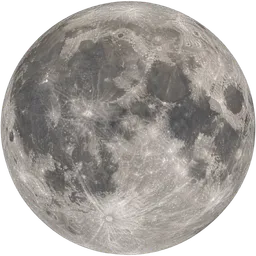 SpaceMoon3,475 kmThe Moon is Earth’s natural satellite and the brightest large object in Earth’s night sky.
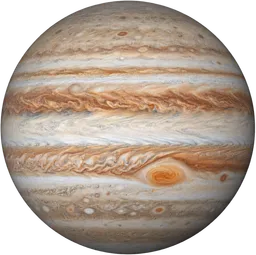 SpaceJupiter139,800 kmJupiter is a giant planet composed mainly of hydrogen and helium, orbiting the Sun beyond the asteroid belt.
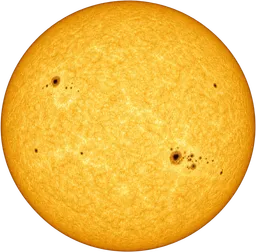 SpaceSun1,391,000 kmThe Sun is the star at the centre of the Solar System.SpaceUranus50,720 kmUranus is an ice giant planet with a blue-green atmosphere, orbiting the Sun on its side.
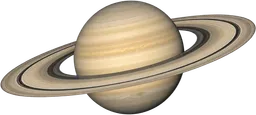 SpaceSaturn116,500 kmSaturn is a giant planet made mostly of hydrogen and helium, distinguished by its extensive ring system.
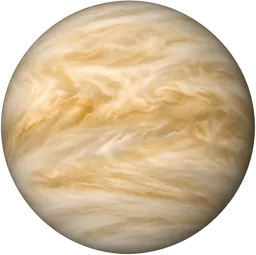 SpaceVenus12,100 kmVenus is a rocky planet orbiting the Sun, covered by thick clouds of carbon dioxide and sulphuric acid.
 SpaceWhite dwarf12,000 kmA white dwarf is the dense, hot remnant core left behind after a star like the Sun has exhausted its nuclear fuel and shed its outer layers.