Explore a category
Motion and speed,
in proportion.
Compare speeds from slow biological movement to vehicles, orbital motion and physical limits.
Speed describes distance travelled per unit time, not the physical length of the illustrated mover. Conditions and the selected reference frame matter.
- Entities
- 25
- Most common primary scale
- Speed
- Common measurements
- Crawling speed, Speed, Representative loaded trolley speed, Representative plate speed, Representative surface speed, Surface crawling speed
Within this category's most common primary scale, explore Stalactite growth front at 3 × 10⁻¹¹ m/s and Light in vacuum at 1 c. These are navigation anchors, not universal category limits.
25 entities in this category, ordered by name.
No matches here. Try the main search to explore your own quantity.
25 measured entities
Browse motion and speed
 Banana slug crawl0.0015 m/sBanana slug crawl refers to the speed at which a banana slug moves across a surface using muscular contractions and mucus secretion.
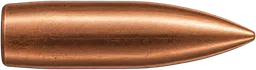 Bullet2,880 km/hA bullet is a small metal projectile fired from a gun or rifle.
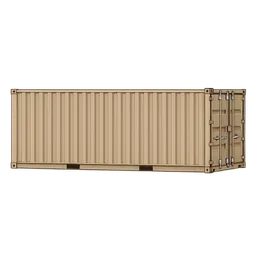 Container-terminal ship-to-shore trolley3 m/sA container-terminal ship-to-shore trolley is a motorised platform that moves shipping containers horizontally along a crane between a ship and the dock.Continental plate drift8 × 10⁻¹⁰ m/sContinental plate drift is the slow movement of Earth's tectonic plates driven by forces within the planet's mantle.
 Earth equator rotational speed1,674 km/hEarth equator rotational speed is the velocity at which a point on the equator moves eastward due to Earth's rotation.
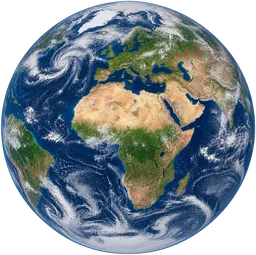 Earth orbiting the Sun107,200 km/hEarth orbiting the Sun is the motion of our planet as it revolves around the Sun along its elliptical path.Earthworm surface crawl0.005 m/sEarthworm surface crawl is the rate at which an earthworm moves along the ground by extending and contracting its body segments.
 Electron drift in household copper wiring0.0001 m/sThis refers to the slow average movement of electrons through copper wire when an electric current flows.Fingernail growth1 × 10⁻⁹ m/sFingernail growth is the process by which human fingernails gradually extend from the base of the nail bed over time.Garden snail relaxed crawl0.0008 m/sA garden snail relaxed crawl describes the slow, steady movement of a garden snail as it glides along a surface.Golf ball after a drive270 km/hA golf ball after a drive is a ball in rapid motion immediately after being struck from the tee by a golf club.
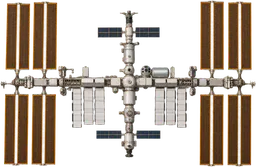 International Space Station28,160 km/hThe International Space Station is a large habitable satellite that orbits Earth and serves as a research laboratory.Light in vacuum1 cLight in vacuum is electromagnetic radiation that travels through empty space without any material medium.Moon orbital speed around Earth3,679 km/hMoon orbital speed around Earth is the average velocity at which the Moon travels along its orbit around our planet.Red blood cell in a capillary0.001 m/sA red blood cell in a capillary refers to an erythrocyte moving through the body's smallest blood vessels as part of microcirculation.
 Running2.778 m/sRunning is a method of terrestrial locomotion in which humans move rapidly on foot, with both feet leaving the ground during each stride.Sea star tube-foot travel0.0003 m/sSea star tube-foot travel is the movement speed of a sea star as it uses its tube feet to glide over surfaces.Slime mould migration1 × 10⁻⁵ m/sSlime mould migration is the rate at which a motile stage of slime mould advances across a surface in search of food.
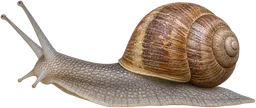 Snail crawling0.001 m/sSnail crawling is the slow movement of a snail as it glides along a surface using its muscular foot.Sound in air1,235 km/hSound in air is the propagation of pressure waves through the atmosphere, which can be heard by humans and animals.Sperm cell swimming5 × 10⁻⁵ m/sSperm cell swimming refers to the speed at which a human sperm cell moves through fluid using its tail for propulsion.Sprinting36 km/hSprinting is running at full speed over a short distance, requiring maximum effort and power.Stalactite growth front3 × 10⁻¹¹ m/sA stalactite growth front is the advancing tip of a stalactite, where mineral deposits accumulate as water drips in caves.Tree trunk radial growth1 × 10⁻¹⁰ m/sTree trunk radial growth refers to the outward expansion of a tree's trunk as new layers of wood are added beneath the bark.Walking1.389 m/sWalking is a form of human locomotion where one foot is always in contact with the ground.