
Golf ball after a drive
A golf ball after a drive is a ball in rapid motion immediately after being struck from the tee by a golf club.
Also known as: golf drive ball speed
How big is it?
270 km/h · defined launch speed
Also 167.8 mph
Defined launch speed · defined motion model
Typical recorded range: 216 km/h to 324 km/h.
A little perspective
Golf ball after a drive vs High-speed train: speed comparison
The speed of a high-speed train is about 1.11 times the launch speed of a golf ball after a drive.
DISTANCE IN ONE SECOND
A golf ball after a drive is a ball in rapid motion immediately after being struck from the tee by a golf club.
75 m in 1 s
A high-speed train is a passenger train designed to travel much faster than conventional rail services, often between major cities.
83.33 m in 1 s
Measurements, assumptions & sources +
Golf ball after a drive
Defined launch speed: 270 km/h; defined motion model; range 216 km/h–324 km/h.
A defined golf-ball launch speed of 75 m/s immediately after a drive. Club, impact, ball, player and measurement point all affect speed; this is not a record claim.
Defined examples — our methodology
The marked defined launch speed is calibrated. Unmeasured illustration details are representative.
High-speed train
Speed: 300 km/h; example.
A defined 200 m trainset, 400 tonne mass and 300 km/h cruise example.
Defined examples — our methodology
The marked speed is calibrated. Unmeasured illustration details are representative.
Use the visual comparison to explore its scale, then check the measurements and sources.
Change your perspective
Put it next to…
Choose a suggestion to redraw the comparison, or open its page to learn what it is.
Why this measurement?
Why we use 270 km/h
We compare the launch speed of a golf ball after a drive. This is an illustrative comparison value, not a claim that every example is the same. The recorded range is 216 km/h to 324 km/h.
A defined golf-ball launch speed of 75 m/s immediately after a drive. Club, impact, ball, player and measurement point all affect speed; this is not a record claim.
The picture identifies the subject; the diagram compares the recorded values. How calibrated comparisons work →
Recorded properties
Dimensions and measurements
| Property | Selected value | Recorded range | Basis |
|---|---|---|---|
| 270 km/h | 216 km/h to 324 km/h | defined motion model |
Around this scale
Explore nearby values.
Compare examples with lower, similar and higher values. Each card names the measurement being compared.
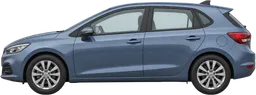 Nearest lower valueVehicles and transportFamily car100 km/hExample cruising speedA family car is a motor vehicle designed to carry several passengers and their belongings.
 Nearest higher valueVehicles and transportHigh-speed train300 km/hSpeedA high-speed train is a passenger train designed to travel much faster than conventional rail services, often between major cities.
Sources and method
Want to check the number?
The source records and measurement method remain available for inspection.
There’s always another scale
Follow your curiosity.
 EnergyGolf drive ball kinetic energy130 JGolf drive ball kinetic energy is the amount of energy a golf ball possesses due to its motion immediately after being struck.TransportHigh-speed train200 mA high-speed train is a passenger train designed to travel much faster than conventional rail services, often between major cities.
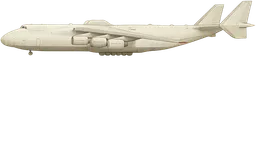 TransportAntonov An-225 Mriya84 mThe Antonov An-225 Mriya was a Ukrainian-built cargo aircraft designed to transport extremely heavy and oversized loads.MotionSound in air1,235 km/hSound in air is the propagation of pressure waves through the atmosphere, which can be heard by humans and animals.TransportFamily car4.5 mA family car is a motor vehicle designed to carry several passengers and their belongings.
 MotionEarth equator rotational speed1,674 km/hEarth equator rotational speed is the velocity at which a point on the equator moves eastward due to Earth's rotation.
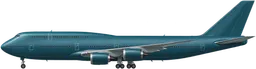 TransportBoeing 747-876.3 mThe Boeing 747-8 is a long-range, wide-body commercial airliner used for transporting passengers and cargo.
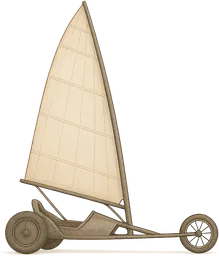 TransportLand yacht5.5 mA land yacht is a wind-powered vehicle with wheels and a sail, designed for high-speed travel over flat surfaces such as beaches or dry lake beds.