Earthworm surface crawl
Earthworm surface crawl is the rate at which an earthworm moves along the ground by extending and contracting its body segments.
How big is it?
0.005 m/s
Surface crawling speed · representative
Typical recorded range: 0.001 m/s to 0.02 m/s.
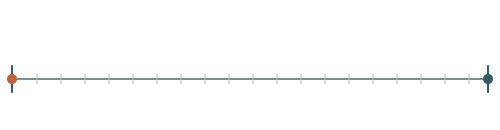
A little perspective
About 5 times the speed of Snail crawling.
Snail crawling: Snail crawling is the slow movement of a snail as it glides along a surface using its muscular foot.
Measurements, assumptions & sources +
Earthworm surface crawl
A representative 5 mm/s surface crawl for an earthworm. Species, body extension, substrate, moisture and escape behaviour account for the broad range.
Defined examples — our methodology
The marked surface crawling speed is calibrated. Unmeasured illustration details are representative.
Snail crawling
A chosen 1 mm/s crawl. Species, surface and conditions affect pace.
Defined examples — our methodology
The marked speed is calibrated. Unmeasured illustration details are representative.
Change your perspective
Put it next to…
Choose a suggestion to redraw the comparison, or open its page to learn what it is.
Why this measurement?
Why we use 0.005 m/s
For comparison, this page uses surface crawling speed. This is labelled representative; the central value is useful for comparison, while real values or measurement solutions can vary. The recorded range is 0.001 m/s to 0.02 m/s.
A representative 5 mm/s surface crawl for an earthworm. Species, body extension, substrate, moisture and escape behaviour account for the broad range.
The identifying illustration and the numerical comparison remain separate. How calibrated comparisons work →
Recorded properties
Earthworm surface crawl dimensions and measurements
| Property | Selected value | Recorded range | Basis |
|---|---|---|---|
| 0.005 m/s | 0.001 m/s to 0.02 m/s | representative |
Around this scale
Go smaller. Go bigger.
These links use compatible speed records, ordered around the selected value.
Nearest lower value · MotionBanana slug crawl0.0015 m/sBanana slug crawl refers to the speed at which a banana slug moves across a surface using muscular contractions and mucus secretion. Nearest higher value · MotionWalking1.389 m/sWalking is a form of human locomotion where one foot is always in contact with the ground.
Sources and method
Want to check the number?
The source records and measurement method remain available for inspection.
There’s always another scale
Follow your curiosity.
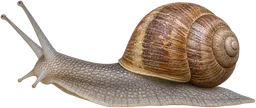 MotionSnail crawling0.001 m/sSnail crawling is the slow movement of a snail as it glides along a surface using its muscular foot.MotionBanana slug crawl0.0015 m/sBanana slug crawl refers to the speed at which a banana slug moves across a surface using muscular contractions and mucus secretion.MotionRed blood cell in a capillary0.001 m/sA red blood cell in a capillary refers to an erythrocyte moving through the body's smallest blood vessels as part of microcirculation.MotionGarden snail relaxed crawl0.0008 m/sA garden snail relaxed crawl describes the slow, steady movement of a garden snail as it glides along a surface.
 MotionElectron drift in household copper wiring0.0001 m/sThis refers to the slow average movement of electrons through copper wire when an electric current flows.
 TransportVenetian gondola10.85 mA Venetian gondola is a traditional, flat-bottomed rowing boat used for transport on the canals of Venice.PeopleOne-hour walk5 kmA one-hour walk is the distance a person travels by walking continuously at a steady pace for one hour.
 TransportCanal narrowboat17.7 mA canal narrowboat is a long, slender vessel designed for navigating the narrow canals of the United Kingdom.