
Red blood cell in a capillary
A red blood cell in a capillary refers to an erythrocyte moving through the body's smallest blood vessels as part of microcirculation.
Also known as: capillary red blood cell speed, erythrocyte capillary flow
How big is it?
0.001 m/s · representative capillary transit speed
Representative capillary transit speed · representative
Typical recorded range: 0.0005 m/s to 0.002 m/s.
A little perspective
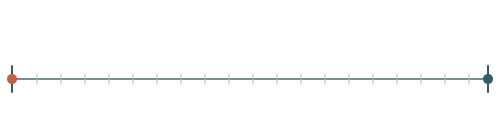
Red blood cell in a capillary vs Snail crawling: speed comparison
The capillary transit speed of a red blood cell in a capillary is approximately equal to the speed of a crawling snail.
DISTANCE IN ONE SECOND
A red blood cell in a capillary refers to an erythrocyte moving through the body's smallest blood vessels as part of microcirculation.
1 mm in 1 s
Snail crawling is the slow movement of a snail as it glides along a surface using its muscular foot.
1 mm in 1 s
Measurements, assumptions & sources +
Red blood cell in a capillary
Representative capillary transit speed: 0.001 m/s; representative; range 0.0005 m/s–0.002 m/s.
A representative red-blood-cell speed of 1 mm/s in a human capillary. Microvascular flow changes with vessel diameter, tissue, pressure and physiology, and individual cells deform during transit.
NCBI Bookshelf — Microcirculation
The marked representative capillary transit speed is calibrated. Unmeasured illustration details are representative.
Snail crawling
Speed: 0.001 m/s; example.
A chosen 1 mm/s crawl. Species, surface and conditions affect pace.
Defined examples — our methodology
The marked speed is calibrated. Unmeasured illustration details are representative.
Use the visual comparison to explore its scale, then check the measurements and sources.
Change your perspective
Put it next to…
Choose a suggestion to redraw the comparison, or open its page to learn what it is.
Why this measurement?
Why we use 0.001 m/s
We compare the capillary transit speed of a red blood cell in a capillary. This is a representative comparison value; individual specimens or conditions can vary. The recorded range is 0.0005 m/s to 0.002 m/s.
A representative red-blood-cell speed of 1 mm/s in a human capillary. Microvascular flow changes with vessel diameter, tissue, pressure and physiology, and individual cells deform during transit.
The picture identifies the subject; the diagram compares the recorded values. How calibrated comparisons work →
Recorded properties
Dimensions and measurements
| Property | Selected value | Recorded range | Basis |
|---|---|---|---|
| 0.001 m/s | 0.0005 m/s to 0.002 m/s | representative |
Around this scale
Explore nearby values.
Compare examples with lower, similar and higher values. Each card names the measurement being compared.
Nearest lower valueMotion and speedGarden snail relaxed crawl0.0008 m/sSpeedA garden snail relaxed crawl describes the slow, steady movement of a garden snail as it glides along a surface.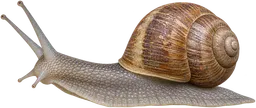 Around the same scaleMotion and speedSnail crawling0.001 m/sSpeedSnail crawling is the slow movement of a snail as it glides along a surface using its muscular foot.Nearest higher valueMotion and speedBanana slug crawl0.0015 m/sCrawling speedBanana slug crawl refers to the speed at which a banana slug moves across a surface using muscular contractions and mucus secretion.
Sources and method
Want to check the number?
The source records and measurement method remain available for inspection.
- NCBI Bookshelf — MicrocirculationRed cells deform and move through capillaries at tissue- and vessel-dependent millimetre-per-second scales.
There’s always another scale
Follow your curiosity.
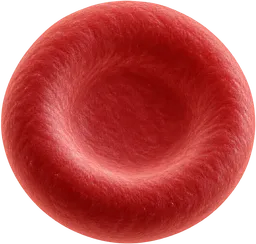 MicroscopicRed blood cell7.5 µmA red blood cell is a specialised blood cell that transports oxygen using haemoglobin.MotionSperm cell swimming5 × 10⁻⁵ m/sSperm cell swimming refers to the speed at which a human sperm cell moves through fluid using its tail for propulsion.MotionSnail crawling0.001 m/sSnail crawling is the slow movement of a snail as it glides along a surface using its muscular foot.MotionGarden snail relaxed crawl0.0008 m/sA garden snail relaxed crawl describes the slow, steady movement of a garden snail as it glides along a surface.MotionBanana slug crawl0.0015 m/sBanana slug crawl refers to the speed at which a banana slug moves across a surface using muscular contractions and mucus secretion.
 MotionElectron drift in household copper wiring0.0001 m/sThis refers to the slow average movement of electrons through copper wire when an electric current flows.MotionSea star tube-foot travel0.0003 m/sSea star tube-foot travel is the movement speed of a sea star as it uses its tube feet to glide over surfaces.MotionEarthworm surface crawl0.005 m/sEarthworm surface crawl is the rate at which an earthworm moves along the ground by extending and contracting its body segments.