
Container-terminal ship-to-shore trolley
A container-terminal ship-to-shore trolley is a motorised platform that moves shipping containers horizontally along a crane between a ship and the dock.
Also known as: STS crane trolley speed, container crane trolley
How big is it?
3 m/s · representative loaded trolley speed
Also 6.711 mph
Representative loaded trolley speed · representative
Typical recorded range: 2 m/s to 4 m/s.
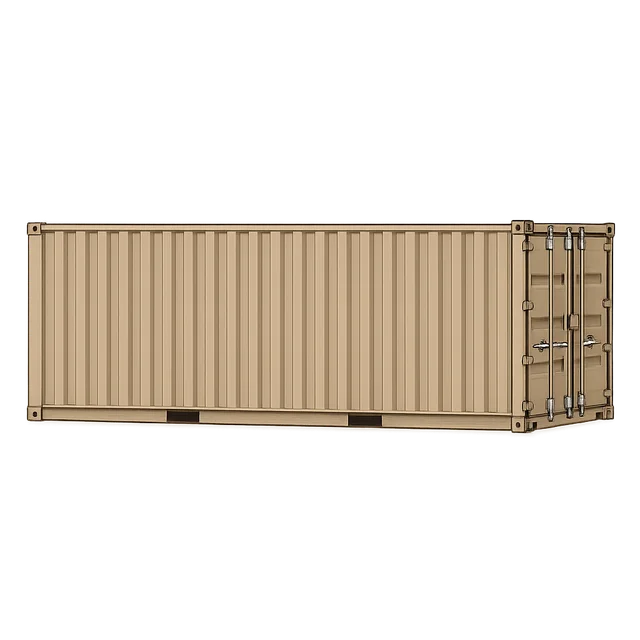
A little perspective
Container-terminal ship-to-shore trolley vs Polynesian outrigger canoe: speed comparison
The sailing speed of a Polynesian outrigger canoe is about 1.33 times the loaded trolley speed of a container-terminal ship-to-shore trolley.
DISTANCE IN ONE SECOND
A container-terminal ship-to-shore trolley is a motorised platform that moves shipping containers horizontally along a crane between a ship and the dock.
3 m in 1 s
A Polynesian outrigger canoe is a traditional sailing vessel with a main hull and a lateral float for stability, used for navigation across the Pacific.
4 m in 1 s
Measurements, assumptions & sources +
Container-terminal ship-to-shore trolley
Representative loaded trolley speed: 3 m/s; representative; range 2 m/s–4 m/s.
A representative 3 m/s horizontal trolley speed for a loaded ship-to-shore container crane. Crane design, payload, automation and operating phase change the commanded speed; this is not hoist speed.
Liebherr — Ship-to-shore container cranes
The marked representative loaded trolley speed is calibrated. Unmeasured illustration details are representative.
Polynesian outrigger canoe
Defined sailing speed: 4 m/s; defined specimen; range 2.5 m/s–6 m/s.
A defined single-outrigger Polynesian sailing canoe with an 8.7 m main hull, 180 kg rigged mass and 4 m/s sailing pace. Traditional forms vary by island, purpose and construction; hull length excludes steering paddles.
Smithsonian Ocean — Polynesian voyaging
The marked defined sailing speed is calibrated. Unmeasured illustration details are representative.
Use the visual comparison to explore its scale, then check the measurements and sources.
Change your perspective
Put it next to…
Choose a suggestion to redraw the comparison, or open its page to learn what it is.
Why this measurement?
Why we use 3 m/s
We compare the loaded trolley speed of a container-terminal ship-to-shore trolley. This is a representative comparison value; individual specimens or conditions can vary. The recorded range is 2 m/s to 4 m/s.
A representative 3 m/s horizontal trolley speed for a loaded ship-to-shore container crane. Crane design, payload, automation and operating phase change the commanded speed; this is not hoist speed.
The picture identifies the subject; the diagram compares the recorded values. How calibrated comparisons work →
Recorded properties
Dimensions and measurements
| Property | Selected value | Recorded range | Basis |
|---|---|---|---|
| 3 m/s | 2 m/s to 4 m/s | representative |
Around this scale
Explore nearby values.
Compare examples with lower, similar and higher values. Each card names the measurement being compared.
 Nearest lower valueMotion and speedRunning2.778 m/sSpeedRunning is a method of terrestrial locomotion in which humans move rapidly on foot, with both feet leaving the ground during each stride.
 Around the same scaleGravity and forceTen-metre centrifuge at two rpm2.094 m/sTangential speed at 10 m radiusA ten-metre centrifuge at two rpm is a rotating device used to simulate artificial gravity by spinning samples at a controlled speed.
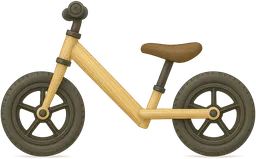 Nearest higher valueVehicles and transportBalance bicycle4 m/sDefined travel speedA balance bicycle is a small children's bike without pedals, designed to teach balance and steering skills.
Sources and method
Want to check the number?
The source records and measurement method remain available for inspection.
- Liebherr — Ship-to-shore container cranesSTS trolley and hoist configuration; the atlas selects a representative loaded horizontal trolley speed.
There’s always another scale
Follow your curiosity.
 Transport20-foot container6.096 mA 20-foot container is a standard-sized steel box used to transport goods by ship, rail or lorry.
 TransportContainer ship400 mA container ship is a large vessel built to transport standardised cargo containers across seas and oceans.
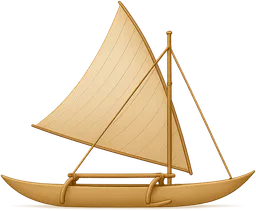 TransportPolynesian outrigger canoe8.7 mA Polynesian outrigger canoe is a traditional sailing vessel with a main hull and a lateral float for stability, used for navigation across the Pacific.MotionRunning2.778 m/sRunning is a method of terrestrial locomotion in which humans move rapidly on foot, with both feet leaving the ground during each stride.
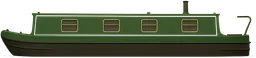 TransportCanal narrowboat17.7 mA canal narrowboat is a long, slender vessel designed for navigating the narrow canals of the United Kingdom.
 PeopleOne-hour walk5 kmA one-hour walk is the distance a person travels by walking continuously at a steady pace for one hour.
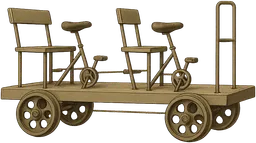 TransportPedal-powered rail trolley2.4 mA pedal-powered rail trolley is a lightweight vehicle propelled by pedalling, designed to travel along railway tracks for recreation or transport.MotionWalking1.389 m/sWalking is a form of human locomotion where one foot is always in contact with the ground.