
Ten-metre centrifuge at two rpm
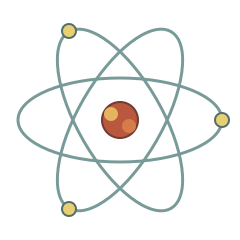
A ten-metre centrifuge at two rpm is a rotating device used to simulate artificial gravity by spinning samples at a controlled speed.
Also known as: 10 m centrifuge at 2 rpm
How big is it?
0.4387 N · equivalent force on a 1 kg sample
Equivalent force on a 1 kg sample · derived

A little perspective
Ten-metre centrifuge at two rpm vs Weight of a 180 g apple: weight comparison
The weight of a 180 g apple is about 4.02 times the equivalent force on a 1 kg sample of a ten-metre centrifuge at two rpm.
FORCE
A ten-metre centrifuge at two rpm is a rotating device used to simulate artificial gravity by spinning samples at a controlled speed.
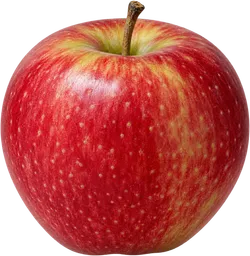
This is the downward force exerted by gravity on an average eating apple.
Measurements, assumptions & sources +
Ten-metre centrifuge at two rpm
Equivalent force on a 1 kg sample: 0.4387 N; derived.
A defined 10 m radius centrifuge rotating at 2 rpm. It produces about 0.439 m/s² centripetal acceleration, expressed here as 0.439 N on a 1 kg sample; speed and period are derived from the same model.
Defined examples — our methodology
The marked equivalent force on a 1 kg sample is calibrated. Unmeasured illustration details are representative.
Weight of a 180 g apple
Weight: 1.765 N; example.
Force on a 180 g apple at standard Earth gravity. Its mass is 0.18 kg.
Defined examples — our methodology
The marked weight is calibrated. Unmeasured illustration details are representative.
Use the visual comparison to explore its scale, then check the measurements and sources.
Change your perspective
Put it next to…
Choose a suggestion to redraw the comparison, or open its page to learn what it is.
Why this measurement?
Why we use 0.4387 N
We compare the equivalent force on a 1 kg sample of a ten-metre centrifuge at two rpm. The measurement is labelled derived. Check the source notes for its basis.
A defined 10 m radius centrifuge rotating at 2 rpm. It produces about 0.439 m/s² centripetal acceleration, expressed here as 0.439 N on a 1 kg sample; speed and period are derived from the same model.
The picture identifies the subject; the diagram compares the recorded values. How calibrated comparisons work →
Recorded properties
Dimensions and measurements
| Property | Selected value | Recorded range | Basis |
|---|---|---|---|
| 0.4387 N | Not recorded | derived | |
| 2.094 m/s | Not recorded | derived | |
| 30 s | Not recorded | derived |
Around this scale
Explore nearby values.
Compare examples with lower, similar and higher values. Each card names the measurement being compared.
 Nearest lower valueFundamental physicsThrust of an ionocraft lifter0.2 NThrustThe thrust of an ionocraft lifter is the upward force generated by moving ions through air using high voltage, allowing the device to lift itself.
 Nearest higher valueGravity and forceWeight of a 180 g apple1.765 NWeightThis is the downward force exerted by gravity on an average eating apple.
Sources and method
Want to check the number?
The source records and measurement method remain available for inspection.
There’s always another scale
Follow your curiosity.
 GravityWeight of a 70 kg person686.5 NThis is the downward force exerted by gravity on an average adult human.
 GravityLISA Pathfinder free-falling test mass5 × 10⁻¹⁵ NThe LISA Pathfinder free-falling test mass is a precisely controlled object in space used to demonstrate technologies for detecting gravitational waves by minimising non-gravitational forces.GravityWeight of a 180 g apple1.765 NThis is the downward force exerted by gravity on an average eating apple.Fundamental physicsThrust of an ionocraft lifter0.2 NThe thrust of an ionocraft lifter is the upward force generated by moving ions through air using high voltage, allowing the device to lift itself.Fundamental physicsThrust of a Hall-effect satellite thruster0.1 NThe thrust of a Hall-effect satellite thruster is the force produced by accelerating ions with a magnetic field to propel a spacecraft.Fundamental physicsThrust of a gridded ion engine0.09 NThe thrust of a gridded ion engine is the force generated by accelerating ions through electrostatic grids to provide propulsion in space.GravityParabolic-flight microgravity arc0.02 NA parabolic-flight microgravity arc is a flight manoeuvre that creates short periods of near-weightlessness for people and experiments inside an aircraft.GravityBinary-star planet tidal acceleration0.01 NBinary-star planet tidal acceleration is the difference in gravitational pull experienced across a planet due to the influence of two stars.