Thrust of an ionocraft lifter
The thrust of an ionocraft lifter is the upward force generated by moving ions through air using high voltage, allowing the device to lift itself.
How big is it?
0.2 N of force
Thrust · representative
Typical recorded range: 0.01 N to 1 N.
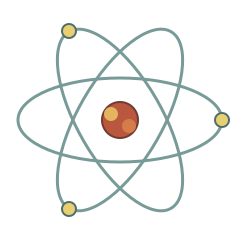
A little perspective
Weight of a 180 g apple is about 8.83 times larger on this measurement.
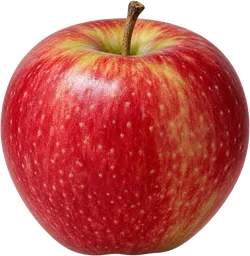
Weight of a 180 g apple: This is the downward force exerted by gravity on an average eating apple.
Measurements, assumptions & sources +
Thrust of an ionocraft lifter
A representative 0.2 N electrohydrodynamic-thrust model for a small atmospheric ionocraft lifter. Electrode geometry, voltage, air conditions and test setup strongly affect thrust.
Defined examples — our methodology
The marked thrust is calibrated. Unmeasured illustration details are representative.
Weight of a 180 g apple
Force on a 180 g apple at standard Earth gravity. Its mass is 0.18 kg.
Defined examples — our methodology
The marked weight is calibrated. Unmeasured illustration details are representative.
Change your perspective
Put it next to…
Choose a suggestion to redraw the comparison, or open its page to learn what it is.
Why this measurement?
Why we use 0.2 N
For comparison, this page uses thrust. This is labelled representative; the central value is useful for comparison, while real values or measurement solutions can vary. The recorded range is 0.01 N to 1 N.
A representative 0.2 N electrohydrodynamic-thrust model for a small atmospheric ionocraft lifter. Electrode geometry, voltage, air conditions and test setup strongly affect thrust.
The identifying illustration and the numerical comparison remain separate. How calibrated comparisons work →
Recorded properties
Thrust of an ionocraft lifter dimensions and measurements
| Property | Selected value | Recorded range | Basis |
|---|---|---|---|
| 0.2 N | 0.01 N to 1 N | representative |
Around this scale
Go smaller. Go bigger.
These links use compatible weight records, ordered around the selected value.
Nearest lower value · Fundamental physicsThrust of a Hall-effect satellite thruster0.1 NThe thrust of a Hall-effect satellite thruster is the force produced by accelerating ions with a magnetic field to propel a spacecraft.Around the same scale · Fundamental physicsThrust of a gridded ion engine0.09 NThe thrust of a gridded ion engine is the force generated by accelerating ions through electrostatic grids to provide propulsion in space. Nearest higher value · GravityTen-metre centrifuge at two rpm0.4387 NA ten-metre centrifuge at two rpm is a rotating device used to simulate artificial gravity by spinning samples at a controlled speed.
Sources and method
Want to check the number?
The source records and measurement method remain available for inspection.
There’s always another scale
Follow your curiosity.
 GravityWeight of a 180 g apple1.765 NThis is the downward force exerted by gravity on an average eating apple.Fundamental physicsThrust of a Hall-effect satellite thruster0.1 NThe thrust of a Hall-effect satellite thruster is the force produced by accelerating ions with a magnetic field to propel a spacecraft.GravityTen-metre centrifuge at two rpm0.4387 NA ten-metre centrifuge at two rpm is a rotating device used to simulate artificial gravity by spinning samples at a controlled speed.Fundamental physicsThrust of a gridded ion engine0.09 NThe thrust of a gridded ion engine is the force generated by accelerating ions through electrostatic grids to provide propulsion in space.GravityParabolic-flight microgravity arc0.02 NA parabolic-flight microgravity arc is a flight manoeuvre that creates short periods of near-weightlessness for people and experiments inside an aircraft.GravityBinary-star planet tidal acceleration0.01 NBinary-star planet tidal acceleration is the difference in gravitational pull experienced across a planet due to the influence of two stars.Fundamental physicsSoap film pull on a wire0.006 NSoap film pull on a wire is the force created by the surface tension of a soap film stretched across a wire frame.GravityMoon gravity force on a 70 kg astronaut113.4 NThis is the gravitational force exerted on a 70 kg person standing on the surface of the Moon, reflecting the Moon's weaker gravity compared to Earth's.