
Light in vacuum
Light in vacuum is electromagnetic radiation that travels through empty space without any material medium.
Also known as: speed of light, lightspeed
How big is it?
100% of c (1c) · speed
Speed · exact

A little perspective
Light in vacuum vs Mercury: speed comparison
The speed of light in vacuum is about 6,330 times the orbital speed of Mercury.
DISTANCE IN ONE SECOND
Light in vacuum is electromagnetic radiation that travels through empty space without any material medium.
299,800 km in 1 s
Mercury is a rocky planet orbiting closest to the Sun in the Solar System.
47.36 km in 1 s
Too small to see at this scale; the bar has not been widened.
Measurements, assumptions & sources +
Light in vacuum
Speed: 100% of c (1c); exact.
Exactly 299,792,458 metres per second in vacuum. Light travels more slowly through materials.
NIST — 2022 CODATA fundamental constants
The marked speed is calibrated. Unmeasured illustration details are representative.
Mercury
Orbital speed: 170,500 km/h; rounded orbital anchor.
Mean-radius spherical model for Mercury; actual shape is not perfectly spherical.
Rounded representative orbital speed, not instantaneous ephemeris data.
Defined examples — our methodology
The marked orbital speed is calibrated. Unmeasured illustration details are representative.
Use the visual comparison to explore its scale, then check the measurements and sources.
Change your perspective
Put it next to…
Choose a suggestion to redraw the comparison, or open its page to learn what it is.
Why this measurement?
Why we use 100% of c (1c)
We compare the speed of light in vacuum. This value follows an exact definition or conversion.
Exactly 299,792,458 metres per second in vacuum. Light travels more slowly through materials.
The picture identifies the subject; the diagram compares the recorded values. How calibrated comparisons work →
Recorded properties
Dimensions and measurements
| Property | Selected value | Recorded range | Basis |
|---|---|---|---|
| 100% of c (1c) | Not recorded | exact |
Around this scale
Explore nearby values.
Compare examples with lower, similar and higher values. Each card names the measurement being compared.
Sources and method
Want to check the number?
The source records and measurement method remain available for inspection.
- NIST — 2022 CODATA fundamental constantsRecommended constants with uncertainties; exact SI definitions are distinguished from measured constants.
More ways to see it
Curated comparisons
There’s always another scale
Follow your curiosity.
 MotionWalking1.389 m/sWalking is a form of human locomotion where one foot is always in contact with the ground.MotionSound in air1,235 km/hSound in air is the propagation of pressure waves through the atmosphere, which can be heard by humans and animals.
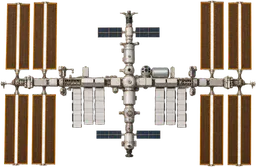 MotionInternational Space Station28,160 km/hThe International Space Station is a large habitable satellite that orbits Earth and serves as a research laboratory.
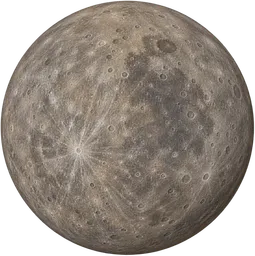 SpaceMercury4,879 kmMercury is a rocky planet orbiting closest to the Sun in the Solar System.
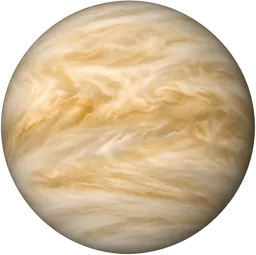 SpaceVenus12,100 kmVenus is a rocky planet orbiting the Sun, covered by thick clouds of carbon dioxide and sulphuric acid.
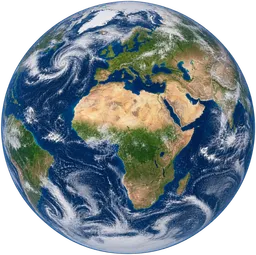 MotionEarth orbiting the Sun107,200 km/hEarth orbiting the Sun is the motion of our planet as it revolves around the Sun along its elliptical path.SpaceEarth12,740 kmEarth is the rocky planet on which we live and the third planet from the Sun.
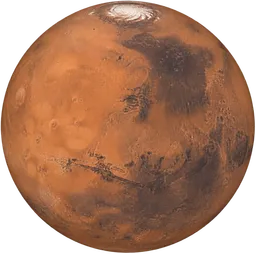 SpaceMars6,779 kmMars is a rocky planet orbiting the Sun, with a reddish surface due to iron oxide.