International Space Station vs Light in vacuum: speed comparison
The speed of light in vacuum is about 38,300 times the speed of the International Space Station. Selected basis: approximate values.
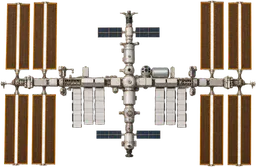
- International Space Station
- Speed
- Light in vacuum
- Speed
DISTANCE IN ONE SECOND
07.823 km in 1 s
Too small to see at this scale; the bar has not been widened.
Each track shows distance covered in the same second. The small illustrations identify the movers; their sizes are schematic.
In perspective38,300× timesMeasurements, assumptions & sources
28,160 km/h - Speed; approximate.
The International Space Station is a large habitable satellite that orbits Earth and serves as a research laboratory.
NASA’s rounded 17,500 mph orbital-speed figure. This is motion around Earth, not speed relative to an astronaut inside.
NASA — International Space Station100% of c (1c) - Speed; exact.
Light in vacuum is electromagnetic radiation that travels through empty space without any material medium.
Exactly 299,792,458 metres per second in vacuum. Light travels more slowly through materials.
NIST — 2022 CODATA fundamental constants 
Got a good eye for scale?
Try matching it yourself.