
Neutron
A neutron is a type of subatomic particle found in atomic nuclei, carrying no electric charge and playing a key role in holding nuclei together.
How big is it?
1.675 × 10⁻²⁷ kg · mass
Mass · measured constant
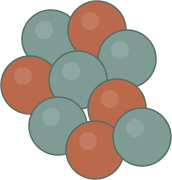
A little perspective
Neutron vs Hydrogen atom: mass comparison
The mass of a neutron is approximately equal to the mass of a hydrogen atom.
A neutron is a type of subatomic particle found in atomic nuclei, carrying no electric charge and playing a key role in holding nuclei together.
A hydrogen atom is the simplest neutral atom, with one proton in its nucleus and one electron around it.
Bar length measures mass, not physical size. Both bars start at zero kilograms (kg). Pictures identify the objects only.
Measurements, assumptions & sources +
Neutron
Mass: 1.675 × 10⁻²⁷ kg; measured constant.
A free neutron’s mass. It is a quantum particle with internal structure, not a little solid sphere.
NIST — 2022 CODATA fundamental constants
The marked mass is calibrated. Unmeasured illustration details are representative.
Hydrogen atom
Mass: 1.674 × 10⁻²⁷ kg; representative.
A diameter of twice the Bohr radius, used as a characteristic scale. An electron cloud has no hard outer surface.
NIST — 2022 CODATA fundamental constants
The marked mass is calibrated. Unmeasured illustration details are representative.
Use the visual comparison to explore its scale, then check the measurements and sources.
Change your perspective
Put it next to…
Choose a suggestion to redraw the comparison, or open its page to learn what it is.
Why this measurement?
Why we use 1.675 × 10⁻²⁷ kg
We compare the mass of a neutron. This is a measured value; check the notes for its source and scope.
A free neutron’s mass. It is a quantum particle with internal structure, not a little solid sphere.
The picture identifies the subject; the diagram compares the recorded values. How calibrated comparisons work →
Recorded properties
Dimensions and measurements
| Property | Selected value | Recorded range | Basis |
|---|---|---|---|
| 1.675 × 10⁻²⁷ kg | Not recorded | measured constant |
Around this scale
Explore nearby values.
Compare examples with lower, similar and higher values. Each card names the measurement being compared.
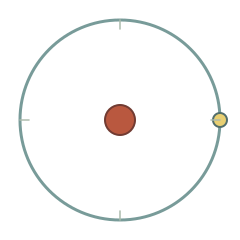 Nearest lower valueMicroscopic objectsHydrogen atom1.674 × 10⁻²⁷ kgMassA hydrogen atom is the simplest neutral atom, with one proton in its nucleus and one electron around it.
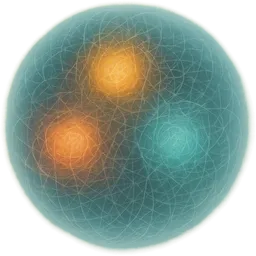 Around the same scaleFundamental physicsProton1.673 × 10⁻²⁷ kgMassA proton is a positively charged particle found in the nucleus of atoms, made up of quarks.
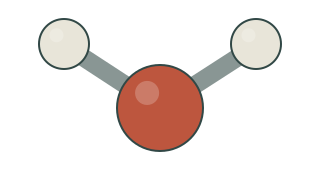 Nearest higher valueMicroscopic objectsWater molecule2.992 × 10⁻²⁶ kgMassA water molecule is a group of two hydrogen atoms bonded to one oxygen atom.
Sources and method
Want to check the number?
The source records and measurement method remain available for inspection.
- NIST — 2022 CODATA fundamental constantsRecommended constants with uncertainties; exact SI definitions are distinguished from measured constants.
More ways to see it
Curated comparisons
There’s always another scale
Follow your curiosity.
 Fundamental physicsPlanck length1.616 × 10⁻³⁵ mThe Planck length is a scale formed from fundamental physical constants.MicroscopicHydrogen atom105.8 pmA hydrogen atom is the simplest neutral atom, with one proton in its nucleus and one electron around it.
 MicroscopicDNA double helix2 nmDNA is the molecule that stores hereditary information in living organisms.Fundamental physicsProton1.682 fmA proton is a positively charged particle found in the nucleus of atoms, made up of quarks.MicroscopicWater molecule280 pmA water molecule is a group of two hydrogen atoms bonded to one oxygen atom.
 MicroscopicGlucose molecule1 nmA glucose molecule is a simple sugar used by living cells as a source of chemical energy.
 Fundamental physicsElectron9.109 × 10⁻³¹ kgAn electron is a fundamental subatomic particle with a negative electric charge, found in atoms and responsible for electricity and chemical bonding.
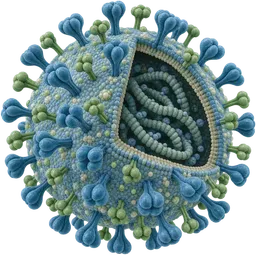 MicroscopicVirus100 nmA virus is an infectious particle containing genetic material inside a protein coat, sometimes with an outer envelope.