
1 dalton
1.661 × 10⁻²⁷ kgMass · definition
The quantity is exact as entered. Comparisons use the clearly stated specimen, model or nominal measurement.

Mass
Particles & molecules
The quantity is exact as entered.
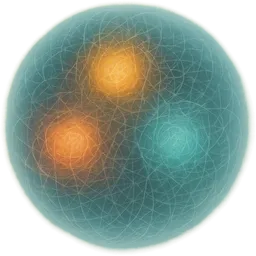
A proton is a positively charged particle found in the nucleus of atoms, made up of quarks.
Bar length measures mass, not physical size. Both bars start at zero kilograms (kg). Pictures identify the objects only.
A little perspective
The mass of a proton is about 1.01 times 1 dalton.
Mass: 1.661 × 10⁻²⁷ kg; definition.
The quantity is exact as entered. Comparisons use the clearly stated specimen, model or nominal measurement.
Mass: 1.673 × 10⁻²⁷ kg; measured constant.
Twice the approximately 0.8409 fm charge radius. The charge distribution has no hard boundary; the illustration is schematic.
NIST — 2022 CODATA fundamental constants
The marked mass is calibrated. Unmeasured illustration details are representative.
Measurement details
Compare 1 dalton with the mass of a proton. The notes below explain how each value was chosen.
Mass · definition
The quantity is exact as entered. Comparisons use the clearly stated specimen, model or nominal measurement.
Mass · measured constant
Twice the approximately 0.8409 fm charge radius. The charge distribution has no hard boundary; the illustration is schematic.
The diagram uses the recorded measurements. Details outside the marked spans do not set the scale.
Mass is distinct from weight: an object’s mass stays the same as gravity changes.
Change your perspective
Choose a suggestion to redraw the comparison, or open its page to learn what it is.
A little smaller. A little larger.