
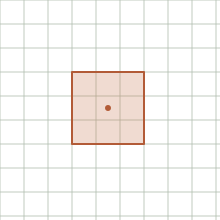
1 Planck time
5.391 × 10⁻⁴⁴ sTime · definition
A theoretical scale made from physical constants. It is not a proven smallest object or a hard physical limit.

Time
A duration of 1 Planck time is about 5.391247 × 10⁻⁴⁴ seconds.
Fleeting instants
ELAPSED TIME
A theoretical scale made from physical constants.
The Planck length is a scale formed from fundamental physical constants.
A little perspective
1 Planck time is approximately equal to the duration of the Planck length.
Time: 5.391 × 10⁻⁴⁴ s; definition.
A theoretical scale made from physical constants. It is not a proven smallest object or a hard physical limit.
Time: 5.391 × 10⁻⁴⁴ s; theoretical.
A theoretical scale formed from the speed of light, reduced Planck constant and gravitational constant. It is not experimentally established as the smallest possible length. The area and volume are derived mathematical scales.
NIST — 2022 CODATA fundamental constants
The marked time is calibrated. Unmeasured illustration details are representative.
Measurement details
Compare 1 Planck time with the duration of the Planck length. The notes below explain how each value was chosen.
Time · definition
A theoretical scale made from physical constants. It is not a proven smallest object or a hard physical limit.
Time · theoretical
A theoretical scale formed from the speed of light, reduced Planck constant and gravitational constant. It is not experimentally established as the smallest possible length. The area and volume are derived mathematical scales.
The diagram uses the recorded measurements. Details outside the marked spans do not set the scale.
A duration is an interval, not a calendar date.
Change your perspective
Choose a suggestion to redraw the comparison, or open its page to learn what it is.
A little smaller. A little larger.