Moon orbital kinetic energy
Moon orbital kinetic energy is the energy the Moon possesses due to its motion as it orbits Earth.
Also known as: lunar orbital kinetic energy
How big is it?
3.83 × 10¹³ PJ of energy
Mean-orbit kinetic energy · derived
Typical recorded range: 3.7 × 10¹³ PJ to 4 × 10¹³ PJ.

A little perspective
About 100 times the energy of One second of sunlight.
One second of sunlight: The total energy emitted by the Sun in all directions over one second.
Measurements, assumptions & sources +
Moon orbital kinetic energy
Approximately 3.83 × 10²⁸ J, calculated as ½mv² from the JPL-derived lunar mass and a mean orbital speed of 1.022 km/s. The Moon’s elliptical orbit changes its instantaneous speed and kinetic energy.
The marked mean-orbit kinetic energy is calibrated. Unmeasured illustration details are representative.
One second of sunlight
The Sun’s nominal luminosity multiplied by one second: total emitted energy, not energy received by Earth.
IAU — nominal solar and planetary conversion constants
The marked energy is calibrated. Unmeasured illustration details are representative.
Change your perspective
Put it next to…
Choose a suggestion to redraw the comparison, or open its page to learn what it is.
Why this measurement?
Why we use 3.83 × 10¹³ PJ
For comparison, this page uses mean-orbit kinetic energy. The record labels the measurement derived; that status is retained wherever the value is compared. The recorded range is 3.7 × 10¹³ PJ to 4 × 10¹³ PJ.
Approximately 3.83 × 10²⁸ J, calculated as ½mv² from the JPL-derived lunar mass and a mean orbital speed of 1.022 km/s. The Moon’s elliptical orbit changes its instantaneous speed and kinetic energy.
The identifying illustration and the numerical comparison remain separate. How calibrated comparisons work →
Recorded properties
Moon orbital kinetic energy dimensions and measurements
| Property | Selected value | Recorded range | Basis |
|---|---|---|---|
| 3.83 × 10¹³ PJ | 3.7 × 10¹³ PJ to 4 × 10¹³ PJ | derived |
Around this scale
Go smaller. Go bigger.
These links use compatible energy records, ordered around the selected value.
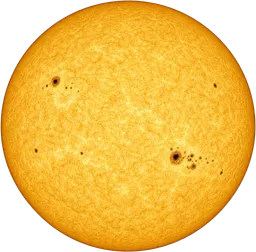 Nearest lower value · EnergyOne second of sunlight3.828 × 10¹¹ PJThe total energy emitted by the Sun in all directions over one second.Nearest higher value · EnergySupernova light model1 × 10²⁷ PJThe electromagnetic energy released by a typical supernova explosion, excluding kinetic and neutrino energy.
Sources and method
Want to check the number?
The source records and measurement method remain available for inspection.
- NASA — Moon factsMean lunar orbital speed and synodic phase-cycle context.
There’s always another scale
Follow your curiosity.
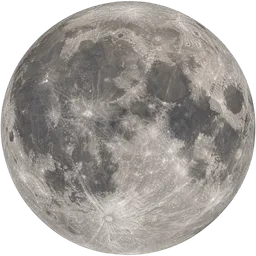 SpaceMoon3,475 kmThe Moon is Earth’s natural satellite and the brightest large object in Earth’s night sky.
 MotionMoon orbital speed around Earth3,679 km/hMoon orbital speed around Earth is the average velocity at which the Moon travels along its orbit around our planet.EnergyOne second of sunlight3.828 × 10¹¹ PJThe total energy emitted by the Sun in all directions over one second.EnergySupernova light model1 × 10²⁷ PJThe electromagnetic energy released by a typical supernova explosion, excluding kinetic and neutrino energy.
 EnergyAn industrial terajoule1 TJAn industrial terajoule is a large unit of energy used to quantify industrial-scale processes or outputs.EnergyLightning energy model1 GJA lightning energy model represents the total energy released during a single lightning discharge.
 EnergyOne tonne TNT equivalent4.184 GJOne tonne of TNT equivalent is a conventional unit of energy, defined as 4.184 gigajoules rather than by the variable yield of a particular explosive sample.
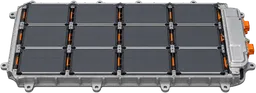 EnergyElectric car battery216 MJAn electric car battery stores energy to power an electric vehicle.