
Human leg
The human leg is the lower limb extending from the hip to the heel, enabling standing and movement.
Also known as: adult human leg, lower limb
How big is it?
1 m · defined hip-to-heel length
Also 3.281 ft
Defined hip-to-heel length · representative model
Typical recorded range: 85 cm to 1.1 m.
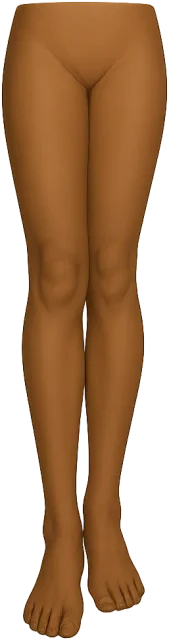
A little perspective
Human leg vs Lacrosse stick: length comparison
The short-crosse length of a lacrosse stick is about 1.04 times the hip-to-heel length of the human leg.
The human leg is the lower limb extending from the hip to the heel, enabling standing and movement.
A lacrosse stick is a sports implement with a netted head used to catch, carry and throw a ball in lacrosse.
Both rulers start at the same zero and share one linear scale. Artwork keeps its original proportions. Horizontal rulers compare the selected spans; vertical brackets also identify height on the artwork.
Measurements, assumptions & sources +
Human leg
Defined hip-to-heel length: 1 m; representative model; range 85 cm–1.1 m.
One complete leg in a defined 70 kg adult model: 1.0 m from hip to heel and 11.68 kg, using published thigh, shank and foot mass fractions. This is a comparison model, not a population average.
de Leva — Adjustments to Zatsiorsky-Seluyanov segment inertia parameters
The marked defined hip-to-heel length is calibrated. Unmeasured illustration details are representative.
Lacrosse stick
Defined short-crosse length: 1.041 m; specified specimen; range 1.016 m–1.067 m.
A defined 41 in (1.0414 m) men’s short crosse, within the World Lacrosse 40–42 in range. Other positions and disciplines use different permitted lengths.
World Lacrosse — Equipment and ball standards
The marked defined short-crosse length is calibrated. Unmeasured illustration details are representative.
Use the visual comparison to explore its scale, then check the measurements and sources.
Change your perspective
Put it next to…
Choose a suggestion to redraw the comparison, or open its page to learn what it is.
Why this measurement?
Why we use 1 m
We compare the hip-to-heel length of the human leg. This is a representative comparison value; individual specimens or conditions can vary. The recorded range is 85 cm to 1.1 m.
One complete leg in a defined 70 kg adult model: 1.0 m from hip to heel and 11.68 kg, using published thigh, shank and foot mass fractions. This is a comparison model, not a population average.
The marked vertical span follows the measured feature, not the edges of the image. How calibrated comparisons work →
Recorded properties
Dimensions and measurements
| Property | Selected value | Recorded range | Basis |
|---|---|---|---|
| 1 m | 85 cm to 1.1 m | representative model | |
| 11.68 kg | 9 kg to 14 kg | representative model |
Around this scale
Explore nearby values.
Compare examples with lower, similar and higher values. Each card names the measurement being compared.
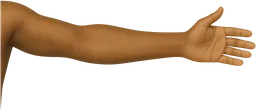 Nearest lower valuePeople and human anatomyHuman arm75 cmDefined shoulder-to-fingertip lengthThe human arm is the upper limb of the body, extending from the shoulder to the hand and enabling a wide range of movement and manipulation.
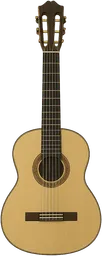 Around the same scaleEveryday objectsClassical guitar1 mDefined overall lengthA classical guitar is a six-stringed musical instrument with nylon strings, commonly used for classical and flamenco music.
 Nearest higher valuePeople and human anatomyChild1.2 mHeightA child is a young human who is still developing physically and socially towards adulthood.
Sources and method
Want to check the number?
The source records and measurement method remain available for inspection.
- de Leva — Adjustments to Zatsiorsky-Seluyanov segment inertia parametersAdult body-segment mass fractions; atlas segment masses are derived for a defined 70 kg adult model.
There’s always another scale
Follow your curiosity.
PeopleHuman arm75 cmThe human arm is the upper limb of the body, extending from the shoulder to the hand and enabling a wide range of movement and manipulation. PeopleHuman torso60 cmThe human torso is the central part of the body between the shoulders and hips, containing most major internal organs.
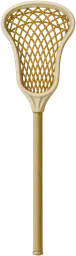 SportLacrosse stick1.041 mA lacrosse stick is a sports implement with a netted head used to catch, carry and throw a ball in lacrosse.
 SpaceLuna 290 cmLuna 2 was a Soviet spacecraft that became the first human-made object to impact the Moon in 1959.
 Living thingsCapybara1.15 mA capybara is the largest living rodent, native to South America and adapted to semi-aquatic habitats.Everyday thingsClassical guitar1 mA classical guitar is a six-stringed musical instrument with nylon strings, commonly used for classical and flamenco music.
 TransportKick scooter1 mA kick scooter is a human-powered vehicle with a handlebar and deck, propelled by pushing off the ground with one foot.
 SportFencing foil1.1 mA fencing foil is a lightweight sword used in the sport of fencing, designed for thrusting with a blunted tip.