
Human arm
The human arm is the upper limb of the body, extending from the shoulder to the hand and enabling a wide range of movement and manipulation.
Also known as: adult human arm, upper limb
How big is it?
75 cm · defined shoulder-to-fingertip length
Also 2.461 ft
Defined shoulder-to-fingertip length · representative model
Typical recorded range: 65 cm to 85 cm.
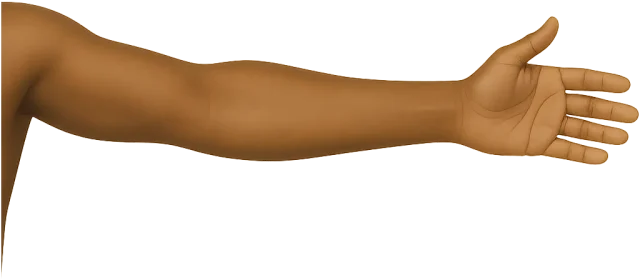
A little perspective
Human arm vs Snowshoe: length comparison
The frame length of a snowshoe is about 1.01 times the shoulder-to-fingertip length of the human arm.
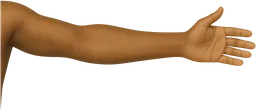
The human arm is the upper limb of the body, extending from the shoulder to the hand and enabling a wide range of movement and manipulation.
A snowshoe is a footwear device designed to spread a person's weight, allowing easier movement across snow-covered ground.
Both rulers start at the same zero and share one linear scale. Artwork keeps its original proportions. Horizontal rulers compare the selected spans; vertical brackets also identify height on the artwork.
Measurements, assumptions & sources +
Human arm
Defined shoulder-to-fingertip length: 75 cm; representative model; range 65 cm–85 cm.
One complete arm in a defined 70 kg adult model: 75 cm from shoulder to fingertip and 3.46 kg, using published upper-arm, forearm and hand mass fractions. This is a comparison model, not a population average.
de Leva — Adjustments to Zatsiorsky-Seluyanov segment inertia parameters
The marked defined shoulder-to-fingertip length is calibrated. Unmeasured illustration details are representative.
Snowshoe
Defined frame length: 76 cm; defined specimen; range 65 cm–90 cm.
One defined traditional teardrop snowshoe 76 cm long, 25 cm wide and 1 kg. Frames, decking and bindings vary; dimensions describe one complete shoe, not a pair.
Encyclopaedia Britannica — Snowshoe
The marked defined frame length is calibrated. Unmeasured illustration details are representative.
Use the visual comparison to explore its scale, then check the measurements and sources.
Change your perspective
Put it next to…
Choose a suggestion to redraw the comparison, or open its page to learn what it is.
Why this measurement?
Why we use 75 cm
We compare the shoulder-to-fingertip length of the human arm. This is a representative comparison value; individual specimens or conditions can vary. The recorded range is 65 cm to 85 cm.
One complete arm in a defined 70 kg adult model: 75 cm from shoulder to fingertip and 3.46 kg, using published upper-arm, forearm and hand mass fractions. This is a comparison model, not a population average.
The marked horizontal span follows the measured feature, not the edges of the image. How calibrated comparisons work →
Recorded properties
Dimensions and measurements
| Property | Selected value | Recorded range | Basis |
|---|---|---|---|
| 75 cm | 65 cm to 85 cm | representative model | |
| 3.46 kg | 2.5 kg to 4.5 kg | representative model |
Around this scale
Explore nearby values.
Compare examples with lower, similar and higher values. Each card names the measurement being compared.
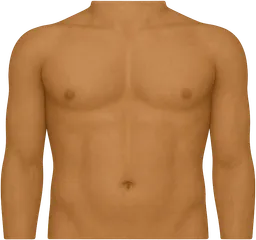 Nearest lower valuePeople and human anatomyHuman torso60 cmDefined shoulder-to-hip heightThe human torso is the central part of the body between the shoulders and hips, containing most major internal organs.
 Around the same scalePeople and human anatomyWalking step75 cmLengthA walking step is the distance covered by a person in a single step during normal walking.
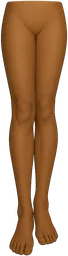 Nearest higher valuePeople and human anatomyHuman leg1 mDefined hip-to-heel lengthThe human leg is the lower limb extending from the hip to the heel, enabling standing and movement.
Sources and method
Want to check the number?
The source records and measurement method remain available for inspection.
- de Leva — Adjustments to Zatsiorsky-Seluyanov segment inertia parametersAdult body-segment mass fractions; atlas segment masses are derived for a defined 70 kg adult model.
There’s always another scale
Follow your curiosity.
PeopleHuman leg1 mThe human leg is the lower limb extending from the hip to the heel, enabling standing and movement.PeopleHuman torso60 cmThe human torso is the central part of the body between the shoulders and hips, containing most major internal organs.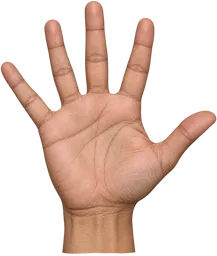 PeopleHand span20 cmHand span is the distance measured from the tip of the thumb to the tip of the little finger when the hand is fully extended.
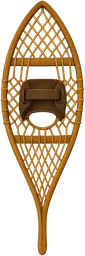 SportSnowshoe76 cmA snowshoe is a footwear device designed to spread a person's weight, allowing easier movement across snow-covered ground.
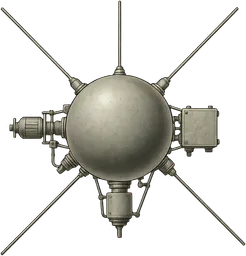 SpaceLuna 290 cmLuna 2 was a Soviet spacecraft that became the first human-made object to impact the Moon in 1959.
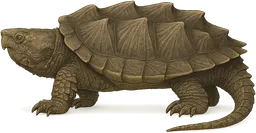 Living thingsAlligator snapping turtle60 cmThe alligator snapping turtle is a freshwater turtle from the southeastern United States, distinguished by its spiked shell and powerful jaws.
 Everyday thingsA1 paper84.1 cmA1 paper is an ISO 216 paper format produced by halving an A0 sheet across its longer side.
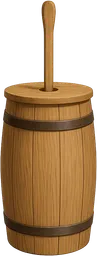 ContainersButter churn20 LA butter churn is a vessel with a mechanism for agitating cream to produce butter, traditionally operated by hand.