
Age of the universe
The age of the universe is the time since the Big Bang, marking the beginning of cosmic expansion.
How big is it?
13.8 Gyr · time
Time · reference interval
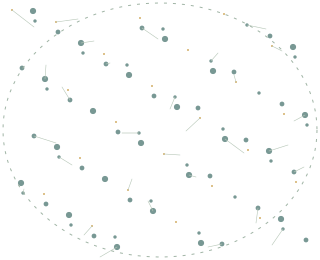
A little perspective
Age of the universe vs Observable universe: duration comparison
The age of the universe is approximately equal to the age of the observable universe.
ELAPSED TIME
The age of the universe is the time since the Big Bang, marking the beginning of cosmic expansion.
The observable universe is the region from which light or other signals have had time to reach us since the early universe.
Measurements, assumptions & sources +
Age of the universe
Time: 13.8 Gyr; reference interval.
Approximately 13.8 billion years in the standard cosmological model. This is distinct from the observable universe’s present diameter.
The marked time is calibrated. Unmeasured illustration details are representative.
Observable universe
Age: 13.8 Gyr; cosmological estimate.
About 92 billion light-years across in present-day comoving distance. Space expanded while the light travelled. The 13.8-billion-year age is a time, not its radius divided by light speed. The total universe may be far larger, possibly infinite.
The marked age is calibrated. Unmeasured illustration details are representative.
Use the visual comparison to explore its scale, then check the measurements and sources.
Change your perspective
Put it next to…
Choose a suggestion to redraw the comparison, or open its page to learn what it is.
Why this measurement?
Why we use 13.8 Gyr
We compare the age of the universe. The measurement is labelled reference interval. Check the source notes for its basis.
Approximately 13.8 billion years in the standard cosmological model. This is distinct from the observable universe’s present diameter.
The picture identifies the subject; the diagram compares the recorded values. How calibrated comparisons work →
Recorded properties
Dimensions and measurements
| Property | Selected value | Recorded range | Basis |
|---|---|---|---|
| 13.8 Gyr | Not recorded | reference interval |
Around this scale
Explore nearby values.
Compare examples with lower, similar and higher values. Each card names the measurement being compared.
Nearest lower valueTime and durationAge of Earth4.54 GyrTimeThe age of Earth is the time that has passed since the planet formed from the solar nebula. Around the same scalePlanets, moons and spaceObservable universe13.8 GyrAgeThe observable universe is the region from which light or other signals have had time to reach us since the early universe.
Sources and method
Want to check the number?
The source records and measurement method remain available for inspection.
- NASA — Cosmic historyApproximately 13.8 billion years since the early hot universe in the standard cosmological model.
More ways to see it
Curated comparisons
There’s always another scale
Follow your curiosity.
 TimeBlink of an eye150 msA blink of an eye is the quick closing and opening of the eyelid, usually happening involuntarily.TimeHuman lifetime80 yearsA human lifetime is the span from a person's birth to their death.TimeAge of Earth4.54 GyrThe age of Earth is the time that has passed since the planet formed from the solar nebula.SpaceObservable universe28.21 GpcThe observable universe is the region from which light or other signals have had time to reach us since the early universe.
 SpaceEarth12,740 kmEarth is the rocky planet on which we live and the third planet from the Sun.TimeSince the non-avian dinosaurs66 MyrThe interval since the non-avian dinosaurs marks the time since these dinosaurs disappeared from Earth.TimeRecorded-history interval5 kyrThe recorded-history interval is the span for which humans have kept written or documented records.TimeA century100 yearsA century is a period of one hundred years.