Geostationary satellite orbit
A geostationary satellite orbit is a circular path above Earth's equator where a satellite moves at the same rate as Earth's rotation, appearing stationary over one longitude.
Also known as: geostationary orbit period, GEO period
How big is it?
23.93 h
Orbital period · specified

A little perspective
About 2.99 times the time of A workday.
A workday: A workday is a typical period during which people perform paid employment.
Measurements, assumptions & sources +
Geostationary satellite orbit
A geostationary satellite’s orbital period matches Earth’s sidereal rotation, about 86,164.09 seconds. Maintaining a fixed apparent longitude also requires a circular equatorial prograde orbit.
NASA — Catalogue of Earth satellite orbits
The marked orbital period is calibrated. Unmeasured illustration details are representative.
A workday
A chosen eight-hour working day.
Defined examples — our methodology
The marked time is calibrated. Unmeasured illustration details are representative.
Change your perspective
Put it next to…
Choose a suggestion to redraw the comparison, or open its page to learn what it is.
Why this measurement?
Why we use 23.93 h
For comparison, this page uses orbital period. The record labels this value specified, so the stated convention rather than an inferred average controls the comparison.
A geostationary satellite’s orbital period matches Earth’s sidereal rotation, about 86,164.09 seconds. Maintaining a fixed apparent longitude also requires a circular equatorial prograde orbit.
The identifying illustration and the numerical comparison remain separate. How calibrated comparisons work →
Recorded properties
Geostationary satellite orbit dimensions and measurements
| Property | Selected value | Recorded range | Basis |
|---|---|---|---|
| 23.93 h | Not recorded | specified |
Around this scale
Go smaller. Go bigger.
These links use compatible time records, ordered around the selected value.
Nearest lower value · TimeSaturn rotation period10.7 hSaturn's rotation period is the time the planet takes to complete one full turn relative to distant stars, defining its day.Nearest higher value · TimeMoon phase synodic cycle29.53 daysThe Moon phase synodic cycle is the average time between identical lunar phases, such as from one full moon to the next.Sources and method
Want to check the number?
The source records and measurement method remain available for inspection.
- NASA — Catalogue of Earth satellite orbitsA geostationary orbit matches Earth’s sidereal rotation and requires circular equatorial prograde motion.
There’s always another scale
Follow your curiosity.
 SpaceEarth12,740 kmEarth is the rocky planet on which we live and the third planet from the Sun.
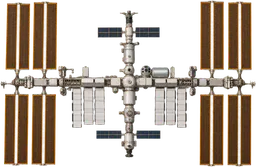 MotionInternational Space Station28,160 km/hThe International Space Station is a large habitable satellite that orbits Earth and serves as a research laboratory.
 TimeA workday8 hA workday is a typical period during which people perform paid employment.TimeSaturn rotation period10.7 hSaturn's rotation period is the time the planet takes to complete one full turn relative to distant stars, defining its day.TimeA feature film2 hA feature film is a motion picture created to tell a complete story for viewers.
 SpaceEarth–Sun distance1 AUThe Earth–Sun distance, or astronomical unit, is the standard measure of separation between Earth and the Sun used in astronomy.TimeMoon phase synodic cycle29.53 daysThe Moon phase synodic cycle is the average time between identical lunar phases, such as from one full moon to the next.
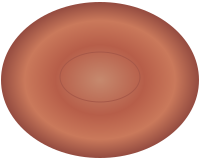 PeopleRed-cell lifespan120 daysRed-cell lifespan is the average time a human red blood cell remains in circulation before being removed from the bloodstream.