
Human lifetime
A human lifetime is the span from a person's birth to their death.
How big is it?
80 years · time
Time · reference interval
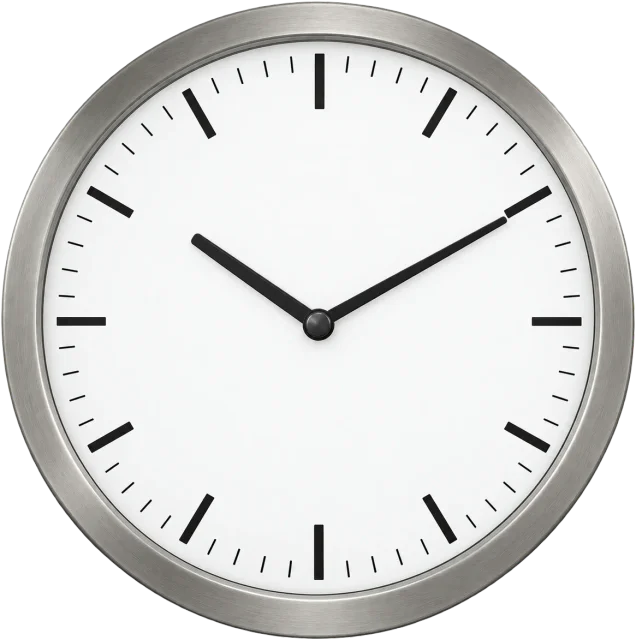
A little perspective
Human lifetime vs A century: duration comparison
A century is about 1.25 times a human lifetime.
ELAPSED TIME
Measurements, assumptions & sources +
Human lifetime
Time: 80 years; reference interval.
An 80-year comparison interval, not a prediction of life expectancy.
Defined examples — our methodology
The marked time is calibrated. Unmeasured illustration details are representative.
A century
Time: 100 years; reference interval.
One hundred Julian years for consistent conversion.
Defined examples — our methodology
The marked time is calibrated. Unmeasured illustration details are representative.
Use the visual comparison to explore its scale, then check the measurements and sources.
Change your perspective
Put it next to…
Choose a suggestion to redraw the comparison, or open its page to learn what it is.
Why this measurement?
Why we use 80 years
We compare a human lifetime. The measurement is labelled reference interval. Check the source notes for its basis.
An 80-year comparison interval, not a prediction of life expectancy.
The picture identifies the subject; the diagram compares the recorded values. How calibrated comparisons work →
Recorded properties
Dimensions and measurements
| Property | Selected value | Recorded range | Basis |
|---|---|---|---|
| 80 years | Not recorded | reference interval |
Around this scale
Explore nearby values.
Compare examples with lower, similar and higher values. Each card names the measurement being compared.
 Nearest lower valueTime and durationVenus solar day116.8 daysSolar dayA Venus solar day is the interval between two successive sunrises at the same location on Venus, which is much longer than an Earth day.
 Nearest higher valueTime and durationA century100 yearsTimeA century is a period of one hundred years.
Sources and method
Want to check the number?
The source records and measurement method remain available for inspection.
More ways to see it
Curated comparisons
There’s always another scale
Follow your curiosity.
TimeBlink of an eye150 msA blink of an eye is the quick closing and opening of the eyelid, usually happening involuntarily. TimeAge of Earth4.54 GyrThe age of Earth is the time that has passed since the planet formed from the solar nebula.TimeAge of the universe13.8 GyrThe age of the universe is the time since the Big Bang, marking the beginning of cosmic expansion.TimeA century100 yearsA century is a period of one hundred years.TimeRecorded-history interval5 kyrThe recorded-history interval is the span for which humans have kept written or documented records.
 PeopleRed-cell lifespan120 daysRed-cell lifespan is the average time a human red blood cell remains in circulation before being removed from the bloodstream.TimeVenus solar day116.8 daysA Venus solar day is the interval between two successive sunrises at the same location on Venus, which is much longer than an Earth day.TimeMoon phase synodic cycle29.53 daysThe Moon phase synodic cycle is the average time between identical lunar phases, such as from one full moon to the next.