
Space Shuttle re-entry plasma
Space Shuttle re-entry plasma is the extremely hot, ionised gas layer that forms around a spacecraft as it re-enters Earth's atmosphere at high speed.
Also known as: shuttle reentry plasma temperature
How big is it?
8,000 K · representative plasma temperature
Representative plasma temperature · defined reference
Typical recorded range: 5,000 K to 10,000 K.

A little perspective
Space Shuttle re-entry plasma vs Sun: temperature comparison
The plasma temperature of Space Shuttle re-entry plasma is 2,228 K higher than the surface temperature of the Sun.
Space Shuttle re-entry plasma is the extremely hot, ionised gas layer that forms around a spacecraft as it re-enters Earth's atmosphere at high speed.
Measurements, assumptions & sources +
Space Shuttle re-entry plasma
Representative plasma temperature: 8,000 K; defined reference; range 5,000 K–10,000 K.
An 8,000 K representative scale for the ionised shock-layer gas around a re-entering shuttle. Temperature varies strongly through the flow and is not the vehicle skin temperature.
Defined examples — our methodology
The marked representative plasma temperature is calibrated. Unmeasured illustration details are representative.
Sun
Surface temperature: 5,772 K; approximate.
Our star, modelled with the IAU nominal solar radius. “Surface” means the visible photosphere. The core is much hotter; this is not a solid surface.
IAU — nominal solar and planetary conversion constants
The marked surface temperature is calibrated. Unmeasured illustration details are representative.
Use the visual comparison to explore its scale, then check the measurements and sources.
Change your perspective
Put it next to…
Choose a suggestion to redraw the comparison, or open its page to learn what it is.
Why this measurement?
Why we use 8,000 K
We compare the plasma temperature of Space Shuttle re-entry plasma. This is an illustrative comparison value, not a claim that every example is the same. The recorded range is 5,000 K to 10,000 K.
An 8,000 K representative scale for the ionised shock-layer gas around a re-entering shuttle. Temperature varies strongly through the flow and is not the vehicle skin temperature.
The picture identifies the subject; the diagram compares the recorded values. How calibrated comparisons work →
Recorded properties
Dimensions and measurements
| Property | Selected value | Recorded range | Basis |
|---|---|---|---|
| 8,000 K | 5,000 K to 10,000 K | defined reference |
Around this scale
Explore nearby values.
Compare examples with lower, similar and higher values. Each card names the measurement being compared.
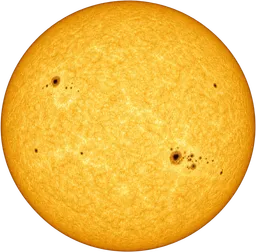 Nearest lower valuePlanets, moons and spaceSun5,772 KSurface temperatureThe Sun is the star at the centre of the Solar System.
 Nearest higher valueTemperatureNeutron star surface1,000,000 KRepresentative young surface temperatureNeutron star surface temperature is the intense heat found at the outer layer of a young neutron star after a supernova.
Sources and method
Want to check the number?
The source records and measurement method remain available for inspection.
There’s always another scale
Follow your curiosity.
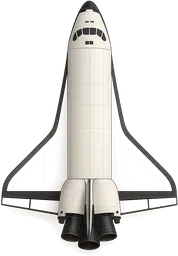 SpaceSpace Shuttle orbiter37.24 mA Space Shuttle orbiter was a reusable winged spacecraft that carried crews and cargo between Earth and low orbit.SpaceSun1,391,000 kmThe Sun is the star at the centre of the Solar System.TemperatureMolten iron1,811 KMolten iron is iron in its liquid state, formed by heating solid iron above its melting point.TemperatureLava1,373 KLava is molten rock that erupts from a volcano and flows on the Earth's surface before cooling and solidifying.TemperatureWood fire1,073 KA wood fire is the burning of wood in air, producing heat, light and flames.TemperatureHot oven200 °CA hot oven is a kitchen appliance used for baking or roasting food at elevated temperatures.TemperatureBoiling water100 °CBoiling water is water heated until it changes rapidly from liquid to steam at standard atmospheric pressure.TemperatureGallium melting plateau at standard pressure29.76 °CThis is the temperature at which pure gallium changes from solid to liquid under normal atmospheric pressure.