Where next?

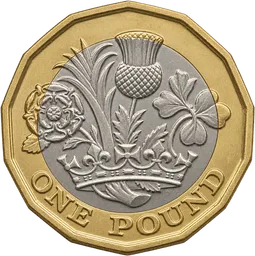
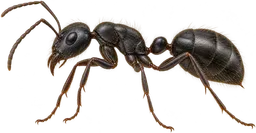
Honeybee vs £1 coin: length comparison

The maximum diameter of a £1 coin is about 1.56 times the body length of a honeybee. Selected basis: a representative value for Honeybee; approximate values.

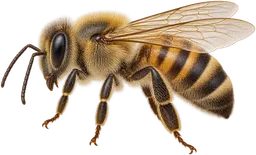
Honeybee
Body length
£1 coin
Specified maximum diameter
Scale
Honeybee
1.5 cmBody length
0 - shared origin
£1 coin
2.343 cmSpecified maximum diameter
0 - shared origin

Both rulers start at the same zero and share one linear scale. Artwork keeps its original proportions.

In perspective1.56 times
Measurements, assumptions & sources

Honeybee

1.5 cm - Body length; representative; range 1 cm–1.5 cm.

A honeybee is a social insect that lives in a colony and gathers nectar and pollen from flowers.

A 15 mm worker honeybee (Apis mellifera), at the upper end of the cited 10–15 mm worker range. Body length excludes antennae, legs and wings. The 100 mg mass is a separate illustrative assumption.

University of Michigan — Apis mellifera

£1 coin

2.343 cm - Specified maximum diameter; specified.

A £1 coin is a twelve-sided British coin used as standard currency in the United Kingdom.

Twelve-sided bimetallic UK pound introduced on 28 March 2017: 23.43 mm maximum point-to-point span, 2.80 mm published thickness and 8.75 g mass. The older round pound was 22.5 mm across, 3.15 mm thick and 9.50 g; its legal tender status ended on 15 October 2017. Specimen rim measurements are not official thickness tolerances.

Royal Mint — £1 coin specifications

Choose an object

Compare something else

There’s always another scale

Follow your curiosity.

Explore things ↗

A closer look

Follow the comparison further.

All stories →
The invisible world beneath a beeA bee beside a pound coin is small. A bee beside a bacterium is enormous.Read the story →

Side by side

Another point of view.

All comparisons ↗

Got a good eye for scale?

Try matching it yourself.

Play Scale It →

Share a little perspective

Honeybee vs £1 coin