
Saturn V liftoff propulsive power
Saturn V liftoff propulsive power is the rate at which the Saturn V rocket’s engines converted fuel energy into thrust during launch.
Also known as: Saturn V launch power
How big is it?
190 GW · defined thrust-power scale
Defined thrust-power scale · defined calculation
Typical recorded range: 150 GW to 250 GW.

A little perspective
Saturn V liftoff propulsive power vs Large grid demand: power comparison
The propulsive power of a Saturn V at liftoff is about 4.75 times the demand on a large electricity grid.
ENERGY EACH SECOND
Saturn V liftoff propulsive power is the rate at which the Saturn V rocket’s engines converted fuel energy into thrust during launch.
The total electrical power required by all users connected to a large electricity grid at a given moment.
Measurements, assumptions & sources +
Saturn V liftoff propulsive power
Defined thrust-power scale: 190 GW; defined calculation; range 150 GW–250 GW.
A defined 190 GW effective propulsive-power scale for Saturn V at liftoff, calculated as an order-of-magnitude exhaust kinetic-energy rate. Rocket power depends on the stated definition and flight condition; this is not electrical output.
Defined examples — our methodology
The marked defined thrust-power scale is calibrated. Unmeasured illustration details are representative.
Large grid demand
Power: 40 GW; example.
A defined 40 GW power snapshot, not a claim about a named country or current demand.
Defined examples — our methodology
The marked power is calibrated. Unmeasured illustration details are representative.
Use the visual comparison to explore its scale, then check the measurements and sources.
Change your perspective
Put it next to…
Choose a suggestion to redraw the comparison, or open its page to learn what it is.
Why this measurement?
Why we use 190 GW
We compare the propulsive power of a Saturn V at liftoff. This is calculated from stated inputs and assumptions, not a direct measurement. The recorded range is 150 GW to 250 GW.
A defined 190 GW effective propulsive-power scale for Saturn V at liftoff, calculated as an order-of-magnitude exhaust kinetic-energy rate. Rocket power depends on the stated definition and flight condition; this is not electrical output.
The picture identifies the subject; the diagram compares the recorded values. How calibrated comparisons work →
Recorded properties
Dimensions and measurements
| Property | Selected value | Recorded range | Basis |
|---|---|---|---|
| 190 GW | 150 GW to 250 GW | defined calculation |
Around this scale
Explore nearby values.
Compare examples with lower, similar and higher values. Each card names the measurement being compared.
Sources and method
Want to check the number?
The source records and measurement method remain available for inspection.
There’s always another scale
Follow your curiosity.
 SpaceSaturn V110.6 mThe Saturn V was a multi-stage rocket developed by NASA to launch astronauts to the Moon during the Apollo programme.
 GravitySaturn V liftoff thrust34 MNSaturn V liftoff thrust is the combined force generated by the Saturn V rocket's first stage engines during launch.
 PowerLarge grid demand40 GWThe total electrical power required by all users connected to a large electricity grid at a given moment.
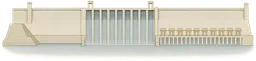 PowerThree Gorges Dam rated output22.5 GWThree Gorges Dam rated output is the maximum electrical power the dam's generators are designed to produce.
 PowerItaipu Dam rated output14 GWItaipu Dam rated output is the maximum electrical power the Itaipu hydroelectric dam is designed to generate under standard conditions.
 PowerSpace Shuttle main engine thermal power12 GWSpace Shuttle main engine thermal power is the rate at which heat energy is produced by the engine's combustion during operation.PowerPower station1 GWThe electrical power produced by a facility that generates electricity for distribution to users.
 PowerContainer ship engine shaft power60 MWContainer ship engine shaft power is the mechanical power transmitted from a ship’s main engine to its propeller for movement through water.