
Coffee bean
A coffee bean is the roasted seed of the Coffea plant, used to make coffee after grinding.
Also known as: roasted coffee bean
How big is it?
120 mg · representative roasted-bean mass
Representative roasted-bean mass · defined specimen
Typical recorded range: 80 mg to 180 mg.
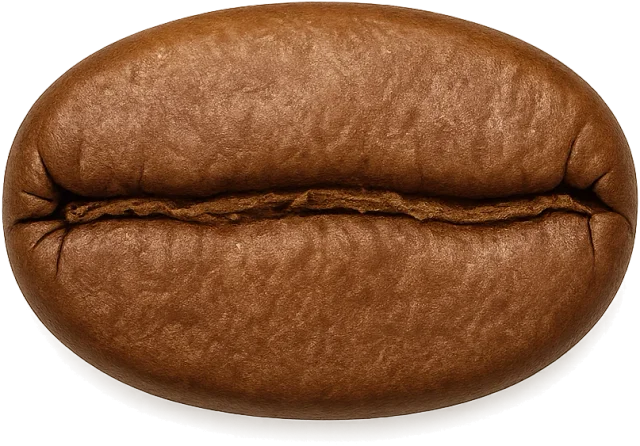
A little perspective
Coffee bean vs Honeybee: length comparison
The body length of a honeybee is about 1.5 times the bean length of a coffee bean.
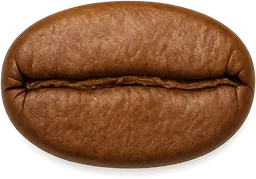
A coffee bean is the roasted seed of the Coffea plant, used to make coffee after grinding.
A honeybee is a social insect that lives in a colony and gathers nectar and pollen from flowers.
Both rulers start at the same zero and share one linear scale. Artwork keeps its original proportions.
Measurements, assumptions & sources +
Coffee bean
Representative bean length: 1 cm; defined specimen; range 8 mm–1.2 cm.
A defined roasted coffee bean 10 mm long and 0.12 g. Variety, roast and moisture change both measurements.
Defined examples — our methodology
The marked representative bean length is calibrated. Unmeasured illustration details are representative.
Honeybee
Body length: 1.5 cm; representative; range 1 cm–1.5 cm.
A 15 mm worker honeybee (Apis mellifera), at the upper end of the cited 10–15 mm worker range. Body length excludes antennae, legs and wings. The 100 mg mass is a separate illustrative assumption.
University of Michigan — Apis mellifera
The marked body length is calibrated. Unmeasured illustration details are representative.
Use the visual comparison to explore its scale, then check the measurements and sources.
Change your perspective
Put it next to…
Choose a suggestion to redraw the comparison, or open its page to learn what it is.
Why this measurement?
Why we use 120 mg
We compare the roasted-bean mass of a coffee bean. This is an illustrative comparison value, not a claim that every example is the same. The recorded range is 80 mg to 180 mg.
A defined roasted coffee bean 10 mm long and 0.12 g. Variety, roast and moisture change both measurements.
The picture identifies the subject; the diagram compares the recorded values. How calibrated comparisons work →
Recorded properties
Dimensions and measurements
| Property | Selected value | Recorded range | Basis |
|---|---|---|---|
| 120 mg | 80 mg to 180 mg | defined specimen | |
| 1 cm | 8 mm to 1.2 cm | defined specimen |
Around this scale
Explore nearby values.
Compare examples with lower, similar and higher values. Each card names the measurement being compared.
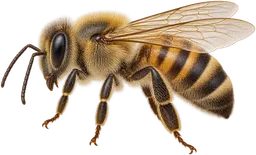 Nearest lower valueLiving thingsHoneybee100 mgMassA honeybee is a social insect that lives in a colony and gathers nectar and pollen from flowers.
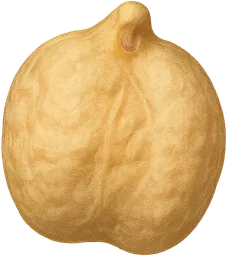 Nearest higher valueEveryday objectsChickpea300 mgDefined dry-seed massA chickpea is an edible seed from the Cicer arietinum plant, commonly used in cooking and also called a garbanzo bean.
Sources and method
Want to check the number?
The source records and measurement method remain available for inspection.
There’s always another scale
Follow your curiosity.
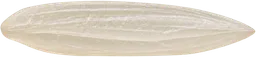 Everyday thingsGrain of rice7 mmA grain of rice is the edible seed of the rice plant, widely consumed as a staple food.
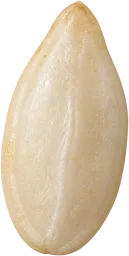 Living thingsSesame seed3 mmA sesame seed is an oil-rich edible seed produced by the sesame plant and used whole, ground or pressed for oil.
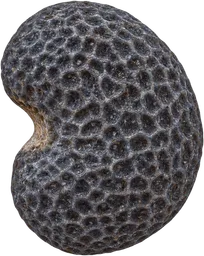 Living thingsPoppy seed1 mmA poppy seed is an edible seed produced by plants in the poppy family and commonly used in breads and other foods.Living thingsHoneybee1.5 cmA honeybee is a social insect that lives in a colony and gathers nectar and pollen from flowers.Everyday thingsChickpea9 mmA chickpea is an edible seed from the Cicer arietinum plant, commonly used in cooking and also called a garbanzo bean.
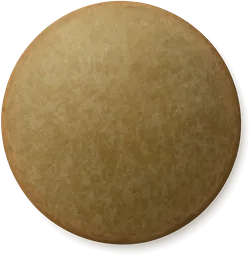 Everyday thingsLentil5 mmA lentil is the edible, lens-shaped seed of the Lens culinaris plant, widely used in soups and stews.
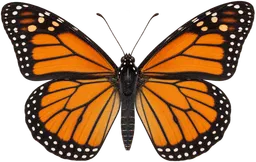 Living thingsButterfly5 cmThe butterfly is an insect with two pairs of scaled wings that undergoes metamorphosis from caterpillar to adult.
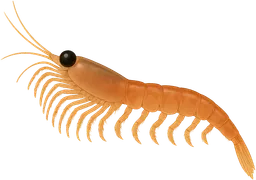 Living thingsAntarctic krill6 cmAntarctic krill (Euphausia superba) are small, shrimp-like marine crustaceans that serve as a vital food source for many Antarctic animals.