ASCII character
An ASCII character is a letter, digit, punctuation mark or control code encoded using the American Standard Code for Information Interchange.
How big is it?
1 B of data
Data · example
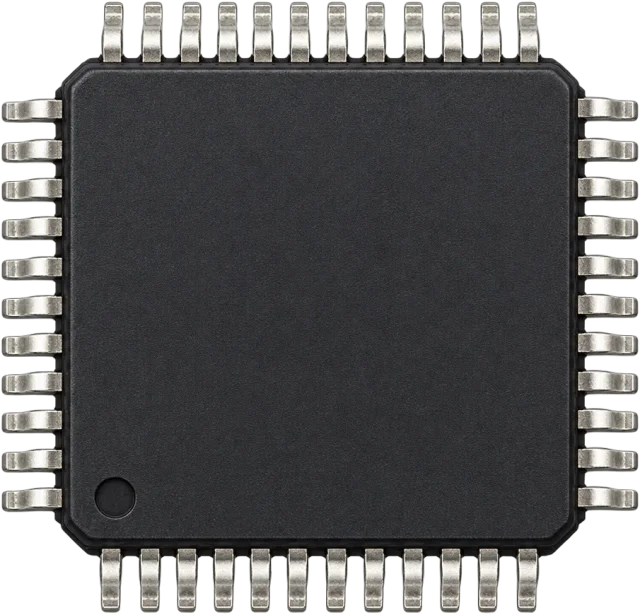
A little perspective
About twice the data volume of Four-bit hexadecimal digit.
Four-bit hexadecimal digit: A four-bit hexadecimal digit is a data unit capable of representing any value from 0 to 15, commonly used in digital systems.
Measurements, assumptions & sources +
ASCII character
One ASCII character stored as one byte. UTF-8 characters can occupy more than one byte.
Defined examples — our methodology
The marked data is calibrated. Unmeasured illustration details are representative.
Four-bit hexadecimal digit
A curated four-bit hexadecimal digit comparison anchor. The representative value and any stated range preserve the backlog measurement convention; operating or experimental conditions can change real observations.
Defined examples — our methodology
The marked data volume is calibrated. Unmeasured illustration details are representative.
Change your perspective
Put it next to…
Choose a suggestion to redraw the comparison, or open its page to learn what it is.
Why this measurement?
Why we use 1 B
For comparison, this page uses data. This is labelled example: an explicit comparison model rather than a claim that every example has the same value.
One ASCII character stored as one byte. UTF-8 characters can occupy more than one byte.
The identifying illustration and the numerical comparison remain separate. How calibrated comparisons work →
Recorded properties
ASCII character dimensions and measurements
| Property | Selected value | Recorded range | Basis |
|---|---|---|---|
| 1 B | Not recorded | example |
Around this scale
Go smaller. Go bigger.
These links use compatible data records, ordered around the selected value.
 Nearest lower value · DigitalFour-bit hexadecimal digit0.5 BA four-bit hexadecimal digit is a data unit capable of representing any value from 0 to 15, commonly used in digital systems.Nearest higher value · DigitalIPv4 address4 BAn IPv4 address is a numerical label used to identify a device on a computer network that uses Internet Protocol version 4 for communication.
Sources and method
Want to check the number?
The source records and measurement method remain available for inspection.
There’s always another scale
Follow your curiosity.
 DigitalText page3 kBA digital file containing one page of plain text characters without formatting or embedded fonts.
 DigitalCompressed photo3 MBA compressed photo is a digital image file that has been processed to reduce the amount of data needed to store or transmit it.Digital128 GB phone128 GBPhone storage is the digital memory in a mobile phone used to keep apps, photos, videos and other files.
 Digital1 TB drive1 TBA one-terabyte drive is a digital storage device capable of holding large amounts of computer data, such as documents, media and software.DigitalFour-bit hexadecimal digit0.5 BA four-bit hexadecimal digit is a data unit capable of representing any value from 0 to 15, commonly used in digital systems.DigitalIPv4 address4 BAn IPv4 address is a numerical label used to identify a device on a computer network that uses Internet Protocol version 4 for communication.DigitalEthernet MAC address6 BAn Ethernet MAC address is a unique identifier assigned to network interfaces for communications on physical networks.DigitalSingle binary flag0.125 BA single binary flag is a data unit that can represent one of two possible states, such as true or false.