Home / Compare / Ribosome vs Virus Ribosome vs Virus: length comparison The characteristic size of a virus is about 4 times the characteristic size of a ribosome. Selected basis: a representative value for Ribosome; a representative value for Virus; approximate values.
Ribosome Change → Virus Change → MeasurementLength & distance PropertiesCharacteristic size
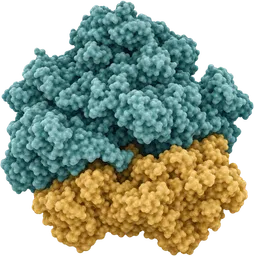
Ribosome Characteristic size
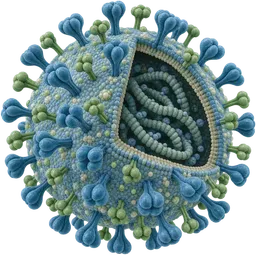
Virus Characteristic size Scale Linear ✓ Logarithmic ✓ Virus 100 nm Characteristic size
Both rulers start at the same zero and share one linear scale. Artwork keeps its original proportions.
In perspective 4× times Measurements, assumptions & sources 25 nm - Characteristic size; representative.
A ribosome is a molecular machine that builds proteins by reading instructions carried by messenger RNA. Ribosomes are found in every living cell.
A chosen 25 nm ribosome. Size depends on organism and subunit state.
University of Utah — Cell size and scale 100 nm - Characteristic size; representative.
A virus is an infectious particle containing genetic material inside a protein coat, sometimes with an outer envelope. It reproduces only inside host cells.
A chosen 100 nm viral particle, including the approximate envelope. Viruses vary greatly.
University of Utah — Cell size and scale Share comparison ↗
Retry update
Retry
Ribosome and Virus, compared by characteristic size. The visual is a static, shareable rendering of the interactive comparison. Like seeing things in perspective?
Help expand the encyclopedia. Support more calibrated illustrations, comparisons and ways to explore scale.
Help expand the encyclopedia → Got a good eye for scale?
Try matching it yourself. Play Scale It → Every canonical measurement and diagram is available without JavaScript. Enable it to search, change properties, compare your own values or move through the scale explorer.