Home / Compare / Honeybee vs US dime Honeybee vs US dime: length comparison The diameter of a US dime is about 1.19 times the body length of a honeybee. Selected basis: a representative value for Honeybee; approximate values.
Honeybee Change → US dime Change → MeasurementLength & distance Mass PropertiesBody length / Diameter
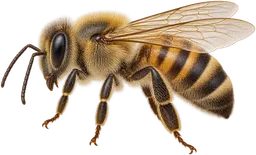
Honeybee Body length
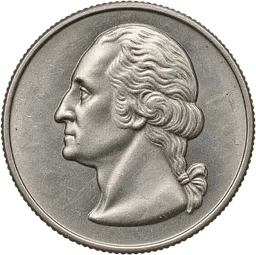
US dime Diameter Scale Linear ✓ Logarithmic ✓ Both rulers start at the same zero and share one linear scale. Artwork keeps its original proportions.
In perspective 1.19× times Measurements, assumptions & sources 1.5 cm - Body length; representative; range 1 cm–1.5 cm.
A honeybee is a social insect that lives in a colony and gathers nectar and pollen from flowers.
A 15 mm worker honeybee (Apis mellifera), at the upper end of the cited 10–15 mm worker range. Body length excludes antennae, legs and wings. The 100 mg mass is a separate illustrative assumption.
University of Michigan — Apis mellifera 1.791 cm - Diameter; specified.
A US dime is a ten-cent coin, the smallest denomination in US currency above the penny and nickel.
Standard copper-nickel clad US dime: 17.91 mm diameter, 1.35 mm thickness and 2.268 g mass. Earlier silver dimes do not share this mass.
US Mint — circulating coin specifications Share comparison ↗
Retry update
Retry
Honeybee and US dime, compared by body length / Diameter. The visual is a static, shareable rendering of the interactive comparison. Like seeing things in perspective?
Help expand the encyclopedia. Support more calibrated illustrations, comparisons and ways to explore scale.
Help expand the encyclopedia → UK and US coin sizes compared Got a good eye for scale?
Try matching it yourself. Play Scale It → Every canonical measurement and diagram is available without JavaScript. Enable it to search, change properties, compare your own values or move through the scale explorer.